
Red Hot Cyber
Cybersecurity is about sharing. Recognize the risk, combat it, share your experiences, and encourage others to do better than you.



Redazione RHC : 4 December 2025 07:24
Windows 10 has been officially retired, but it still runs on approximately one billion personal computers worldwide. A significant number of devices are technically ready to upgrade to Windows 11, increasing the risk of cyberattacks and proving that updating the operating system is more difficult than it seems .
According to Jeff Clark, vice president and chief operating officer of Dell Technologies, of the approximately 1.5 billion PCs installed, more than 1 billion have not yet been upgraded to Windows 11 or are too old to do so.
Approximately 500 million devices meet the requirements for the new version but have not been updated, and about the same number are computers that do not meet the minimum requirements for Windows 11. The company sees this billion as a significant wave of future device upgrades, but notes that the current platform transition cycle is 10 to 12 percentage points slower than the previous transition.
Statcounter statistics for November show that the ratio of desktop systems running Windows 10 to Windows 11 remains virtually unchanged , standing at around 42.7% versus 53.7% .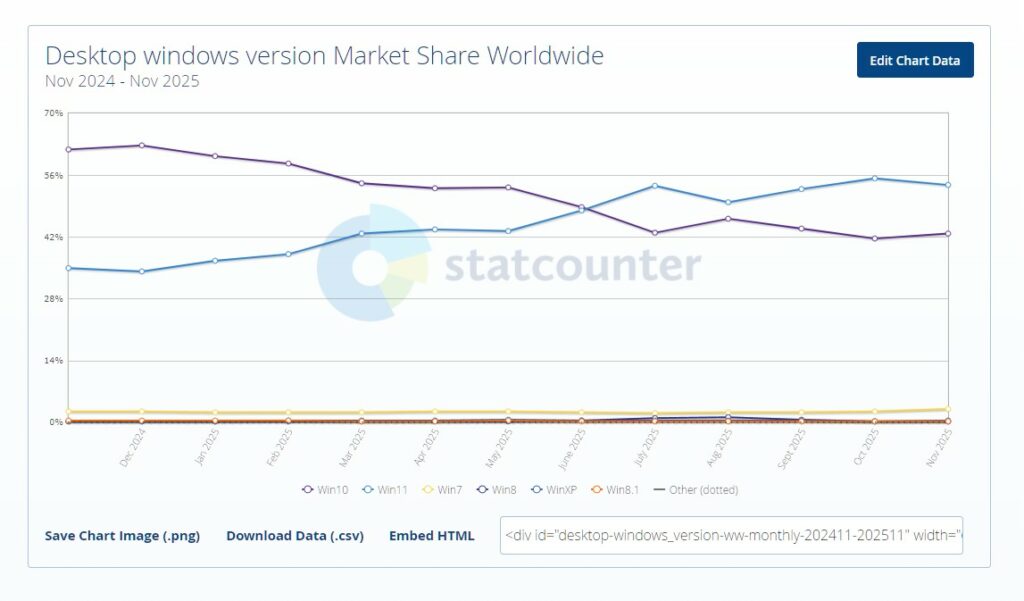
This means that a significant percentage of computers continue to run versions that are beyond the standard support period . After October 14, 2025, Microsoft will only release important security updates through the Extended Security Updates program, available to Windows 10 users with extended support.
To access ESU, you need to sign in with a Microsoft account. Some privacy-conscious users prefer local accounts and don’t want to associate their daily PC work with additional data collection by the company.
Against this backdrop, some owners of older systems are switching to alternative platforms. For example, the Zorin OS team reported that the distribution had been downloaded nearly a million times in just over a month, demonstrating the interest in Linux during the end-of-life phase of Windows 10.
 Redazione