

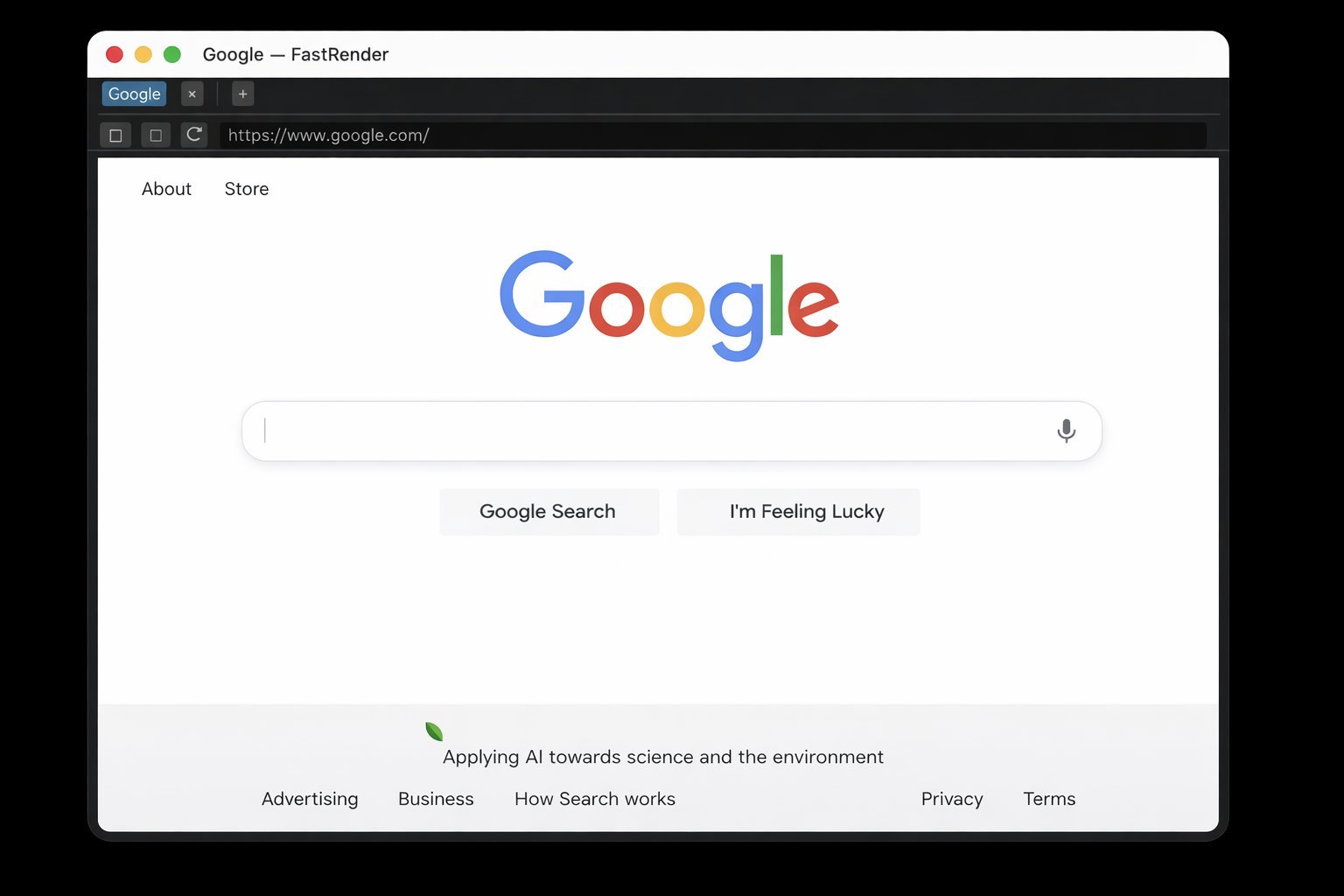
A week ago, Cursor CEO Michael Truell announced a supposedly remarkable achievement. He claimed that, using GPT-5.2, Cursor had created a browser capable of running continuously for an entire week.
This browser is made up of three million lines of code spread across thousands of files.
The rendering engine was written from scratch in Rust and includes HTML parsing, CSS cascading, layout, text generation, rendering, and its own JavaScript virtual machine.
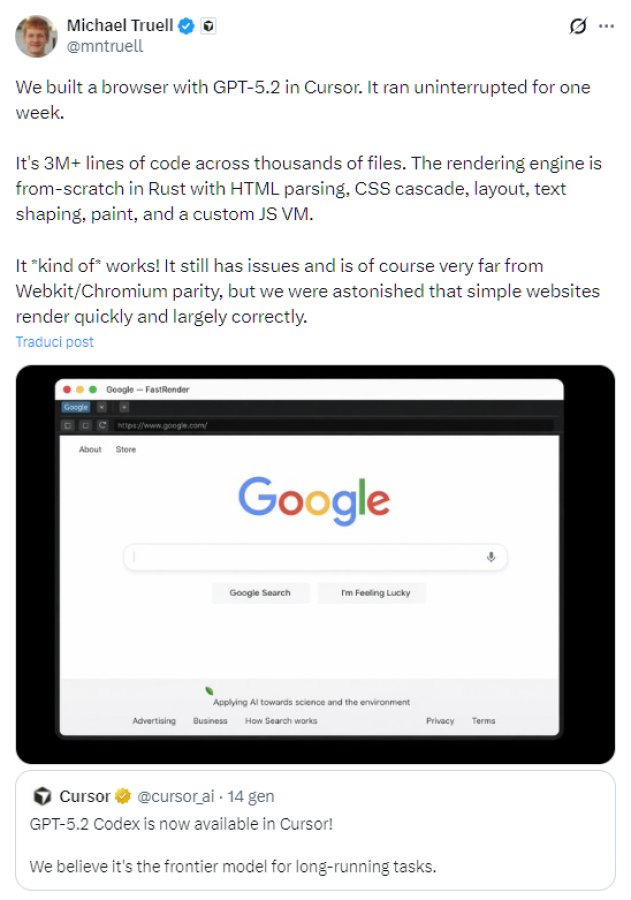
Truell noted that the browser works, albeit with some caveats. It has some issues and is far from the level of WebKit or Chromium , but the team was impressed that simple websites rendered quickly and mostly correctly.
Some developers managed to compile the code after fixing some bugs, while others reported success after reviewing the compilation instructions.
Overall, however, developers aren’t convinced that Cursor has achieved a breakthrough. Jason Gorman, director of the British consultancy Codemanship , sees it as proof that agent-based AI can scale to create non-functional software . Oliver Medhurst, a software engineer and former Mozilla employee, agrees.
He noted that while working with a codebase of this size is impressive, it’s objectively not a good browser. Furthermore, the code is incredibly bloated: the Ladybird and Servo projects do much more, each clocking in at around a million lines.
Writing a web browser is one of the most challenging tasks for a programmer. Chromium, the open-source foundation of Google Chrome, contains over 37 million lines of code. The browser cursor, called FastRender , contains approximately three million lines.
In 2022, developer Joshua Marinacci wrote about how complex the web has become, to the point that only a few companies are capable of building a browser from scratch. The fact that Microsoft has discontinued development of its own browser engine and migrated Edge to Chromium underscores the enormous engineering resources required to develop and support a browser.
Cursor engineer Wilson Lin, who worked on the browser’s code, published a blog post explaining the project’s goals: to explore how far the boundaries of agent-based coding can be pushed for projects that typically take months to complete.
Critics have accused Cursor of relying heavily on Servo, Mozilla’s open-source Rust rendering engine. However, Lin has dismissed claims that FastRender relies on libraries and frameworks, stating that the JavaScript virtual machine, DOM, rendering systems, and text pipeline are all being developed within the project.
Gorman criticizes claims about the success of AI-based programming tools in general. He cites data showing that developers significantly overestimate the impact of AI on their productivity , and that most teams experience a negative impact on metrics such as development time and release reliability.
Gorman notes that when you measure output—lines of code, commits, pull requests—you definitely see an increase. But this doesn’t translate into a real increase in productivity. He points to the lack of evidence that AI tools are leading to the creation of more software, as measured by the number of products in app stores, and the lack of revenue attributable to these tools.
The agentic technology of artificial intelligence is impressive, but often imperfect. It’s used daily as a coach and mentor to understand how to best apply it. But do you consider it revolutionary? No. The principles and practices that made development teams effective before AI—small steps, short feedback loops, continuous testing, code review and integration, modular design—remain the same. Same game, different dice.
If AI agents could truly create a working product with three million lines of code in a week, at what stage of the design process would user and customer feedback be gathered? That’s where the real value is created.
Follow us on Google News to receive daily updates on cybersecurity. Contact us if you would like to report news, insights or content for publication.