




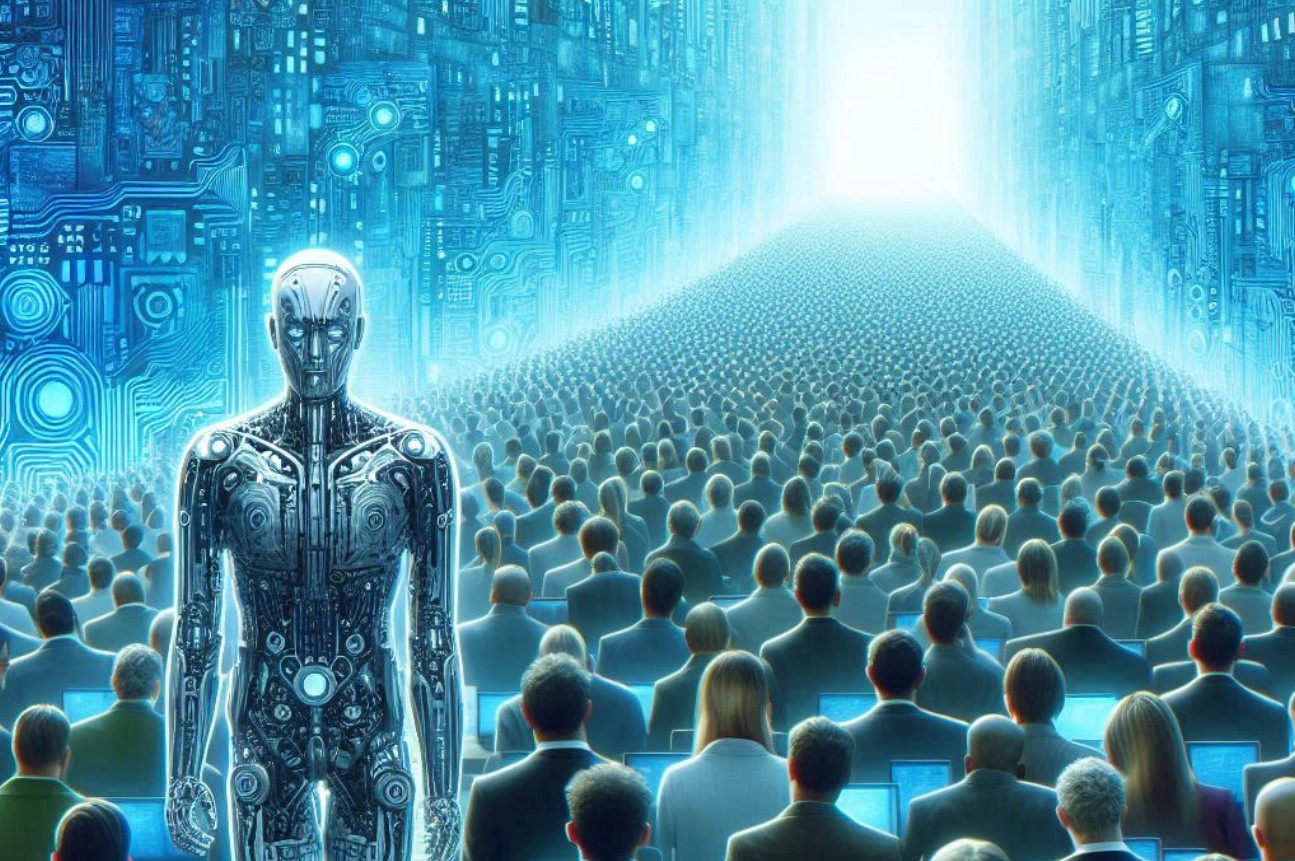
Computer science professor Geoffrey Hinton , one of the founders of modern artificial intelligence technologies, has claimed that AI could lead to large-scale job losses as early as 2026. According to him, AI systems are developing so rapidly that they are beginning to threaten not only routine professions, but also many white-collar positions.
Hinton, the 2024 Nobel Prize winner for discoveries in physics, said this in an interview on CNN’s “State of the Union,” as reported by Business Inside. “We’re going to see AI get even better. It’s already incredibly good. It’s already capable of replacing call center jobs, but it will replace other jobs as well,” Hinton said.
According to the scientist, the development of artificial intelligence is accelerating. While previously, models could only handle short snippets of work, such as minutes of programming, they are now capable of executing entire projects lasting about an hour.
At the same time, according to Hinton, approximately every seven months AI will be able to handle tasks that take twice as long as before . In the coming years, this could lead to AI managing months-long software development projects, significantly reducing the need for large numbers of specialists.
Hinton compared what’s happening to the Industrial Revolution, which reduced the need for human physical labor. He believes artificial intelligence could play a similar role, but in relation to intellectual labor.
Beyond the economic implications, Hinton also expressed concern about deeper risks. He emphasized that modern AI systems are developing reasoning and manipulation capabilities faster than expected. “If the system thinks you’re trying to get rid of it, it might start developing plans to deceive you,” he warned.
Not all experts believe that the development of artificial intelligence will inevitably lead to mass unemployment in the coming years. Andrew Ng, a leading machine learning expert and co-founder of Google Brain, notes that AI is more likely to transform jobs than eliminate them entirely.
In his view, artificial intelligence is taking over specific tasks within professions, both routine and technical, while the human role is shifting toward control, decision-making, and contextualization . He believes that most jobs won’t disappear overnight, but that they will change more rapidly than before.
Ng adds that the speed of AI adoption depends not only on technological capabilities, but also on corporate culture and companies’ willingness to restructure processes.
Forecasts for the future of the labor market vary: some predict abrupt and painful changes as early as 2026, while others predict a more gradual adaptation . However, both sides agree on one point: artificial intelligence will increasingly influence the employment structure, and these changes can no longer be ignored.
Follow us on Google News to receive daily updates on cybersecurity. Contact us if you would like to report news, insights or content for publication.