
In the war in Ukraine, where the battlefield can change within weeks or even days, the time
required to train a soldier can become a strategic variable. Ukrainian forces are experimenting
with a model of warfare in which drones, autonomous systems, data analysis, and artificial
intelligence are increasingly integrated into operations. This is because traditional training systems
have long been challenged by the speed of innovation: manuals and procedures now risk becoming
obsolete even before a new contingent has completed its training.
AI-based training systems analyse performance, create realistic scenarios that can adapt to the evolution of the conflict, and enable training to be tailored

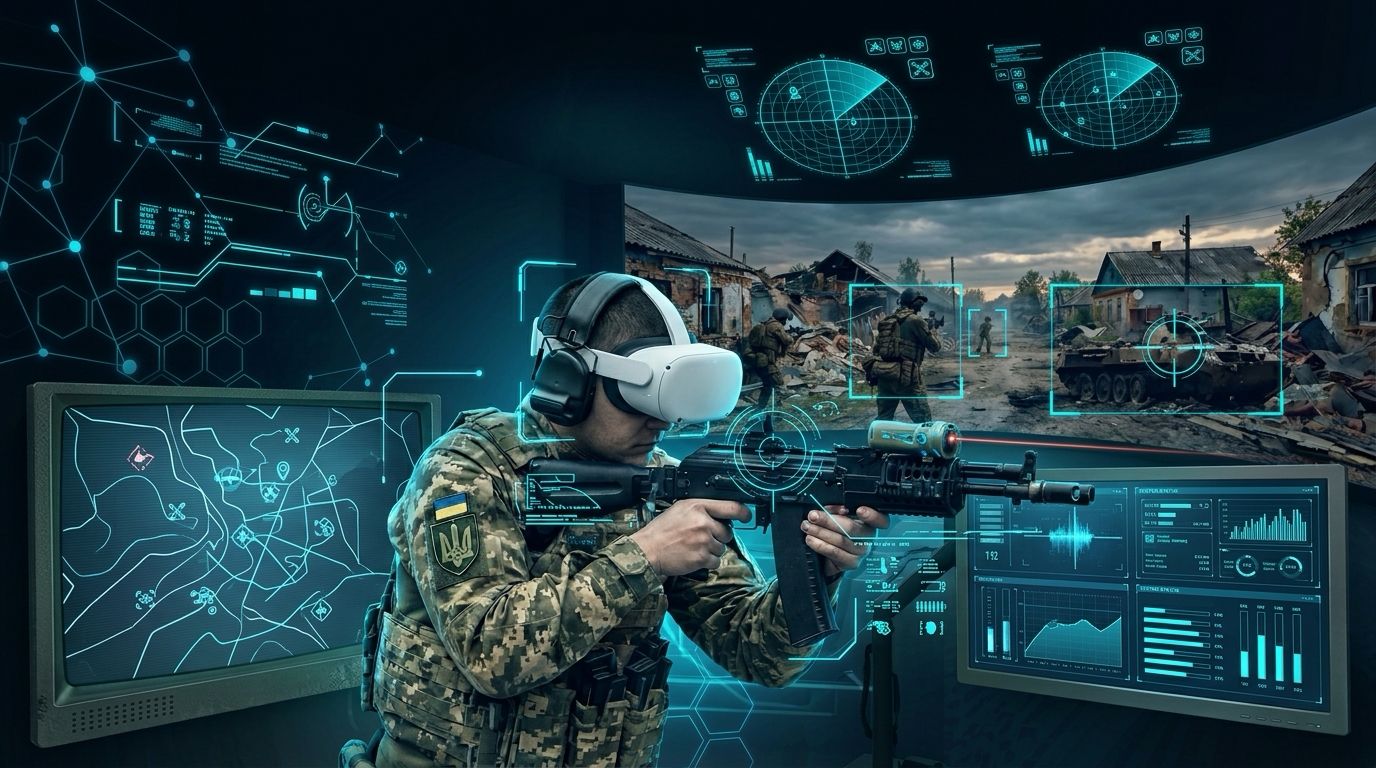
This is the context in which artificial intelligence-based training systems are emerging. Adaptive simulators, virtual environments, digital instructors, and systems capable of analysing a servicemember’s performance could make it possible to personalize training, rapidly identify deficiencies, and replicate scenarios that are much closer to those encountered on the front line. The objective would not simply be to train more soldiers, but to reduce the time required to transform a recruit into an effective operator, while at the same time increasing the ability to train forces based on concrete threats and on the actual evolution of the battlefield, as well as on the enemy’s strategy.
This perspective raises a decisive question: if AI can continuously learn from war, can it also become the new instructor for those who have to fight in that war? And, above all, if it were able to drastically reduce the time and costs of training, what effect could this have on the balance between Russia and Ukraine and, more broadly, on warfare?
In summary
Since the Russian invasion of 2022 and the subsequent escalation of the conflict, technology has no longer represented merely a support to military operations: it has become a structural component of the battlefield. Technological innovation has, from the outset, been a means of resisting and averting the prospect of surrender. From the extensive use of drones for reconnaissance and attack, to electronic warfare, and systems capable of automatically analysing images and data collected at the front, both sides are seeking to transform technological superiority into an operational advantage. NATO also regards the Ukrainian experience as a lesson for the future of warfare, particularly with regard to the role of unmanned systems. NATO Allies are looking to the drone expertise acquired by Ukrainian veterans in the field, also through the contributions of the Joint Analysis, Training and Education Centre (JATEC), a joint civil-military centre inaugurated in Poland in February 2025. By analysing and supporting Ukraine’s experience, JATEC studies are intended to improve training and defence, while also fostering cooperation and interoperability through Ukraine’s adoption of NATO standards.
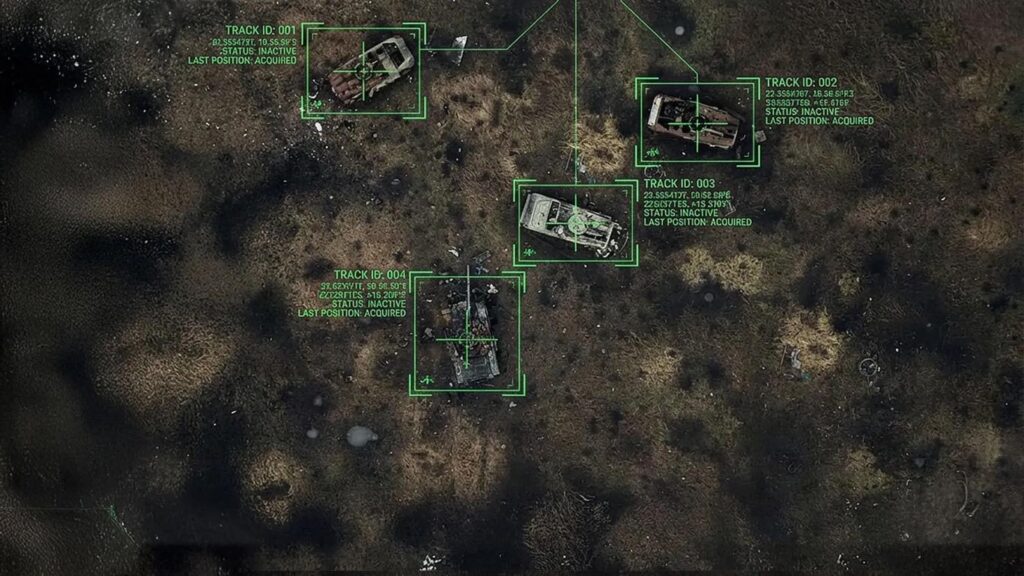
Against this backdrop, the increasingly concrete role of artificial intelligence is becoming evident. Ukraine is integrating AI models into its command-and-control systems, while the vast amount of data generated on the battlefield is being used to improve target recognition and thereby accelerate the cycle from the identification of a threat to an operational decision. This process has been described by the Ukrainian Ministry of Defence as a central element in the modernization of the engagement chain. The NATO Allied Command Transformation (NATO ACT) has also developed an AI model integrated into Ukraine’s DELTA ecosystem, which is already used by more than 200,000 members of the Ukrainian Defence Forces. Once fully operational, this system will become strategically important for analysing Russian activity: its target-recognition capabilities will enhance situational awareness.
These brief observations are just some of the examples supporting the thesis that the conflict in Ukraine is acting as a catalyst for a structural transformation of military training, thereby accelerating the convergence of AI, extended reality (XR), and advanced simulation systems.
The speed at which tactics, technologies, and threats evolve (particularly in the domain of unmanned systems, as well as in the strategic realm of cyberwarfare) is highlighting the limitations of traditional training models, characterized by relatively long update cycles and significant reliance on physical platforms and infrastructure. In this context, XR technologies can enable a rapidly reconfigurable training model, allowing data from the operational theatre to be transferred directly into training scenarios. The integration of AI represents the next stage of evolution: algorithms capable of dynamically generating and modifying scenarios, adapting the level of complexity to the trainee’s performance, and simulating adversarial behaviour can transform training from a predominantly prescriptive process into an adaptive, data-driven capability.
The initiatives already undertaken by Ukraine and NATO, from the use of XR simulators for counter-UAS (anti-drone systems) to the experimentation with AI in model generation, represent a concrete and valuable resource for the battlefield. The disruptive potential of AI-enabled XR training therefore lies not in simulation itself, but in the ability to build a scalable, continuous-learning architecture capable of persistently connecting operational experience, data, simulation, and training as an antidote to the obsolescence of traditional systems.
Kyiv is already building infrastructure to train AI models using data coming directly from the battlefield: in 2026, the Ministry of Defence launched, among other projects, Brave1 Dataroom and Avengers Labs, the latter based on 5 million images acquired during military operations, primarily through DELTA. The scale of this phenomenon can also be observed from a geopolitical perspective, particularly in the agreement signed between the United Kingdom and Ukraine in August of this year. This initiated cooperation on AI for defence and national security, based on British access to Ukrainian data, thereby generating cooperation in the launch of pilot projects involving AI-based sensor technologies and fibre-optic cables for the protection of military facilities, as well as low-power chips for autonomous systems.
The conflict in Ukraine is a war in which new solutions are tested, adapted, and redeployed on the battlefield with a speed rarely seen in previous conflicts. It can be regarded as a real-time technological laboratory.
As evidence of this, VARTA, a military training system compliant with NATO standards, has been developed on the basis of the best practices of the Ukrainian Armed Forces and testing conducted by combat units of the defence forces. It is an ecosystem integrating laser, VR, AR, and AI technologies in order to replicate combat conditions and ballistics with a high degree of accuracy.
VR technology provides realistic simulations of traditional training conditions through a so-called mass-and-dimensions model, i.e. a weight and bulk simulator, referring to a MANPADS (Man-Portable Air-Defense System, i.e. a shoulder-launched surface-to-air missile such as the FIM-92 Stinger or Piorun). This is an inert hardware simulator that faithfully replicates the weight, centre of gravity, and exact dimensions of the actual weapon, while also enabling 360-degree visualization.
Among the products developed is the VARTA Training Complex for Mechanized Unit, designed to effectively enhance capabilities in the use of firearms and, specifically, for the individual training of military personnel in ballistic and shooting skills, training them in target recognition and prioritization, as well as unit and squad performance during combat tasks carried out on missions. The software also enables the creation of scenarios with different levels of difficulty, analysis of skills-related data, and reporting. It makes it possible to train ten operators simultaneously, with different and personalized settings.
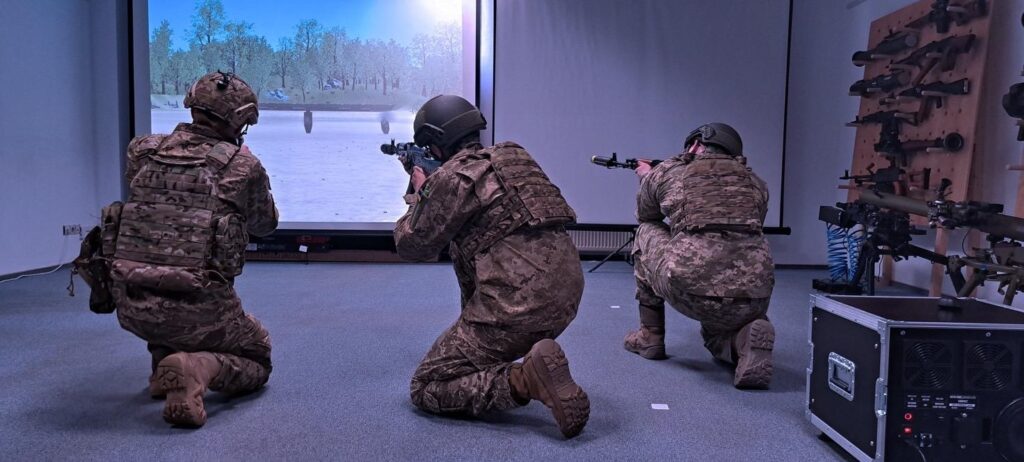
Training Complex Compact, on the other hand, is a mobile training tool that can be set up and used to begin training at the location where it has been deployed in just 25 minutes. It is a ready-to-use solution and includes 30 available weapon models corresponding to their real counterparts in terms of weight and dimensions, equipped with an invisible laser beam and system sensors for collecting performance data. Finally, VARTA Training Complex “AntiDrone” is a training system for aerial targets (FPV drones) that allows training without the use of live ammunition, using Kalashnikovs and shotguns. FPV Duel is the simulator in which trainees must rapidly change tactics and make decisions within short timeframes. Through data collection and the definition of training tasks, the instructor monitors both the actions of the shooter and those of the drone operator in order to assess performance.
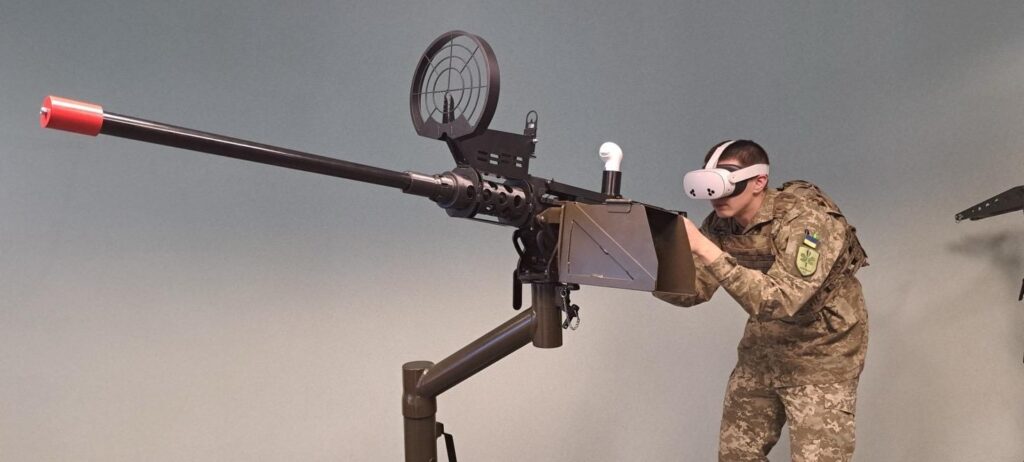
Virtual training systems have also emerged in other national contexts. In the field of immersive training, HGXR, the division of HOLOGATE (Germany), develops virtual, immersive, and modular systems, integrating AI to enhance the realism and effectiveness of training. The HOLOFORCE BLUE XR platform is oriented toward law enforcement and enables the training of responsiveness in high-stress scenarios through simulations involving negotiation, detentions, identification, response to gunfire, and the use of non-lethal tools.
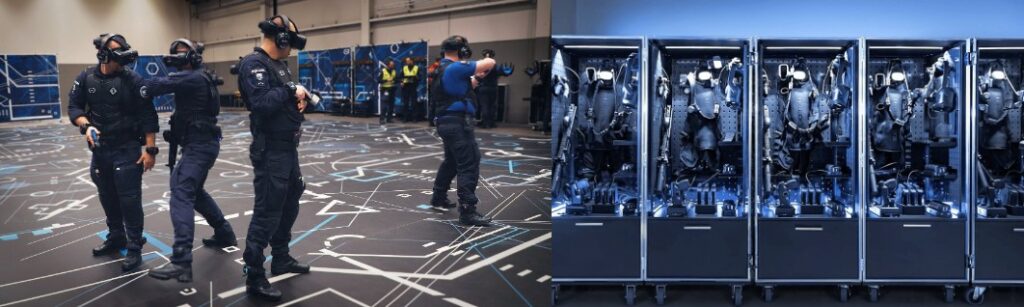
HOLOFORCE BLACK, by contrast, extends the simulation into the military domain, with scenarios dedicated to the use of heavy weapon systems, including anti-aircraft and anti-tank systems. Applications include the MBDA ENFORCER Anti-Air and Anti-Tank systems, developed in the European context with the involvement of Italy, France, and Spain, with the aim of integrating weapon systems into realistic training scenarios.
MBDA is also participating in the European BattleVerse project, coordinated by CERTH (Greece), which aims to develop an interoperable, AI-driven platform for multidomain simulation and predictive scenario analysis. The consortium also includes IANUS Technologies (Cyprus), which develops dual-use solutions, including MAESTRO4Police, intended for law enforcement, and MAESTRO, a military Command, Control and Intelligence (C2I) platform that integrates data from sensors, drones, and communications, supporting situational awareness, AI-assisted decision-making, and mission coordination through an open and interoperable architecture.
The effectiveness of XR and AI systems applied to military training derives from the combination of high accuracy, realistic immersion, configurability, and data analysis capabilities. Immersive interfaces make it possible to recreate realistic operational scenarios within a controlled environment, eliminating the risks associated with the use of real equipment and enabling land, naval, and air operations to be simulated without endangering personnel or assets. AI-driven full-body tracking solutions, such as those integrated into the HGXR ecosystem, capture operators’ movements with a high degree of precision, facilitating natural interactions, coordination among multiple participants, and the development of muscle memory.
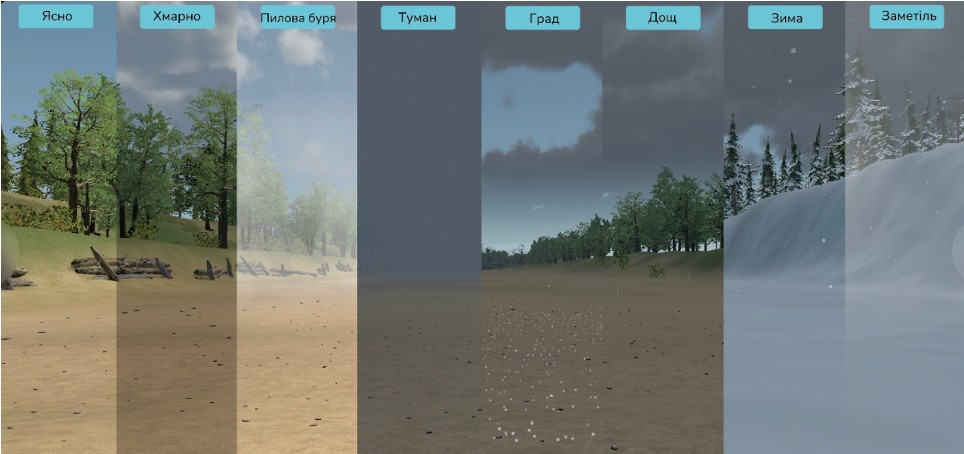
The use of physical replicas of weapons, equipped with sensors and realistic feedback systems, further increases the level of immersion and makes it possible to transfer some of the dynamics inherent to real-world training into the virtual environment. Added to this is the software component, which enables trainers to dynamically modify scenarios, threats, weather and visibility conditions, time of day, and the behaviour of virtual entities through intuitive interfaces and scenario editors equipped with libraries of 3D-modeled objects.
This reconfigurability makes training more flexible and mission-oriented, allowing exercises to be rapidly adapted to the specific skills to be developed and to operational lessons learned. Another enabling element is the After Action Review (AAR), through which data collected during the session are aggregated and analysed to reconstruct the exercise and assess reaction times, trajectories, tactical errors, and individual and team performance. The result is a data-driven and user-centric training model in which simulation, AI, and analytics contribute to personalizing the training pathway, improving situational awareness, and accelerating the learning process, while simultaneously reducing logistical costs, equipment wear and tear, and availability constraints.
The modularity of systems such as HGXR M, conceived according to the principle “train anything, anytime, anywhere,” further expands the ability to deploy training in distributed environments, transforming ordinary spaces into reconfigurable training environments. The virtual environment eliminates the risks associated with training operations involving the use of weapons. This safety dimension, in which operators can train their responsiveness in highly stressful as well as highly hazardous situations, is enabled through drag-and-drop interfaces that allow realistic scenarios to be created without the logistical obstacles associated with setting up training grounds or the deployment of significant financial resources.
HGXR estimates a reduction in costs of approximately 80% compared with traditional training methodologies. This reduction, combined with independence from complex and costly infrastructure, makes these technologies strategically relevant to training. This applies both to countries that develop and maintain their own defence strategies and to countries such as Ukraine, which are already engaged in a conflict involving substantial losses in terms of resources, first and foremost human resources and, no less significantly, economic resources.
In this context, the use of XR and AI systems for training new recruits could represent not only an opportunity to increase their efficiency and scalability, but also a tool for rationalizing public expenditure, helping to reduce the costs associated with military personnel training in an economy heavily constrained by the demands of warfare.
This technological evolution in training systems is not without its challenges. First and foremost, the realism of AI-generated scenarios, the quality and provenance of the data, interoperability between platforms, and the ability to verify the results produced by algorithms are becoming central elements of training.
A recent study by FOI, the research institute of the Swedish Ministry of Defence, highlights in particular how generative AI applied to VR still has to address limitations related to realism, temporal memory, generation times, as well as risks involving bias, security, and legal issues. The issue, therefore, is no longer merely how realistic a simulation can be, but rather how reliable, verifiable, and resilient the artificial intelligence contributing to its construction can prove to be. This is a crucial distinction from a cybersecurity perspective as well: an increasingly connected and automated training environment expands the attack surface and makes the protection of data, AI models, networks, and XR devices an integral part of operational effectiveness itself. The issue of reliability also has a methodological dimension.
The CNAS (Center for a New American Security) highlights a further critical issue: military AI cannot be evaluated solely on the basis of performance achieved under controlled conditions, because its behaviour may change depending on the data, the operational environment, and model updates. For this reason, the center advocates a continuous testing and evaluation approach, capable of assessing the robustness of systems even in unpredictable scenarios, including simulations that are as close as possible to the real-world context.
A particularly relevant aspect for XR training is therefore the need to validate not only the technology, but also the simulated environment and the data that feed it: an AI system may demonstrate excellent performance during a simulation and nevertheless behave differently when conditions, data, or the operational context change. It is precisely this unpredictability, according to CNAS, that makes the traditional “one-time” certification model insufficient and requires continuous verification processes throughout the system’s entire lifecycle.