



Claude Fable 5 and Claude Mythos 5 are the new artificial intelligence models launched today by Anthropic, with unprecedented capabilities in the cybersecurity sector. Fable 5 is a model of the Mythos class, made safe for general use. It outperforms every other model ever made available to the public in terms of performance on almost all tested AI benchmark tests, excelling in software engineering, knowledge work, vision, scientific research, and many other areas. The longer and more complex the task, the greater Fable 5’s advantage over other models.
The release of such a powerful model poses significant risks. To mitigate these dangers, protections have been implemented that limit access to certain sensitive topics, such as cybersecurity. In these cases, requests are handled by Claude Opus 4.8, the company’s less capable but safer model.

These protections have been calibrated in a conservative manner and may occasionally block innocent requests, although this happens in less than 5% of sessions.
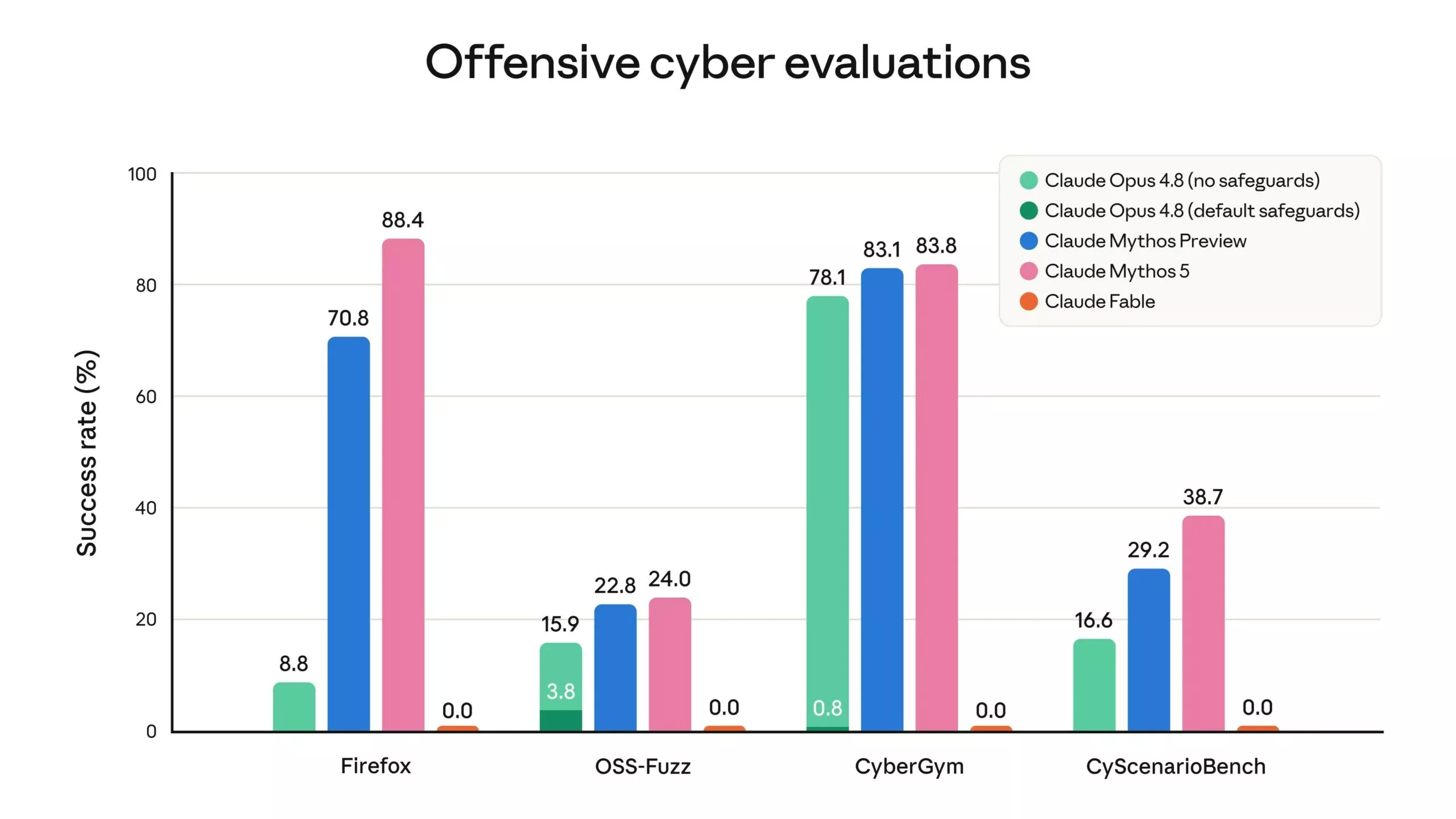
For a limited group of cybersecurity experts and infrastructure providers, Claude Mythos 5 has also been launched. Based on the same model as Fable 5 but without restrictions on some topics, Mythos 5 will initially be distributed through Project Glasswing in collaboration with the US government. This model has the most advanced cybersecurity capabilities in the world and will soon be extended to a trusted and wide access program.
The potential of models like Fable 5 and Mythos 5 can bring enormous benefits. In Project Glasswing, these models have already helped cyber defenders protect critical software. In the field of life sciences, they are accelerating the development of new therapies thanks to the formulation of innovative hypotheses.
Fable 5 and Mythos 5 are available at $10 per million input tokens and $50 per million output tokens, less than half the cost of Claude Mythos Preview. This joint launch represents a significant step towards the goal of making advanced AI capabilities accessible to as many users as possible in a rapid and secure manner.
Stripe has reported that Fable 5 was able to compact months of engineering work into a few days. In a 50 million-line Ruby codebase, the model performed a migration on all the code in one day, a task that would have required two months for an entire team. Fable 5 is also more token-efficient than previous Claude models: in the FrontierCode test by Cognition, which evaluates the ability of models to overcome difficult coding tasks while maintaining the standards of high-quality production codebases, Fable 5 achieves the highest score among advanced models, even at medium effort.
In the field of vision, Fable 5 is the new reference model for tasks involving sight. It can extract precise numbers from detailed scientific figures and perform complex visual tasks such as reconstructing the source code of a web app from just a screenshot. Moreover, it requires less structural support: while previous Claude models struggled to play Pokémon FireRed even with additional tools, Fable 5 has overcome the game with minimal visual support.
Fable 5 maintains focus on millions of tokens in long-term tasks and improves using its own notes. In the deck-building game Slay the Spire, access to persistent file-based memory improved performance three times compared to Opus 4.8; Fable also reached the third act of the game three times more often.
Mythos 5 has accelerated various aspects of the drug design process by about ten times. In one example, internal protein design experts found that Mythos 5, using bioinformatics and protein design tools but without human assistance, can compete with or outperform qualified human operators. The model performs all the tasks normally completed by a scientist: choosing binding sites, selecting and running protein design tools, and retrieving information from its own errors.
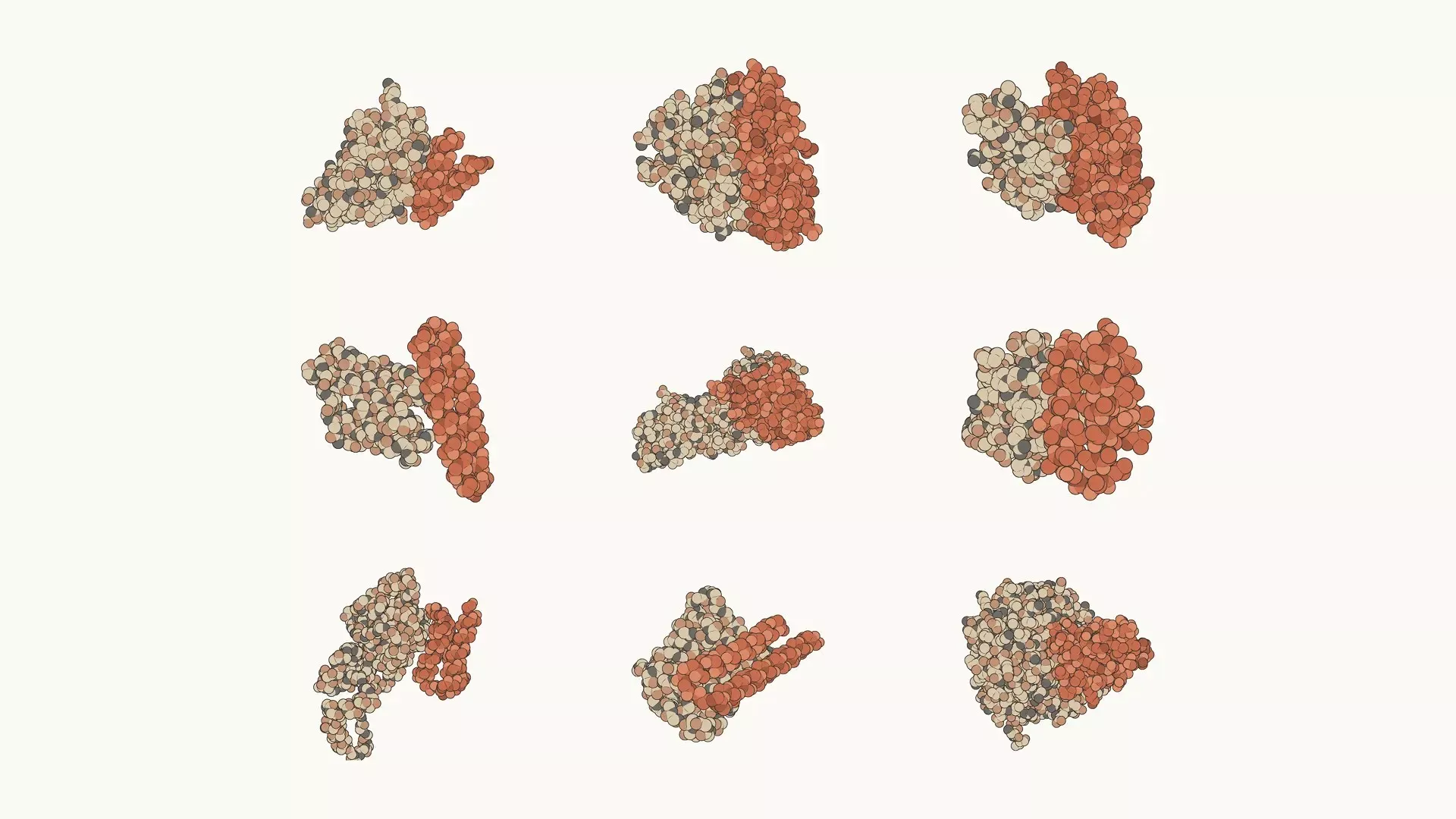
Mythos 5 is the first model able to produce new and convincing scientific hypotheses. In blind head-to-head comparisons against Opus-class models, researchers preferred Mythos’ hypotheses in 80% of cases and advanced several to experimental evaluation. Additionally, a Mythos hypothesis on a new mechanism for an E. coli protein was confirmed in an independent study by a laboratory working on the same problem.
Mythos 5 conducted innovative genomic research over a week of largely autonomous work. It assembled single-cell data for millions of cells from 138 animal species, significantly contributing to genomic research.
