Red Hot Cyber
Cybersecurity is about sharing. Recognize the risk, combat it, share your experiences, and encourage others to do better than you.
Search
Banner Ransomfeed 320x100 1
2nd Edition GlitchZone RHC 970x120 2

Category: Cyberpolitics

Digital Surveillance at Work: The Rise of Algorithmic Monitoring

Remote work has given employees freedom , but with it has also come digital surveillance . We discussed this some time ago in an article, reporting that these monitoring tools are also coming to Microsoft Teams. Therefore, instead of the boss’s unwavering gaze, this role will increasingly be played by ” algorithms ” that monitor how long applications are open, which websites are visited, and how actively the mouse is moved and keys pressed. Advanced systems even analyze employees’ facial expressions and the way they walk in front of a webcam. But these tools also highlight the inherent limitations of collecting personal

Tanks are no longer needed: new wars are fought from a laptop

Author: Roberto Villani, Tanslate: Vincenzo Marcovecchio Why will the cyberg wars, indeed the cyber-guerrillas, be more and more present and involve us more and more? The short century, the 1900s that we have left for more than 20 years has left us the logic of the opposition between states. If at the time the conflict was between east and west, today it is much more extensive and sees the participating actors always in opposition, no longer ideological but strategic. We have always said that natural resources are the main element of conquest, first of all water that guarantees life and therefore existence

Cyber Sabotage Alert: Volt Typhoon Prepares for Destructive Activities

The Australian Security Intelligence Organisation (ASIO) has raised the alarm about the readiness of authoritarian states to go beyond cyber espionage to directly sabotage critical infrastructure. Mike Burgess, head of the Australian Security Intelligence Organisation (ASIO), said foreign governments were increasingly considering targeting energy, telecommunications and financial networks using technology for destructive cyberattacks. According to the agency head, in recent years, intelligence agencies have observed a growing interest by several states in “high-impact” scenarios, from disrupting communications to spoofing or poisoning water supplies. Such actions, Burgess emphasized, are no longer just theoretical . According to ASIO, several countries have created special teams

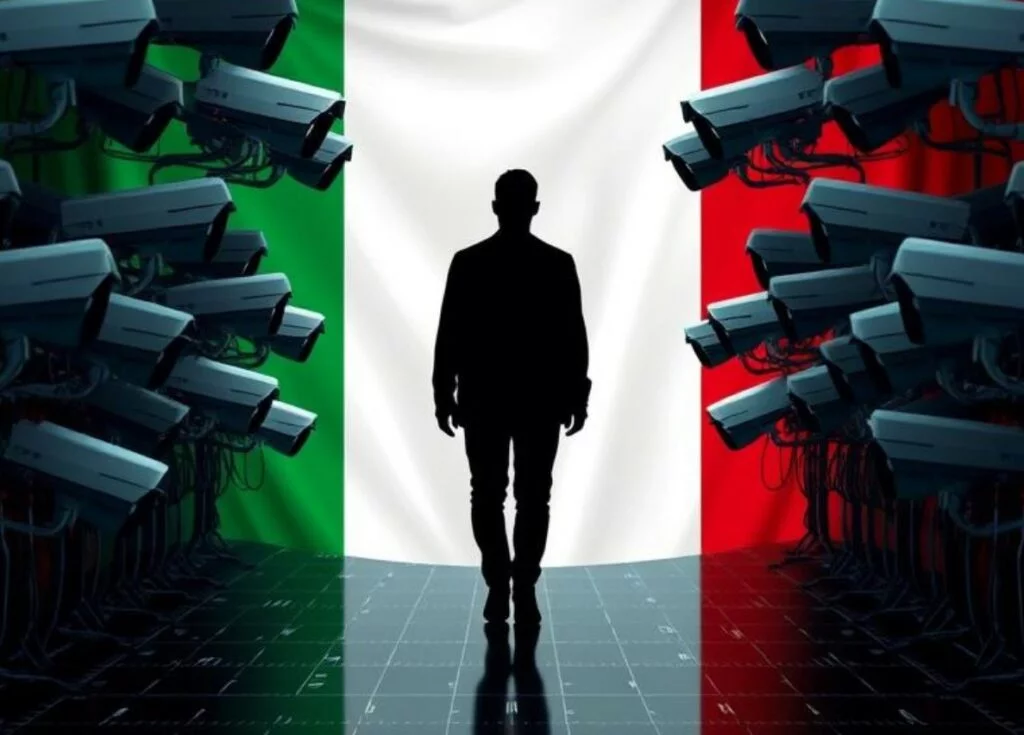
Italy and Adult Sites: The Country Where Entry Is Forbidden… But If You Click Yes, It’s Okay

From November 12, 2025, AGCOM reported that in line with art. 13-bis of the Caivano decree (dl123/2023) , 47 adult websites accessible from Italy would have to introduce an identity verification system to prevent access by minors. Age Verification on Adult Websites Begins November 12 in Italy This measure, anticipated for months, was heralded as a decisive step toward protecting young people online. However, one day after the deadline, the main adult portals are still freely accessible, without any additional verification. Visiting Pornhub, the world’s largest adult content hub, today, the site looks exactly the same: a home screen where the user

Did the US steal 127,000 Bitcoins? China accuses Washington of a massive hack.

We’re talking about 11 billion euros. A staggering figure! China’s National Computer Virus Emergency Response Center (CVERC) said that a state-run entity, likely U.S. , was behind a 2020 attack on a Bitcoin mining company . Recently, the CVERC published a report on Weixin describing an attack on the operator of the LuBian mining pool, which operated in China and Iran. Following the incident, unknown attackers stole 127,272 bitcoins. According to the center, the owner of the stolen funds was Chen Zhi, chairman of the Cambodian Prince Group. In early 2021 and in July 2022, he left messages on the blockchain demanding

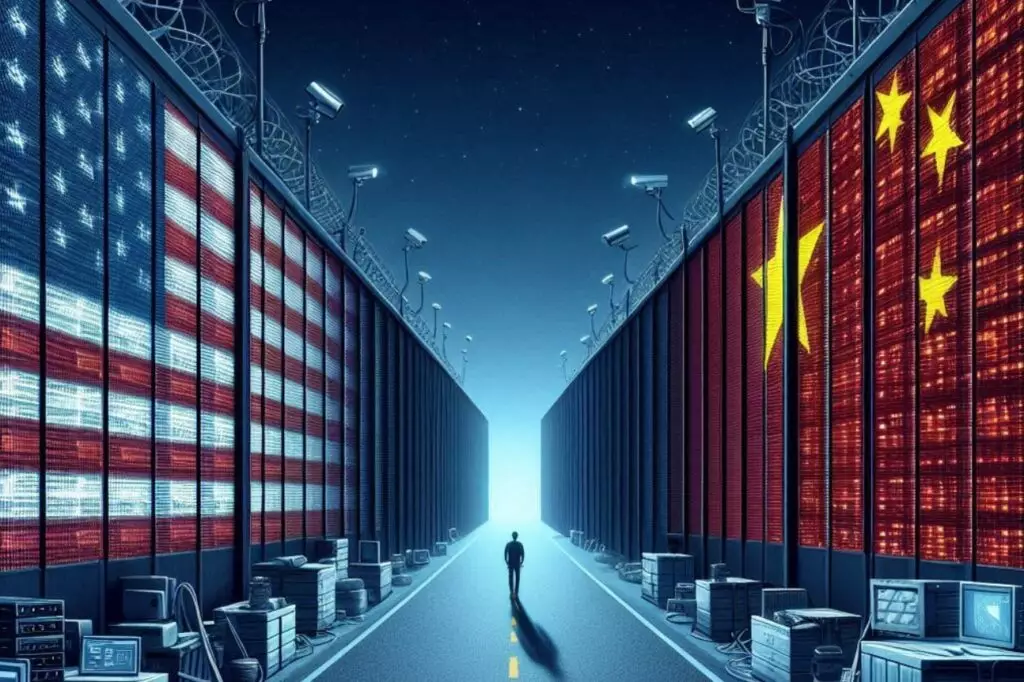
Vault7 with a Chinese twist: China’s secret global surveillance system exposed

Only the flag changes, but the result is always the same. In 2017, WikiLeaks published Vault7 , a leak that exposed the CIA’s arsenal: toolkits for penetrating smartphones, smart TVs, and operating systems, command and control infrastructure, and frameworks for obfuscating code. Tools like Weeping Angel (which turned TVs into microphones), HIVE (C2 for hundreds of implants), and the Marble Framework (for masking and falsely attributing malware) demonstrated that offensive intelligence was common practice even for Western powers. Today, with the Knownsec leak, the same scenario is being repeated under a different banner: rather than judging who is “worse,” it’s confirmation that

The tale of the Mayor who thought of banning axes… but then came the Saws

Once upon a time, there was a town that had a Magical Forest. It was happy to have it, even a little proud. Which is why all the citizens willingly sacrificed a few small comforts to keep it safe and didn’t complain too much. And those who didn’t want to give up were kindly asked to leave. First by the neighbors, then by the authorities. This way, everyone could always count on the fact that the majority not only cared about the Magical Forest, but would always do their utmost to defend it. At all costs. However, some criminals decided to hoard

Cybersecurity is democratic: the same virus hits multinationals and housewives

The same malware that yesterday blocked the servers of a major bank today encrypts Mrs. Pina’s photos on her home PC. As? With an innocuous WhatsApp message, sent by his nephew, whose wife works at that very bank, who contracted the same virus on his company PC, which spread automatically. This story is not a fairy tale, but the stark reality that demonstrates an uncomfortable truth: cybersecurity is profoundly democratic. Threats make no distinctions, they target multinationals and small businesses, large corporations and individuals, exploiting the weakest link in the chain: the human factor. Organizations are not abstract containers, but networks of

Starting November 12th, age verification for porn sites will be implemented in Italy. What’s changing?

Starting Tuesday, November 12, 2025, new provisions from the Italian Communications Regulatory Authority (AGCOM) will come into force, requiring an age verification system for accessing pornographic websites. The measure, provided for by Resolution 96/25/CONS, implements the provisions of the so-called “Caivano decree,” approved in 2023 by Giorgia Meloni’s government to combat juvenile crime and protect minors from accessing prohibited content. What changes from November 12th Until now, to enter an adult site , you simply had to declare that you were at least 18 years old with a simple click on the home screen . This easily circumvented method allowed even minors

$2.8 billion in cryptocurrency stolen! Here’s how North Korea circumvents UN sanctions.

Member countries of the international monitoring group MSMT have concluded that North Korea is increasing its use of cybercrime and the remote work of its citizens abroad to circumvent international sanctions and support its nuclear and missile programs. A recent report, covering the years from January 2024 to September 2025, highlights this strategy. The report’s authors highlight that virtually all illegal activities are orchestrated by organizations that have already been subjected to punitive measures. Through shell companies and anonymous IT groups, these entities operate with the primary goal of financially supporting prohibited weapons programs. According to the authors of the paper, North