




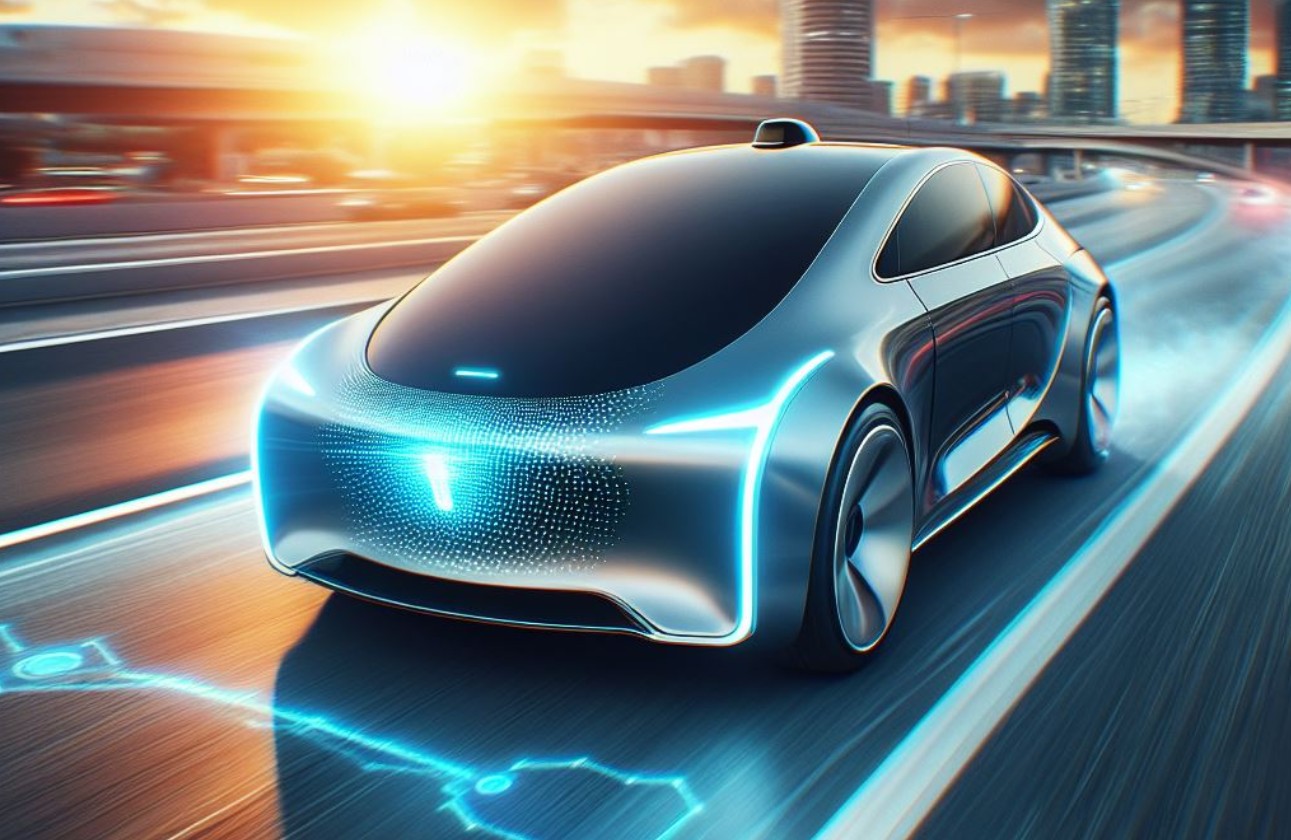
On December 23, the Traffic Management Bureau of the Beijing Municipal Public Security Bureau officially issued the first batch of Level 3 autonomous driving license plates to three intelligent vehicles.
These are the first Level 3 autonomous driving license plates issued in China. This marks a significant milestone in the country’s automotive intelligence development, marking the transition of autonomous vehicles from the testing and demonstration phase to mass production and ushering in the era of Level 3 autonomous driving.
Level 3 autonomous driving (according to the SAE classification) refers to an automation system in which the vehicle is able to autonomously manage all driving functions—steering, acceleration, braking, and monitoring the environment— under specific operating conditions (for example, on a highway, with flowing traffic and good visibility). In this scenario, the driver is not required to constantly monitor the road , being able to divert their attention from driving to perform other tasks, such as reading or using an electronic device.
However, Level 3 does not completely eliminate the human role: the system must be able to request driver intervention when conditions are no longer manageable autonomously. In these cases, the driver must be able to regain control of the vehicle within a defined time . Responsibility for driving therefore falls to the system during the autonomous phase, but returns to the human when the driver requests control, making this level one of the most complex from both a technological and regulatory standpoint.
A Beijing traffic management official said that the first batch of three Level 3 autonomous vehicles registered in Beijing will have the license plates: 京AA0001Z, 京AA0733Z and 京AA0880Z.
After a series of preliminary tests, these vehicles are currently in the conditional autonomous driving phase. The system can perform dynamic driving tasks under limited conditions, achieving autonomous driving capabilities at a maximum speed of 80 km/h in a single lane on highways and urban expressways. The traffic management official emphasized that, while autonomous driving is possible on limited roads, it is still mandatory for a driver to remain in the driver’s seat as a backup in case of emergency.
Currently, the “conditional autonomous driving” function is only available on the Beijing-Taipei Expressway (from Jiugong Xinqiao in Daxing District to the Airport North Line Expressway), the Airport North Line Expressway (from Daqu Nanqiao to the Daxing Airport Expressway), and the Daxing Airport Expressway (from the South Sixth Ring Road to the Airport North Line Expressway). On other roads or in other areas, this function will be forcibly disabled by the system.
Follow us on Google News to receive daily updates on cybersecurity. Contact us if you would like to report news, insights or content for publication.