

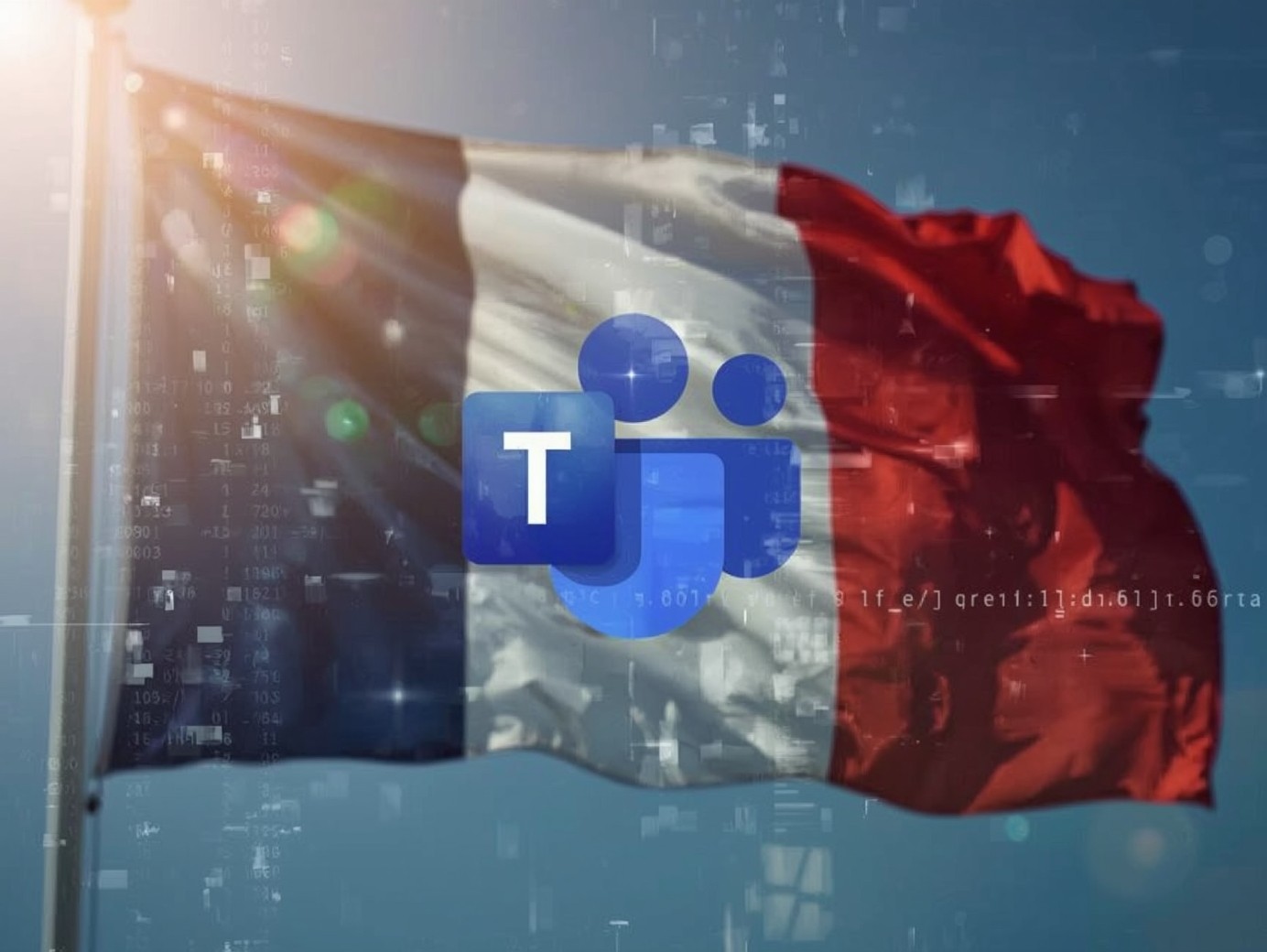
This isn’t the first initiative to emerge on this front recently. Indeed, we’ve heard several of them, one after the other. And it’s almost inevitable: technological autonomy and national security are becoming an increasingly popular topic, one where states are starting to move seriously, perhaps in a somewhat haphazard manner, but with a clear idea in mind.
In France, Teams or Zoom aren’t much talked about in the government corridors anymore. There’s a technical, and somewhat political, move pushing for a complete change in video conferencing platforms.
After having adopted them (and yes, for years Microsoft Teams and Zoom were there, as familiar as coffee in the morning), now the government wants to cut the umbilical cord with American solutions.
The goal is clear, albeit loud and unfussy. To set aside familiar tools to embrace something “personal,” something that sounds more… French , more under national control . There’s a project behind it, tested for about a year with thousands of government users, and it’s on track to become the only official tool by 2027.
The new platform is called Visio —yes, a name that sounds a bit like Microsoft Visio (that diagramming tool), but let’s not confuse them; they’re different worlds. This Visio was developed within the state, or at least led by a government agency dedicated to digital.
It’s not science fiction: Visio supports real video conferencing, both audio and video, and apparently even some clever little things like transcriptions or “speaker identification” (one of those things that techies love to mention, even though a regular person at the bar might turn up their nose and ask “ok, but does it work?”).
Behind the choice there is not only a desire for patriotic originality – even if some online commentators (as always) have already started to imagine the Free Software Commune or to make memes about Teams as a nightmarish sound.
The official reasoning circulating within the government speaks of “digital sovereignty.” A word that’s a bit of a philosophical thought: it means that, according to them, a state should have control over its own communication tools, especially those that handle sensitive data and institutional exchanges.
Security isn’t just about walls and firewalls. There’s the specter of dependence on foreign technology , which, with all the good intentions in the world, can always be subject to the whims of laws, the Cloud Act, or other legal instruments that allow foreign governments to peer into data one thinks is private.
Thus, we read in the press releases—and yes, they sound like “we do this and that” press releases—and the narrative emphasizes security, confidentiality, and control. But behind this lies the broader wind of a Europe reflecting on the depth of its dependence on American intelligence services.
It sounds like an immediate revolution. But no, it won’t happen overnight. Thousands of public employees will gradually abandon Teams and Zoom. Some organizations have already switched to the new system, others will do so in the coming months, and the final goal is set for 2027.
It’s curious—and this is where the mind can wander—that such a technical process can be interpreted as a small piece of something larger. Sovereignty, digital identity, geopolitical insecurities… as if the way a video call is conducted were part of a larger global game.
Then there’s the money, because even official statements reveal numbers: it’s said that savings on Zoom and Teams licenses could be worth more than a million euros for every 100,000 users. No small feat, considering the public coffers.
But sometimes I wonder— and it’s not just me, but also some people on Reddit and other forums —if this isn’t, ultimately, a leap in the dark: many are attached to their American tools, they know them, they take them for granted, and changing them takes time, practice, and even a little patience.
In short, it’s not just about saying goodbye to Zoom and Teams to make room for a new platform. There’s a whole underlying narrative about modernization, technological autonomy, and how a state sees itself in today’s digital world.
And those technical sensations that sometimes sound so abstract— “digital sovereignty,” “control of critical infrastructure” —end up influencing decisions that ultimately affect the daily lives of those who, ultimately, set up their webcam before a meeting.
So from Paris, Visio is seen as something that will become normal. Like those things that bother you a little at first (yes, I know, something always changes), but then, well, you get used to it, maybe even appreciate that slightly different accent.
And who knows – maybe someone, years from now, will look back on all this and say, “Oh, remember when we used Teams for everything?” (And maybe with a grimace, like , ‘those were weird times.’ )
Follow us on Google News to receive daily updates on cybersecurity. Contact us if you would like to report news, insights or content for publication.