


Dutch authorities have published data showing that adolescents’ involvement in cybercrime is usually temporary. An analysis prepared by the House of Representatives indicates that early interest in hacking often fades by age 20, and only a few maintain a lasting interest.
The report highlights that adolescents begin committing various types of crimes at roughly the same age . Cybercrime is no more common than gun or drug crime , and significantly less common than property crime. Furthermore, the path to their first attempts typically passes through game simulations that allow them to develop technical skills.
According to data collected over the years, the peak of criminal activity among young offenders occurred between the ages of seventeen and twenty. This trend is consistent with other types of crime. In a 2013 study of several hundred young offenders, most participants stopped engaging in criminal activity shortly after reaching the peak.
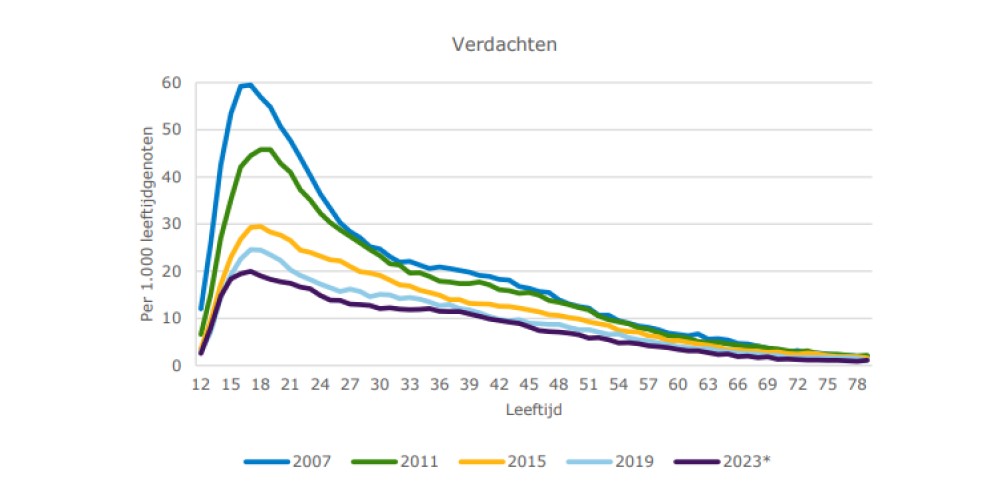
Researchers estimate that the percentage of those who continue to commit digital crimes after age 20 is around four percent. Researcher Alice Hutchings observed back in 2016 that long-term involvement stems from a sustained interest in technology and a desire to develop skills, rather than external incentives.
The authors of the government analysis emphasize that most studies are becoming obsolete due to rapid changes in the digital environment. For comparison, they cite data on the total social costs of juvenile crime, which is approximately €10.3 billion annually. The majority of the burden falls on victims, while the remainder falls on public services, including the police and the justice system.
The precise annual costs of cybercrime are difficult to estimate due to the lack of long-term data. However, indirect data allow us to estimate the scale of the problem. For example, a study commissioned by the UK government found that the annual damage caused by three attacks on a major hospital could exceed £11 million. These amounts are comparable to or greater than the costs of many categories of crime in the Netherlands.
Previously, the country’s government agencies have repeatedly emphasized the difficulty of quantifying the impact of digital attacks. For example, a 2016 report prepared by Deloitte for the Dutch government estimated annual losses to organizations resulting from cyber incidents at approximately €10 billion , a figure comparable to the total cost of juvenile delinquency.
Follow us on Google News to receive daily updates on cybersecurity. Contact us if you would like to report news, insights or content for publication.