




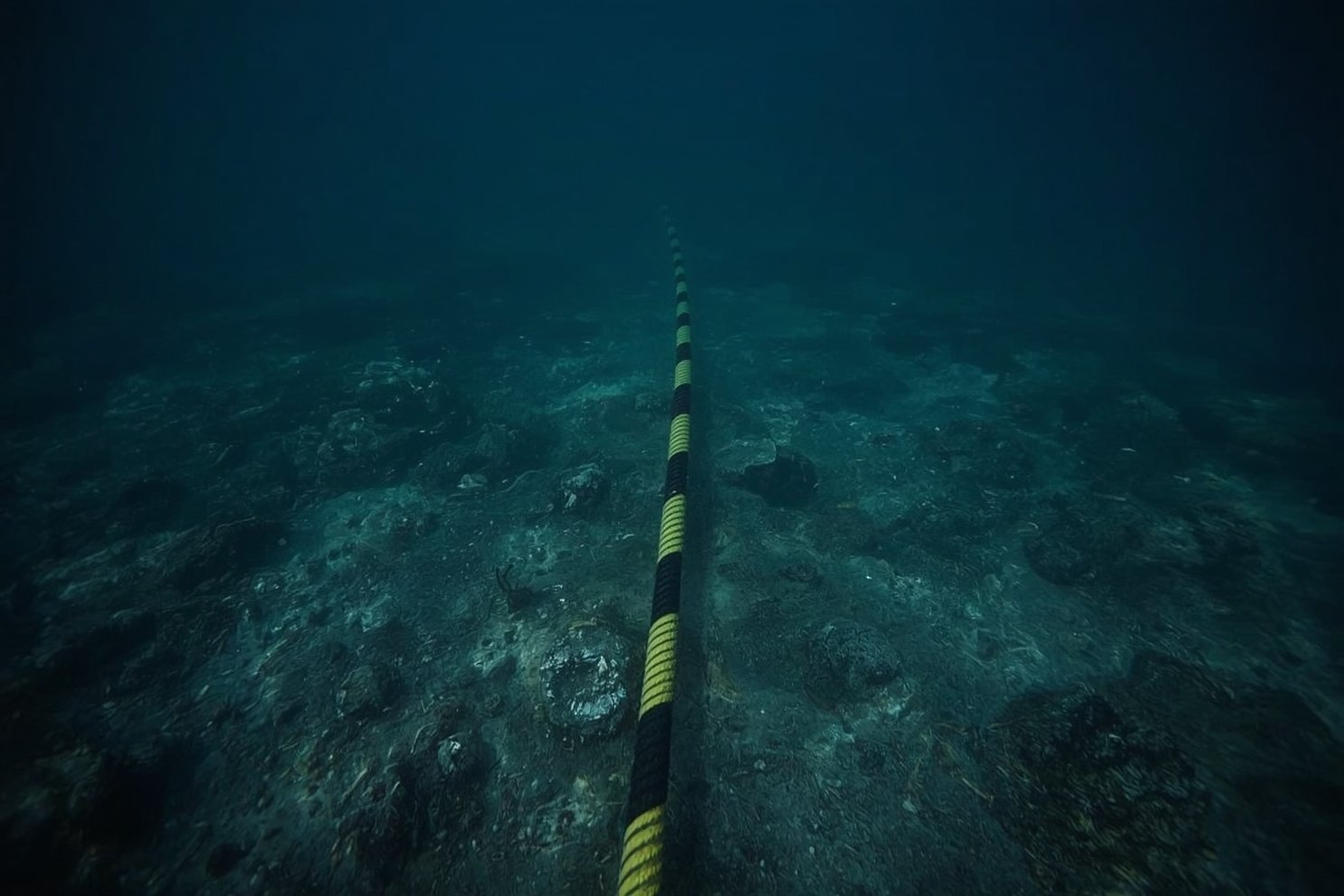
On Wednesday, December 31, Finnish authorities seized a cargo ship believed to be involved in the damage to an undersea telecommunications cable connecting Helsinki to Tallinn, Estonia. The action was triggered after a technical anomaly was reported by the provider Elisa in the early hours of the morning.
The vessel, identified as the Fitburg , was located with its anchor dropped near the point where the fault occurred . The affected area is located within the Estonian exclusive economic zone.
A Finnish Border Guard vessel and helicopter intercepted the cargo vessel, ordering the crew to stop sailing, retrieve the anchor, and head for Finnish territorial waters.
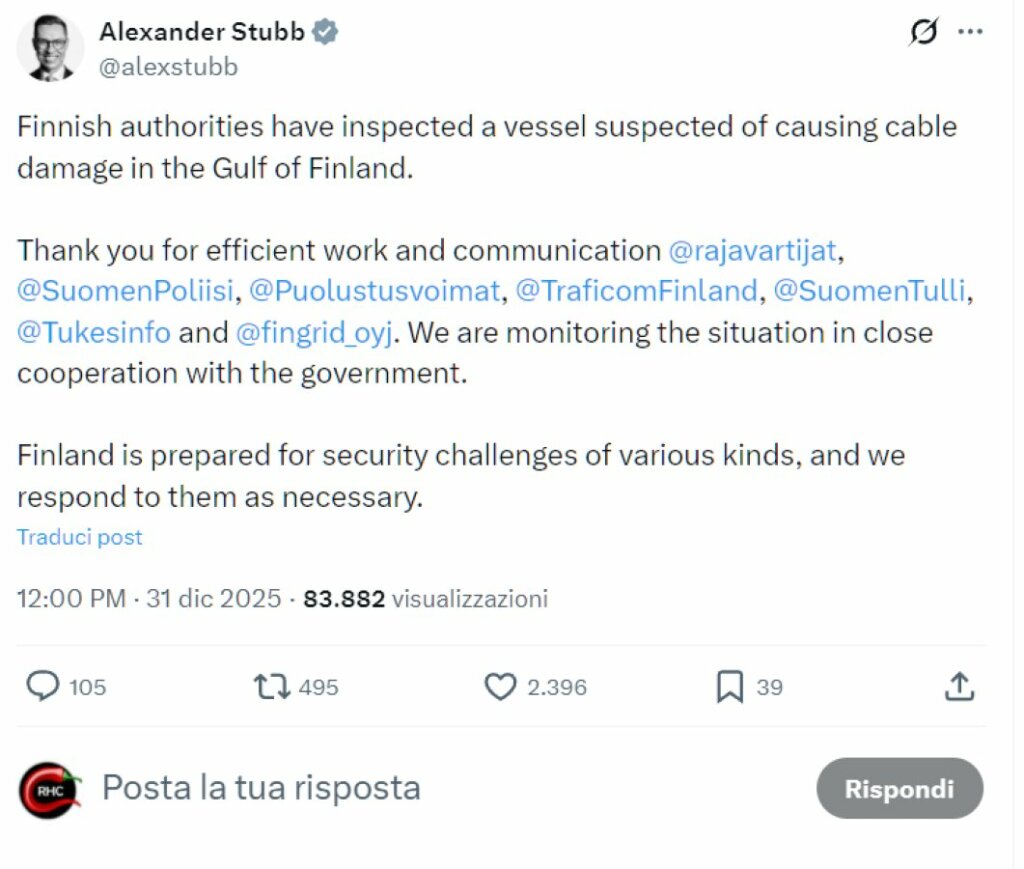
Finnish President Alexander Stubb commented on the operation in a message published on X, stressing that the country is ready to face security threats of various kinds and to act when circumstances require it.
The incident has raised the alert level in the region, already sensitive to the safety of underwater infrastructure. Finnish police have launched an investigation, alleging aggravated criminal damage, attempted aggravated criminal damage, and aggravated interference with telecommunications systems.
According to information available on MarineTraffic, the Fitburg, which flies the flag of Saint Vincent and the Grenadines, set sail from St. Petersburg, Russia, bound for Haifa, Israel. The vessel had 14 crew members on board, who were arrested as part of the operation.
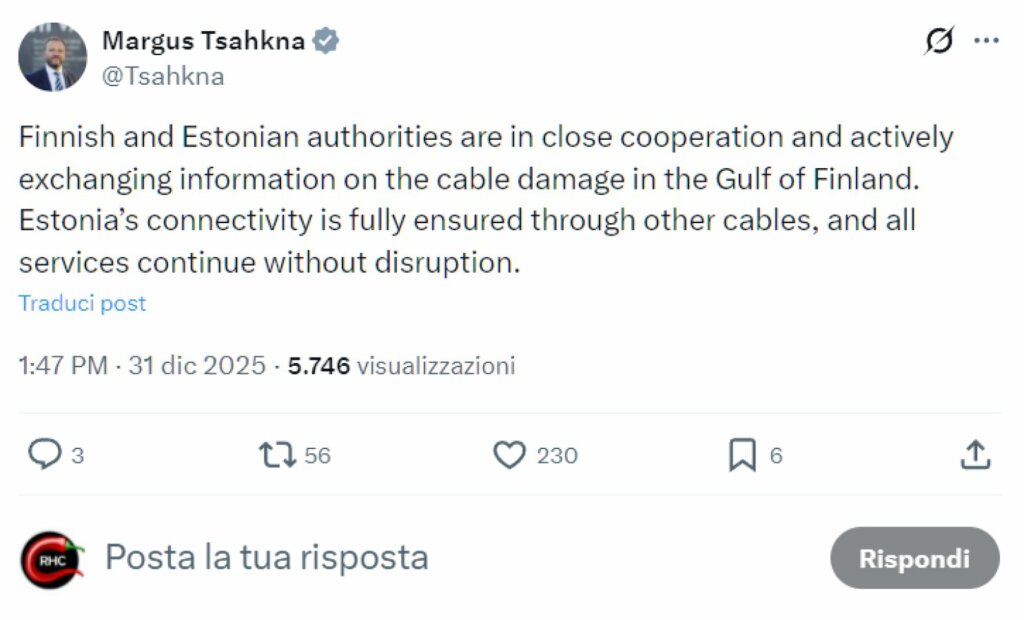
On the diplomatic level, Estonian Foreign Minister Margus Tsahkna confirmed that Finnish and Estonian authorities are working closely together, maintaining a constant flow of information on the progress of the investigation.
In recent years, particularly since Russia’s large-scale invasion of Ukraine, numerous incidents have occurred involving power cables, telecommunications networks, and gas pipelines in Northern Europe, the Baltics , and other regions of the continent. Several analysts and political representatives believe these events may be part of a “hybrid warfare” strategy attributed to Moscow.
In response to the growing number of incidents, NATO announced earlier this year that it would step up patrols in the Baltic Sea , aiming to protect the region’s critical infrastructure.
Follow us on Google News to receive daily updates on cybersecurity. Contact us if you would like to report news, insights or content for publication.