




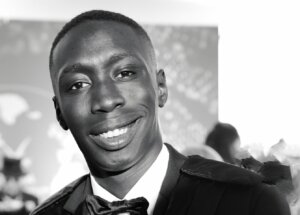
Khaby Lame, the world’s most followed Italian creator and now a global social media icon, has taken a step that could mark a turning point in the history of the digital economy. According to several international sources, the TikToker has sold a key portion of the commercial rights to his identity and personal brand in a transaction valued at approximately $900–975 million.
The agreement, signed with the American company Rich Sparkle Holdings , concerns stakes in Step Distinctive Limited, the company that manages the commercial activities associated with the Khaby Lame brand. For three years, the acquiring company will hold exclusive global commercial rights to partnerships, licensing, e-commerce, and other initiatives related to the creator’s image.
The total value of the deal is estimated between $900 and $975 million, making it one of the largest ever in the history of the so-called “creator economy.” For an influencer— even an extremely popular one —this sum represents not only an extraordinary gain, but a radical transformation in the way digital fame is monetized on an industrial scale.
But this is precisely where the most disturbing crux of the entire affair arises: it’s not just a matter of selling company shares, but of transferring the rights tied to the very identity of a public figure.
Under the terms of the agreement, in addition to commercial management of the brand, Khaby Lame has authorized the use of his biometric data – such as Face ID and Voice ID – and behavioral models for the development of artificial intelligence-based technologies , including a “digital twin” capable of replicating his face, voice and expressions in digital content.
This prospect— effectively the possibility of digitally replicating a now-famous human being— raises ethical and legal questions that go far beyond the individual commercial contract.
A new frontier is opening up where a recognizable face can continue to produce content, deals, and even sales without the physical presence of the real person and as that specific person ages.
For the first time in recent digital history, a global influencer isn’t just selling products, advertising, or content: he’s granted, albeit through a holding company, the ability to leverage his identity as a continuous, AI-replicable commercial asset.
It’s no surprise, then, that analysts and commentators are calling the event a watershed moment in the creator economy: we’re no longer talking about one-off advertising campaigns or individual sponsors, but a brand-new industrial model for leveraging digital identity, with the potential to generate over $4 billion in sales annually.
The idea that a digital avatar of Khaby Lame could continue to operate, negotiate, and produce content 24/7, without time constraints , language zones, or physical presence, generates mixed feelings. On the one hand, it represents a huge opportunity for economic expansion . On the other, it’s disturbing to think of a human face transformed into a replicable product, with unknown implications for privacy, authenticity, and the public perception of what an “influencer” is.
The transaction isn’t just a simple change in company shares: it consolidates a paradigm shift in the management of public figures and digital creators. The deal demonstrates how platforms and commercial companies are shifting from paying for visibility to owning and leveraging digital identities as structural business assets.
If a creator like Khaby can sell these kinds of rights for billions today, what’s to stop tech and media companies from acquiring “digital identities” tomorrow to create content, advertisements, live broadcasts, and commercial activities with AI copies of real people?
This, more than anything else, is what makes the agreement not only important, but potentially disturbing for the future of digital communications.
This operation clearly shows that creator businesses are maturing toward increasingly sophisticated, financialized models integrated into the global economic system. But, at the same time, it exposes an uncomfortable truth: we are not ready .
It’s not people, it’s not institutions, and above all it’s not the law . We’re facing a point where human beings, their image, their voice, and even their behaviors become negotiable, replicable, and potentially eternal assets, while the rules remain anchored to a world that no longer exists.
The Khaby Lame case is disturbing not only because of its size or its media coverage, but because it anticipates a scenario in which personal identity becomes a commercial infrastructure , separable from the individual who generated it.
A face can continue to “live,” speak, promote, and influence even when the real person is not present, makes no decisions, or one day will no longer exist. It’s a step that breaks a profound cultural taboo: the idea that identity is inseparable from being human.
We are therefore facing a real divide. On one side, the past of social media, made up of people using platforms. On the other, a future in which platforms and holding companies own digital people , or rather, what is economically useful about them. In between, a huge regulatory vacuum, where consent, limits, reversibility, and responsibility are still vague concepts, if not entirely absent.
Perhaps the real problem is not that all this is possible, but that it is happening before we have asked ourselves the right questions .
Who controls a digital identity when it is transferred?
Can it be revoked?
Can it be changed?
And what happens if the avatar says or does something that the human would never do?
The law, as often happens, will arrive. But it could arrive when the model is already consolidated, normalized, and irreversible. And then it will no longer be a matter of regulating an exception, but of chasing a system already out of control.
And this is perhaps the most disturbing aspect: we are not witnessing an abuse , but a precedent. And precedents, in the history of technology, rarely remain isolated.
Follow us on Google News to receive daily updates on cybersecurity. Contact us if you would like to report news, insights or content for publication.