




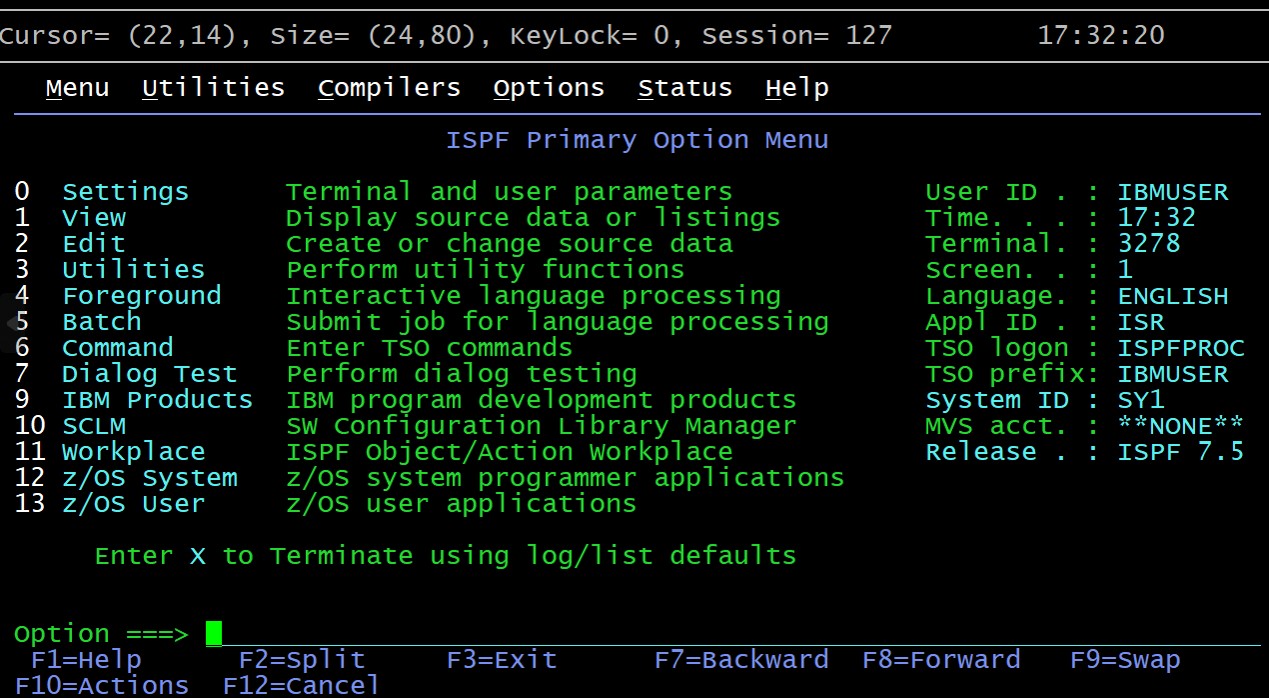
While the industry debates which neural network is the “smartest” and which framework is the “most modern,” decades-old technologies continue to quietly swirl beneath the surface of the banking industry .
This year, COBOL turned 66 and continues to support mission-critical tasks: invoice processing, ATM network management, credit card clearing, and overnight batch settlement . Wherever COBOL lives, mainframes typically also are: in banks, insurance companies, government systems, and large accounting and inventory systems.
This led to a simple question: What technologies will likely work 50 years from now, even if everything around us changes several times over? It’s important to consider that COBOL has changed over time: the current COBOL 2023 standard bears little resemblance to the early versions of the language that Grace Hopper helped create, and modern mainframes have come a long way from the early IBM 701 and IBM/360 systems. But continuity remains; it’s the implementations that change, not the development path itself.
Among programming languages, C, which is more than half a century old, is a promising candidate for longevity . While it has its security issues, it remains extremely capable in terms of speed and versatility: C can be used on virtually any architecture and for any low-level task.
While there is talk of Rust gradually replacing C in system programming , it is worth remembering that Rust has already arrived on Linux, but C’s main strengths – speed and portability – have not disappeared.
Another “indestructible” pillar is SQL. It’s integrated into all major relational database management systems, accumulating enormous amounts of business logic, stored procedures, and queries, making it virtually impossible to replace them all at once. JavaScript and TypeScript are a similar story: they’re often criticized and derided, but the web platform is built on compatibility, meaning the browser language will remain relevant as long as the web itself survives.
A separate layer of enduring technologies is associated not with languages, but with ecosystems. Linux will still be around in 2100, and Git will remain the basic development tool for a long time to come. Surprisingly, alongside them are the “eternal” editors vi and Emacs, as well as Bash, which has surpassed many competitors and, by inertia, continues to be the standard tool in many scenarios.
Among the newer, yet already established, infrastructure solutions, Kubernetes is worth highlighting. It has received its fair share of criticism, but today it is the de facto standard for cloud container orchestration and the foundation of the “cloud-native” approach, so market inertia is on its side. In the application world, Photoshop has a good chance of staying relevant: even with alternatives, the ecosystem and professional habits often prevail over ideological arguments.
The most painful part of the debate concerns file formats . Once a format becomes an industry standard, it persists for years and decades, even if a more open and practical replacement exists. Examples include DOC and DOCX , which have supplanted more open approaches, and PDF , prized for its consistent “everywhere, anytime” document appearance, but which in practice faces a multitude of variations and incompatibilities. A telling example comes from the music industry: after a popular proprietary notation standard was effectively abandoned, users found that migrating their accumulated work to other solutions was extremely difficult, and sometimes impossible, without loss.
The bottom line is simple: open standards and open source software are more likely to survive for decades, while technologies tied to a single company are inherently fragile, even if they seem “too big to fail” today.
Follow us on Google News to receive daily updates on cybersecurity. Contact us if you would like to report news, insights or content for publication.