

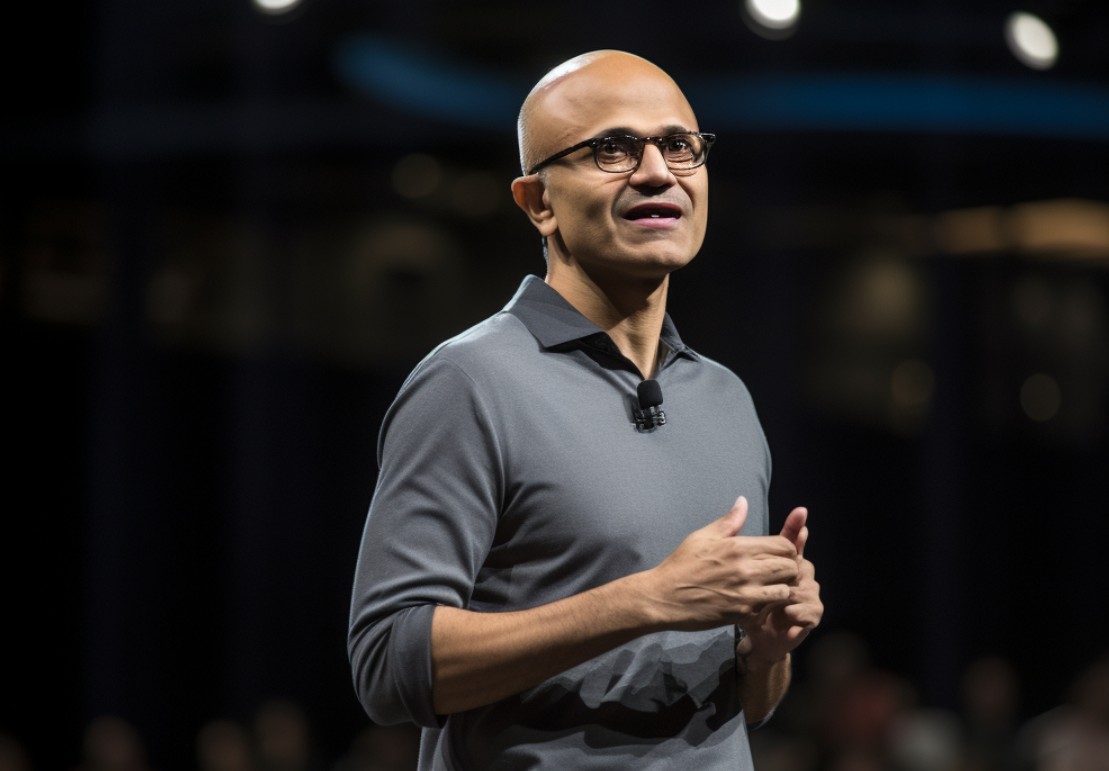
With 2026 just around the corner, Microsoft CEO Satya Nadella shared a thoughtful reflection on the state of the AI industry on SN Scratchpad , his new personal blog.
In his contribution, Nadella calls on the tech sector to overcome a contradiction he considers limiting: that between AI seen as a simple factory of low-quality content and AI conceived exclusively as a tool for high-level experiences.
According to Microsoft’s CEO , 2026 will represent a pivotal moment in the evolution of artificial intelligence. It’s not just another stage of growth , but a shift in approach: the focus will progressively shift from a model-centric paradigm to a systems-based one, with the aim of accelerating the adoption and concrete impact of the technology in the real world.
Looking back at the past year and the one ahead, Nadella emphasizes how the sector is leaving the initial exploratory phase behind . AI is entering a phase of widespread deployment, where it’s becoming possible to more clearly distinguish between solutions built to generate attention and those capable of producing tangible value. At the same time, the question of how to address its impact on society is becoming increasingly pressing.
The Microsoft executive recalls that the journey of artificial intelligence is still in its early stages.
Many aspects remain unpredictable , especially in a context characterized by a high abundance of models, whose capabilities often exceed our current ability to translate them into concrete benefits. In this scenario, some fundamental questions remain open and require rethinking.
One of the priorities concerns the way AI is conceived: not as a replacement for human intelligence, but as a support structure capable of amplifying its potential.
Nadella recalls the concept of “bicycles for the mind,” emphasizing that the value lies not so much in the power of individual models, but in the ways in which people choose to use them to achieve their goals.
Another crucial point concerns the operational transition from models to systems . The industry, Nadella explains, has now acquired solid experience in increasing the capabilities of models, while recognizing their limitations. The current phase requires building more complex architectures capable of orchestrating multiple models and agents, managing memory, enforcing rights, and enabling secure and advanced use of tools.
Alongside the technological aspects, an equally important socio-technical dimension emerges. The diffusion of AI must occur through conscious choices about where and how to employ limited resources, such as energy, computing power, and specialized skills.
To achieve lasting consensus, artificial intelligence will need to demonstrate a tangible impact on the quality of decisions and the ability to address the challenges facing people and the planet.
In conclusion, Nadella identifies the results achieved by individuals and organizations as the true indicator of progress.
As with previous waves of computing, AI will also need to demonstrate its ability to help people do more and better. If this goal is achieved, artificial intelligence could become one of the most profound technological transformations, starting in 2026 and beyond.
The hope is that, as the innovation cycle continues to accelerate, someone will finally start looking at the brakes. Because not everything that is technically possible is automatically necessary, let alone desired. Control, choice, and awareness remain key elements, especially as artificial intelligence silently enters everyday tools and “replaces people.”
Follow us on Google News to receive daily updates on cybersecurity. Contact us if you would like to report news, insights or content for publication.