

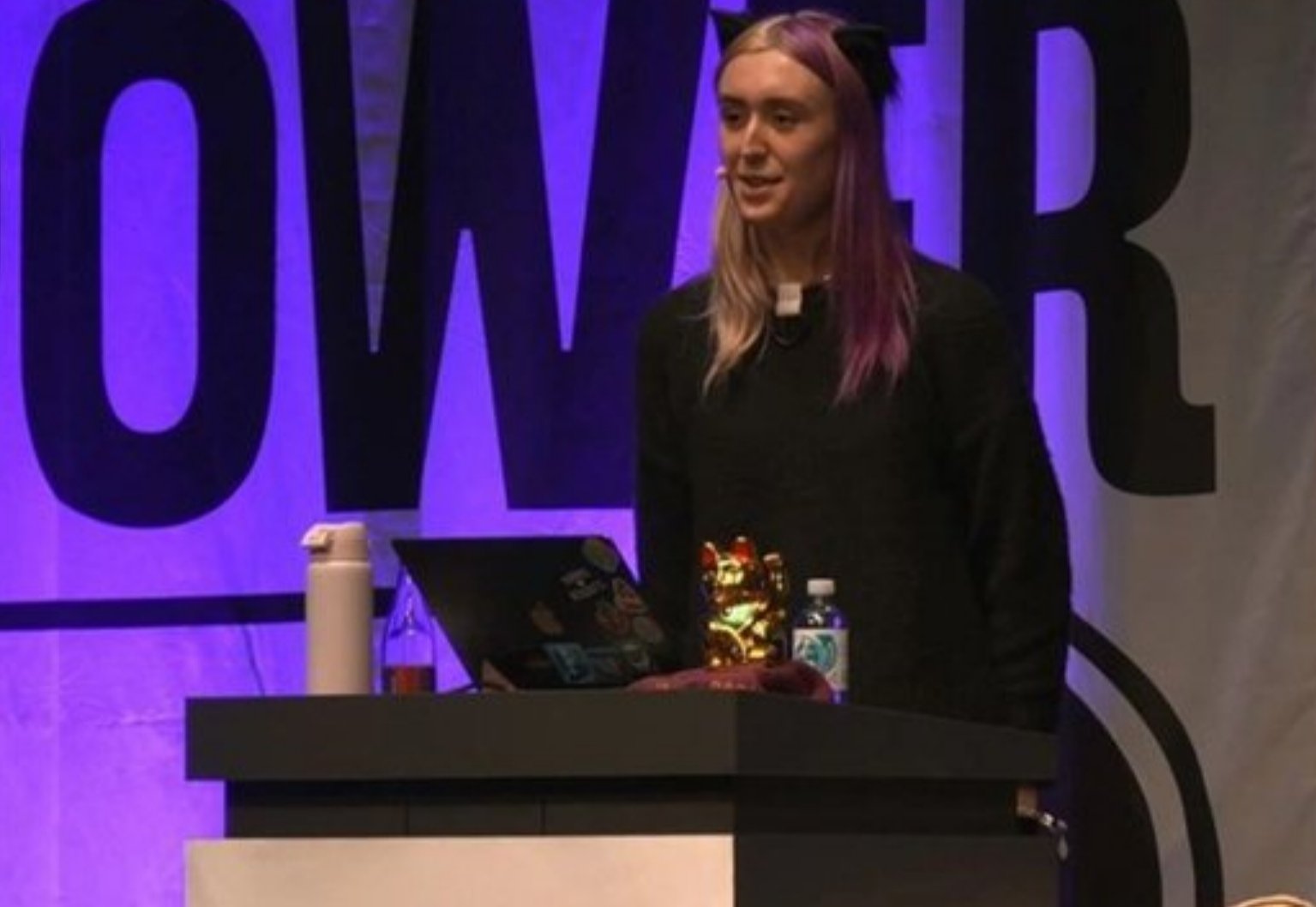
At the 39th annual Chaos Communications Conference (39C3) , security researcher Amber Katze, 22, announced that she has completely analyzed and cracked the secure boot mechanism of the NVIDIA Tegra X2 chip.
Amber Katze is a security researcher with a passion for hacking embedded devices. She previously worked on hacking the Nintendo Switch and even gave a talk on the topic at GPN21.
This discovery indicates that millions of devices equipped with this chip, ranging from MRI glasses to electric vehicle systems, could be vulnerable, provided an attacker has physical access to the device’s USB port.
Amber Katze explained that the main motivation for her work was Magic Leap’s decommissioning of the Magic Leap One launch server in 2024. This outage had rendered the mixed reality glasses virtually unusable , turning them into veritable ” e-waste.” Her goal was therefore to restore the functionality of these devices.
The Magic Leap One uses the NVIDIA Tegra X2 chip, which uses the Fastboot protocol during startup. The open-source version of the code is provided by NVIDIA. After thorough analysis, Katze identified two critical vulnerabilities, dubbed “sparsehax” and “dtbhax.”
By exploiting these vulnerabilities, the researcher was able to execute unsigned code on the Magic Leap One, bypassing the device’s first layer of protection. She then caused the Tegra X2 to malfunction during boot, injecting errors and successfully exporting the BootROM firmware via a side channel.
Analysis of BootROM revealed a serious vulnerability in USB recovery mode. Because BootROM is code stored directly on the chip’s silicon, NVIDIA cannot fix this flaw through software updates.
According to Katze, this flaw could bypass the secure boot chain on all Tegra X2-based devices with access to a USB interface, including sensitive systems like Tesla’s Autopilot. The attack requires physical contact with the device and a complex exploit chain to execute code with elevated privileges.
It should be noted, however, that the Tegra X2 was launched in 2016 and is no longer in production. The most critical vulnerabilities have been fixed in subsequent versions, limiting the impact on current devices.
Follow us on Google News to receive daily updates on cybersecurity. Contact us if you would like to report news, insights or content for publication.