

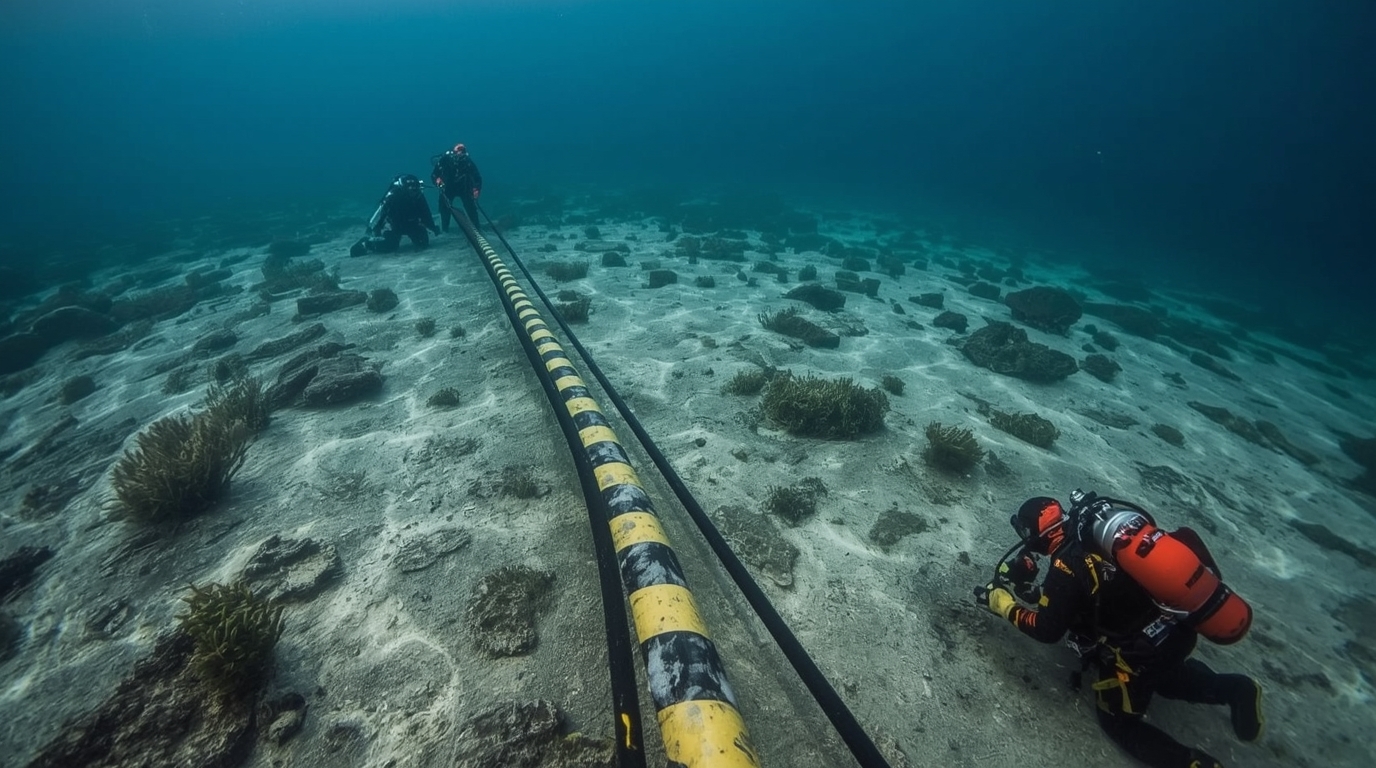
In recent years, Taiwan’s underwater infrastructure—electricity cables, gas pipelines, and water systems—has been damaged on several occasions, particularly communications cables. On December 9, the Legislative Yuan passed a third reading of a series of amendments to the Electricity Law , the Natural Gas Activities Law , and the Water Supply Law , part of a legislative package known as the “Seven Undersea Cable Laws.”
The new rules establish harsher penalties for those who intentionally tamper with such infrastructure: imprisonment of up to seven years, with a maximum fine of NT$10 million. The new rules also provide for the confiscation of any vessels or equipment used to commit the crime, regardless of their owner.
The issue is particularly sensitive because, according to Taiwanese authorities, several ships from China have damaged submarine cables in recent incidents. Similar concerns have been expressed by the US-China Commission for Economic and Security Review, which characterized Taiwan’s submarine network as highly vulnerable. A coordinated disruption of all cables, according to the Commission, would cause economic losses estimated at NT$1.73 billion per day.
The amendments approved on December 9 update Article 71-1 of the Electricity Law, Article 55-1 of the Natural Gas Activities Law, and Article 97-1 of the Water Supply Law. The new provisions introduce penalties of one to seven years for anyone who damages or endangers facilities related to the storage or distribution of natural gas, or the pipelines and cables used for water services. In cases of negligent damage, the penalty is up to six months in prison or a fine of up to NT$2 million.
A significant change concerns evidence management and the prevention of recidivism: any instrument used in the crime—including boats and machinery—must be seized and disposed of.
During the same plenary session, a resolution was also introduced to make public, through the Ministry of the Interior, maps of underwater pipelines and cables, thus preventing potential suspects from claiming they were unaware of their locations. The dissemination of information, according to the legislator, should facilitate both the public and the work of law enforcement and prosecutors.
Meanwhile, the Legislative Yuan’s Transportation Committee has already completed its preliminary review of the remaining four laws in the package: the Telecommunications Management Law , the Meteorological Law , the Commercial Ports Law , and the Shipping Law . The draft versions introduce, among other measures, immediate confiscation for those who endanger underwater equipment, fines of up to NT$2 million for damage to meteorological facilities, and penalties of up to NT$10 million for violations of vessel identification regulations.
Legislator Wang Ting-yu explained that the entire regulatory package will protect not only telecommunications cables but also water, oil, gas, and chemical infrastructure, thus ensuring comprehensive protection. He emphasized that the new rules will provide a stronger legal basis for Taiwanese authorities to intervene, both at sea and on land.
Wang, however, acknowledged some operational challenges: identifying any vessels involved, especially those registered under flags of convenience, remains complex. According to the regulator, many of these vessels are registered in third countries, while the actual inspectors are Chinese citizens or residents of Hong Kong and Macau.
To strengthen investigative activity, he stated, it will be necessary to strengthen the Coast Guard’s aerial reconnaissance, accelerate the identification of damaged areas, and increase tracking capacity. Only with timely identification will it be possible to effectively enforce the new sanctions.
Wang Ting-yu also emphasized the importance of international cooperation. Many ships suspected of sabotage, he explained, tend to quickly head for foreign ports after the operation. Collaboration with other states would therefore be essential to bring to justice those who intentionally damage Taiwan’s underwater infrastructure and to clarify whether state actors are behind such operations.
Follow us on Google News to receive daily updates on cybersecurity. Contact us if you would like to report news, insights or content for publication.