




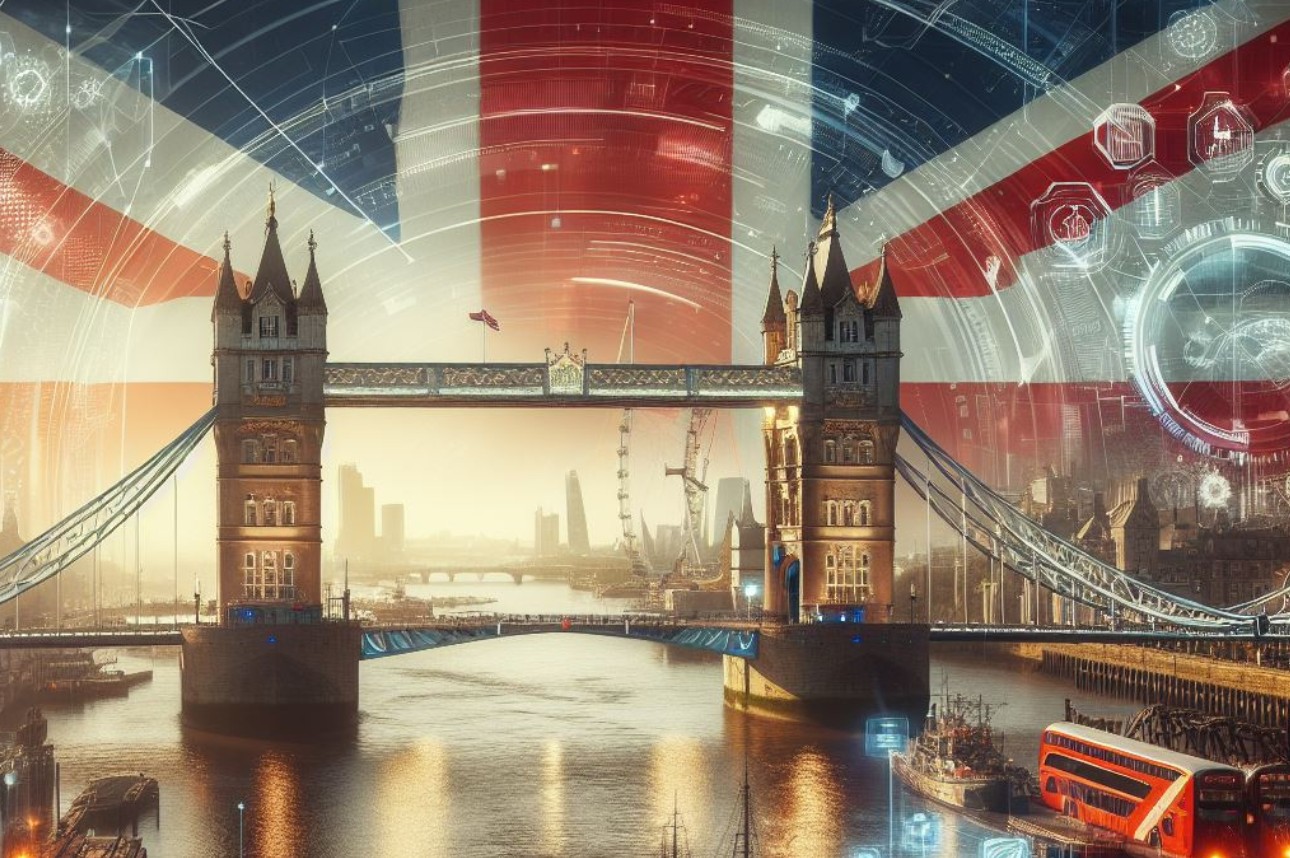
Five days in London, and I felt like I was living inside a permanent demo of the future. The sleek, convenient, frictionless one. The one where you do everything with a tap. Except that, by tapping and tapping, you eventually realize you’re not just paying: you’re signing, every minute, a detailed diary of your life.
I booked the trip on Ryanair. The hotel on Booking.com. Then you get there and immediately understand the situation: transportation, museums, getting around, even choosing a pub for the evening… everything happens on your phone. The metro encourages you to use your card: contactless and off you go, “one per person,” and it costs you less than getting romantic with a ticket bought on the fly.
You manage buses with apps and digital payments. Bikes and scooters? Apps. Museum reservations? Website or app. You’re looking for a nice spot for a pint and, as always, Google Maps takes you by the hand: “Turn here, cross there, you’re there.”
Comfortable? Crazy.
And here’s the trap: convenience is the perfect bait, because you don’t perceive it as a sacrifice. You experience it as an upgrade.
Then you get home, mentally recap your vacation, and yet another confirmation hits you: the internet knows exactly where I’ve been, minute by minute. It knows what I’ve bought, when, where, how often. It knows my movements, my habits, my schedule. And I’m not talking about the classic ” profiling ” of annoying advertising. This goes beyond that: it’s the real possibility of reconstructing your life like a movie, with timestamps and geolocation.
At that point, the word ” privacy ” stops being an abstract concept, a conference topic, something from “account settings.” It becomes a physical sensation: that of being readable. Traceable. Predictable.
And the question becomes inevitable: when everything goes digital, how much freedom is truly left? Because freedom isn’t just “I can do things easily.” That’s practicality. Freedom, in the profound sense, is also being able to be opaque whenever you want. Being able to make a choice without leaving a trail. Being able to exist without having to produce data.
This is where the issue of cash comes in, always thrown into the mix with the tax evasion story. I’ll put it simply: it has nothing to do with it. If I pay for a coffee in cash, no one knows I drank it, at what time, in what area, how often, and maybe even what flavors (macchiato, cappuccino, barley… whatever). The barista can give me a receipt, and the tax situation can be perfectly fine: the point isn’t to “hide” something, the point is not to transform every daily gesture into permanent data .
If I pay electronically, that single action becomes structured information: amount, location, time, anniversary. And it’s not just “the bank” that sees it. An entire ecosystem sees it, made up of intermediaries, circuits, anti-fraud systems, providers, analytics, correlations, consents “accepted” with a hasty tap while you’re in line. The narrative is: “We’re making your life easier.” The reality is often: “We’re making your life measurable.”
The subtlest (and most dangerous) part is that this control isn’t necessarily for cinematic “spying.” It’s for normalizing the idea that everything should be observable. That everything should leave a trace. That opacity is suspect, anonymity a flaw, confidentiality a conspiracy theorist quirk.
And mind you: I’m not saying “let’s go back to candles.” I’m the first to use digital services, I book online, I travel with maps and smart payments. The point isn’t to demonize technology. The point is to recognize the price . Because if you don’t see the price, you pay twice: once in data, once in power transferred.
The future, if you don’t govern it, always tends to choose the path most convenient for those who gather information, not those who produce it. And we continually produce it, even when we think we’re simply living.
The real question, then, isn’t “privacy or no privacy.” It’s: do we want a world where the only way to function is to be tracked? Do we want participation in everyday life to be based on tools that, by design, record and correlate everything? Because at that point, freedom doesn’t disappear with a decree: it fades out of habit. One tap at a time.
If we want to remain masters of the game, we must start demanding sensible alternatives again: digital payments, yes, but without turning everything into profiling; efficient services, yes, but with data minimization; convenience, yes, but without the “this or nothing” blackmail. And, every now and then, even a simple and almost subversive gesture: choosing to be less readable. Not because we have something to hide, but because we still have something to defend. Our autonomy.
Follow us on Google News to receive daily updates on cybersecurity. Contact us if you would like to report news, insights or content for publication.