





Cloudflare has announced that it independently managed an unprecedented Distributed Denial-of-Service (DDoS) attack, the largest ever seen.
The hypervolumetric attack reached an unprecedented peak of 22.2 terabits per second (Tbps) and 10.6 billion packets per second (Bpps ), setting an alarming new benchmark for the scale of cyber threats.
This attack signals a significant escalation in the capabilities of malicious actors and the botnets they control . The previous record was an 11.5 terabit per second UDP flood attack. This attack lasted 35 seconds.
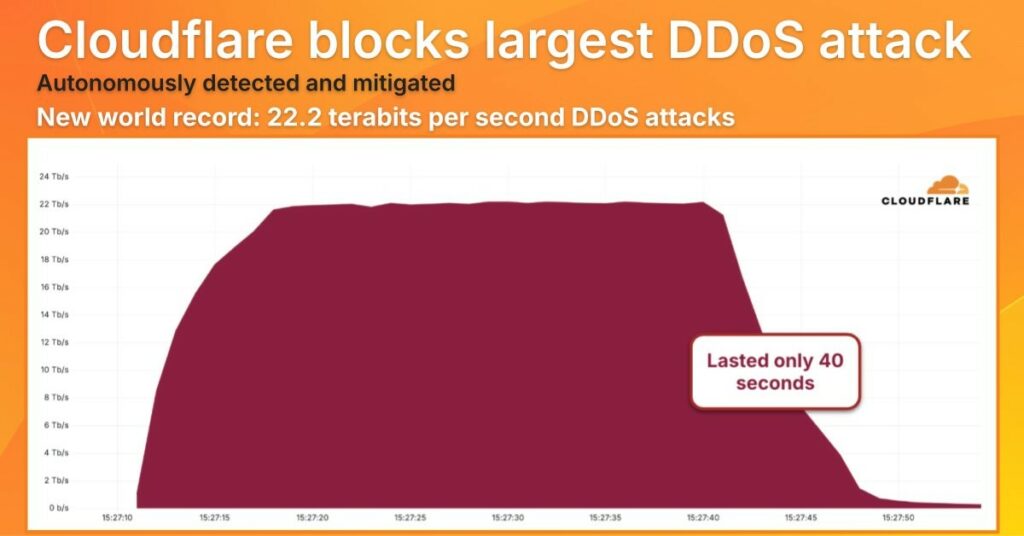
The record-breaking attack was notable not only for its size but also for its brevity. The entire event lasted only about 40 seconds, a tactic designed to overwhelm the defense before it had a chance to fully respond.
A 22.2 Tbps DDoS attack sets a new world record. Attackers are increasingly using these DDoS attacks to cause maximum damage in a minimum amount of time, making automated, real-time detection and mitigation absolutely essential.
Such hypervolumetric attacks are typically launched by massive botnets, networks of compromised computers, and IoT devices, which are exploited to flood a target’s servers with massive amounts of traffic, making its services unavailable to legitimate users.
Cloudflare claims its systems autonomously identified and stopped the attack, eliminating the need for manual intervention. This effective defense strategy underscores the importance of a fundamental shift in cybersecurity: the adoption of automated systems that leverage artificial intelligence to respond to threats that evolve at the same speed as computers.
Thanks to its vast capacity, Cloudflare’s global network was able to absorb and neutralize malicious traffic at the edges, close to the source. This prevented the attack from reaching and overwhelming its intended target, ensuring its online services remained available and functional during the brief but intense assault.
Follow us on Google News to receive daily updates on cybersecurity. Contact us if you would like to report news, insights or content for publication.