

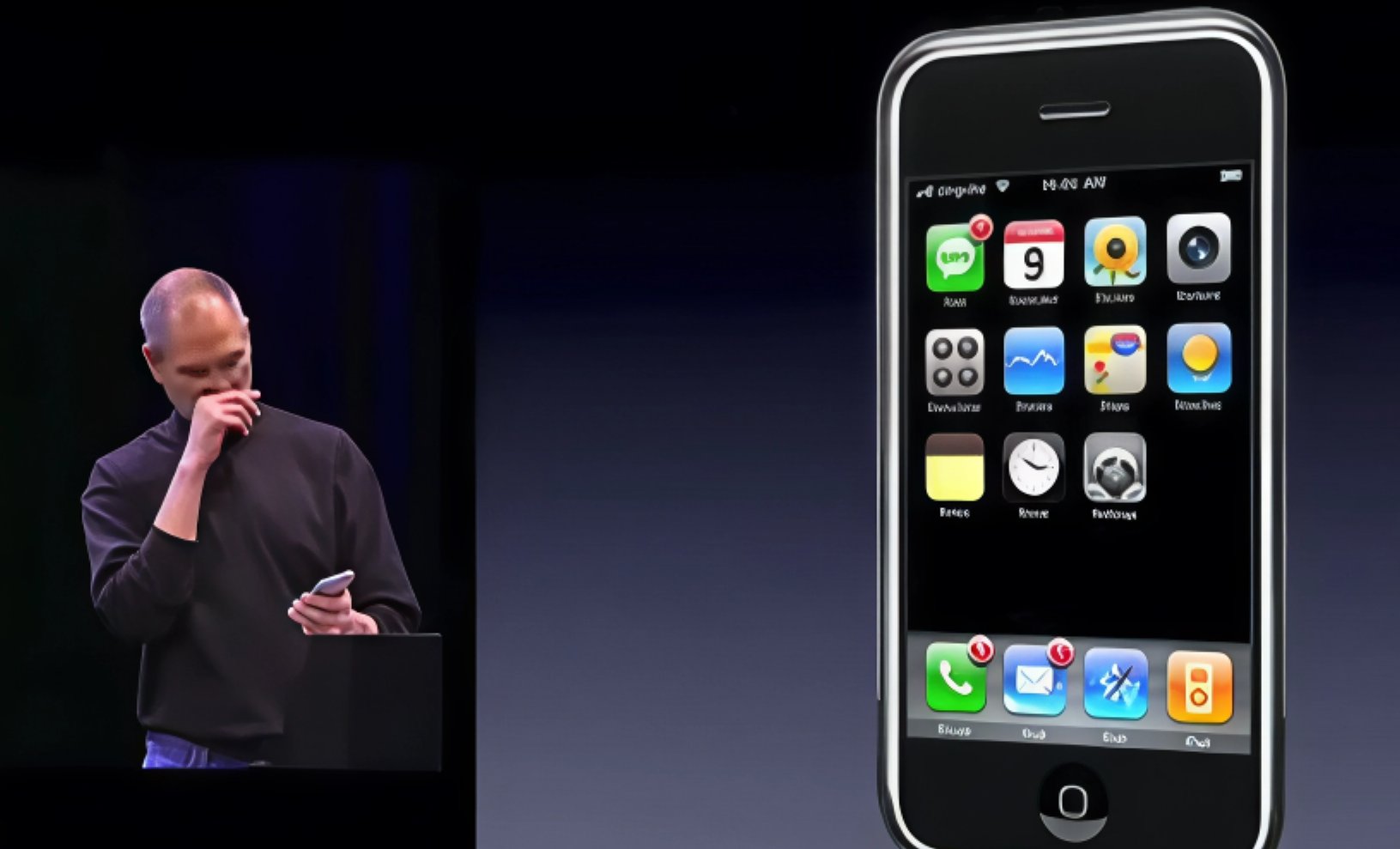
San Francisco: January 9, 2007
There was something strange about the air, like when you know something’s about to happen but you don’t know what. Steve Jobs was on stage at the Macworld Conference & Expo , wearing jeans, a black turtleneck, and a slow pace. He wasn’t in a hurry. He almost seemed to be stalling, or maybe he was just looking at the audience carefully, one by one, before striking them.
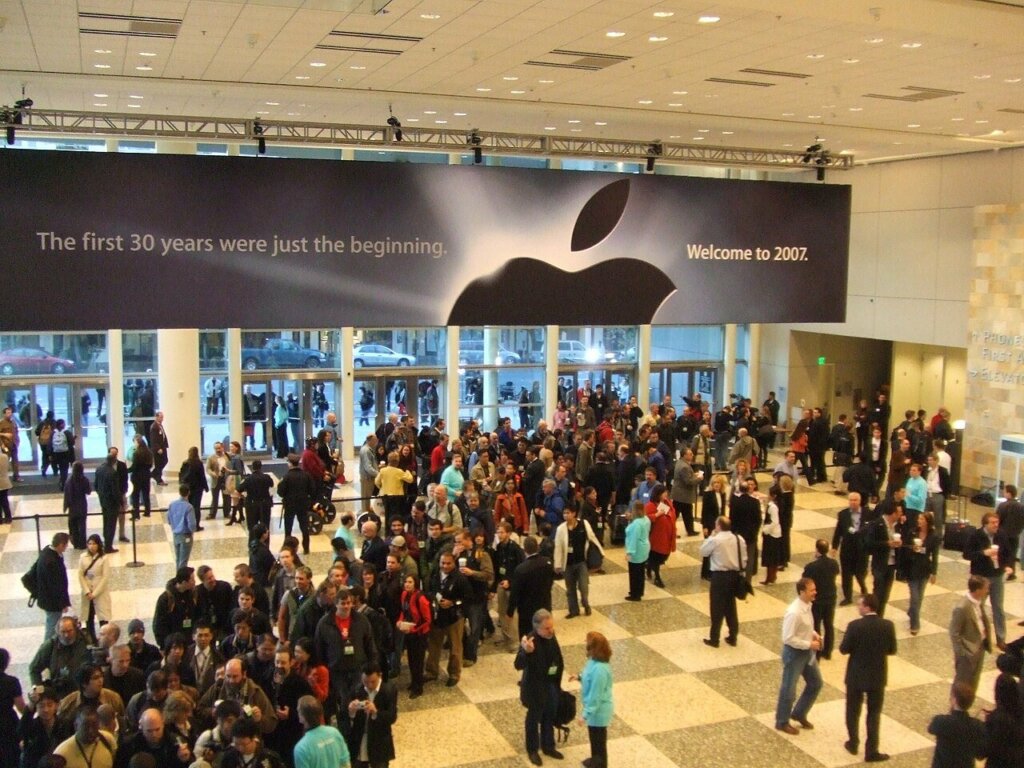
The audience didn’t yet have the tools to understand it, but it was one of those moments that would later be called historic. Not immediately. At first, it seemed like any other presentation. Jobs spoke, people listened, took mental notes. No one, at least initially, was thinking about a before and after.
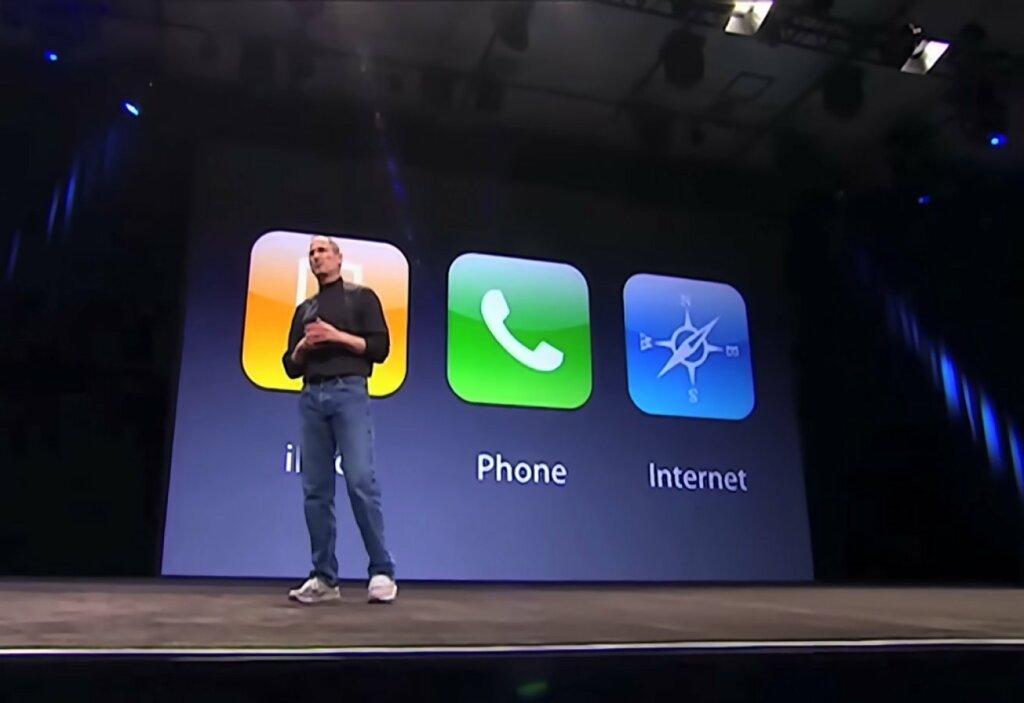
Jobs began by listing three products. A widescreen iPod with touch controls. A revolutionary cell phone. A device for communicating over the Internet. Each time, applause broke out. Polite, enthusiastic. The audience believed they had figured out the game, and indeed, they thought they were ahead of the game.
Then came that sentence, spoken without emphasis and therefore more weighty: “These are not three separate devices. This is one device.” Not three objects, just one. In that moment, without any special effects, the iPhone was born. Not with a roar, but with a sentence spoken almost offhandedly.
In 2007, phones were full of things to press. Physical keyboards, thin styluses, menus nested inside each other. Apple did the opposite. They removed everything. No buttons, no stylus . Just a screen. An idea that, put like that, sounded more like a gamble than a sensible project.
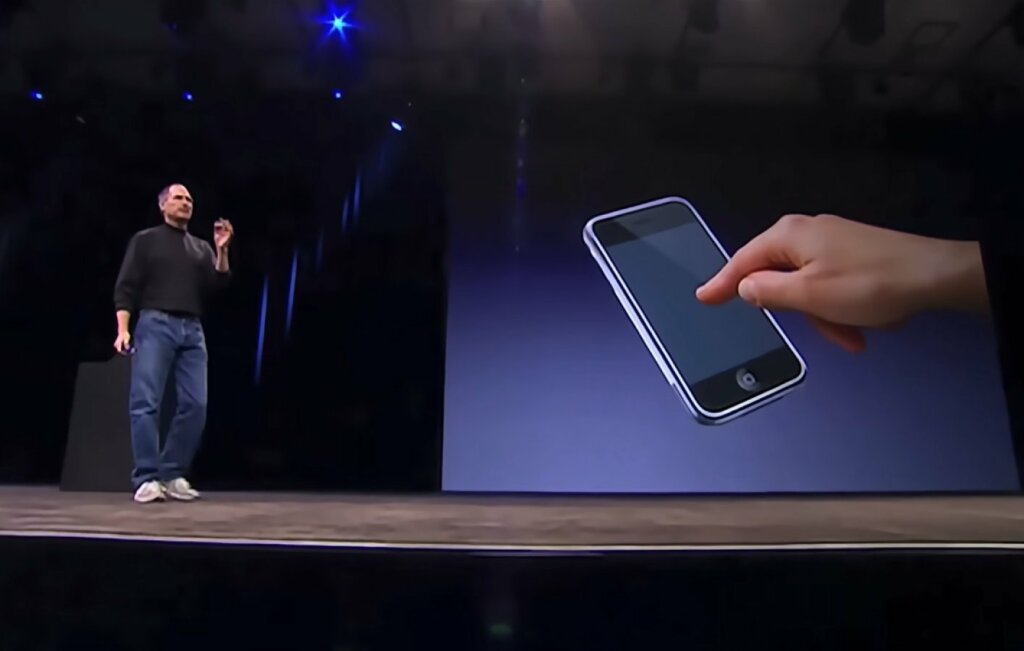
And yet, on stage, that glass rectangle responded to the fingers. Sliding, pinching, touching. Gestures that didn’t need much explanation, because they resembled those we’ve always used with real things. It was strange, a little disconcerting. But it worked.
The truly new part wasn’t just technical. It was a shift in mental posture . The iPhone didn’t ask the user to learn an artificial language. It didn’t impose rigid rules. It adapted . Or at least it tried, with animations, transitions, and sounds designed to accompany, not hinder.
Not everything was perfect, and perhaps it wasn’t even supposed to be. There was that rather clear idea that technology could stop making itself noticed . That it could take a step back, while humans did the rest. A kind of everyday magic, even if it sounds overly elegant when put that way , I admit.
When Jobs demonstrated Safari on a phone, the room changed. It wasn’t a scaled-down version, it wasn’t a compromise. It was the real web, right there on the screen. Zooming in on a page with two fingers felt like a magician’s trick, one of those that makes you look at the hands rather than the trick.
In reality, it was just the beginning of something simpler and more cumbersome at the same time: the Internet always in your pocket. Always on. Always personal. An idea that seems obvious today, but which back then still smacked of excess.
Behind that presentation were years of hidden work, prototypes that didn’t work, internal tensions. Pressure, a lot of pressure, and we know what Jobs was like . Apple was putting much more than a product on the table.
He was risking his reputation, his resources, his future . If it went badly, it would be a blow he would have to absorb.
Jobs knew it. And others probably knew it, too, even if no one said it out loud. Risk was part of the package. Not a footnote, but the very core. Those who don’t take risks don’t change things; those who don’t “hack” things don’t change anything. Or at least they don’t leave a mark.
The first iPhone hit stores on June 29, 2007. It wasn’t perfect, quite the opposite. It lacked things that today seem basic: no App Store, no copy-and-paste, a slow connection. On paper, there were plenty of reasons to turn up your nose.
But all it took was holding it in your hand. Turning it, touching it, using it for a few minutes. All other phones suddenly seemed old. Not outdated in age, but in concept. As if they belonged to an era that had just passed, quietly.
Looking back on that January 9, 2007, you don’t just see a product launch. You see the beginning of a new habit, a new way of being digital. A turning point that, at the time, not everyone had grasped.
It wasn’t the day Apple introduced a phone. It was the day the world began to touch the future with its fingers . And perhaps, without realizing it, it realized it would never stop.
Follow us on Google News to receive daily updates on cybersecurity. Contact us if you would like to report news, insights or content for publication.