

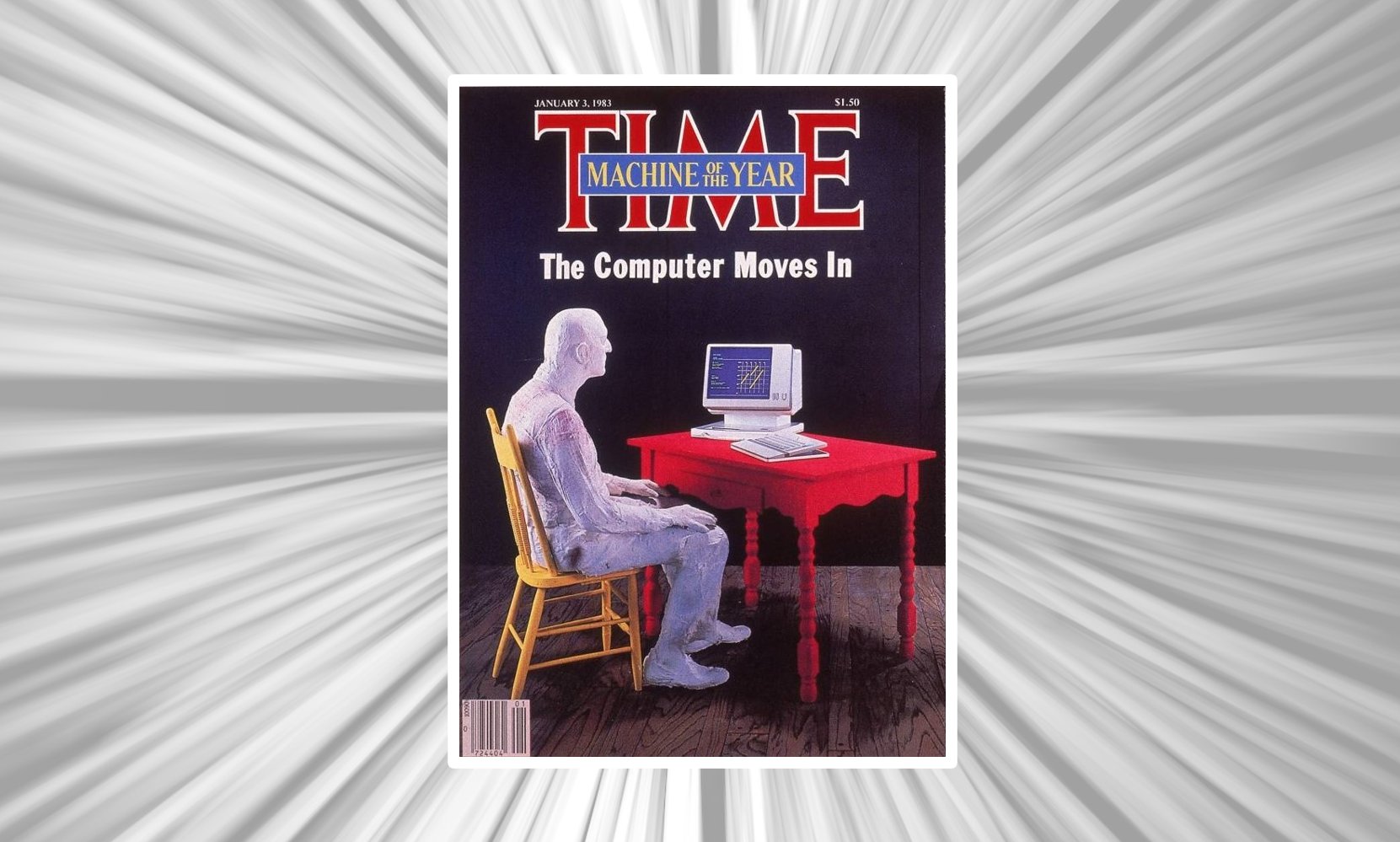
TIME magazine’s selection of a “Person of the Year” is a tradition dating back to 1927, when the award was given to Charles Lindbergh after his historic solo crossing of the Atlantic. Since then, the year-end cover has represented a sort of symbolic synthesis of the protagonists and forces that had shaped the previous twelve months.
By the end of 1982, however, TIME decided to break with this established pattern.
The January 3, 1983, issue, available on newsstands since December 26, featured a unique choice: not a person, but a machine. For the first time, the weekly also changed the name of the award, which became “Machine of the Year.”
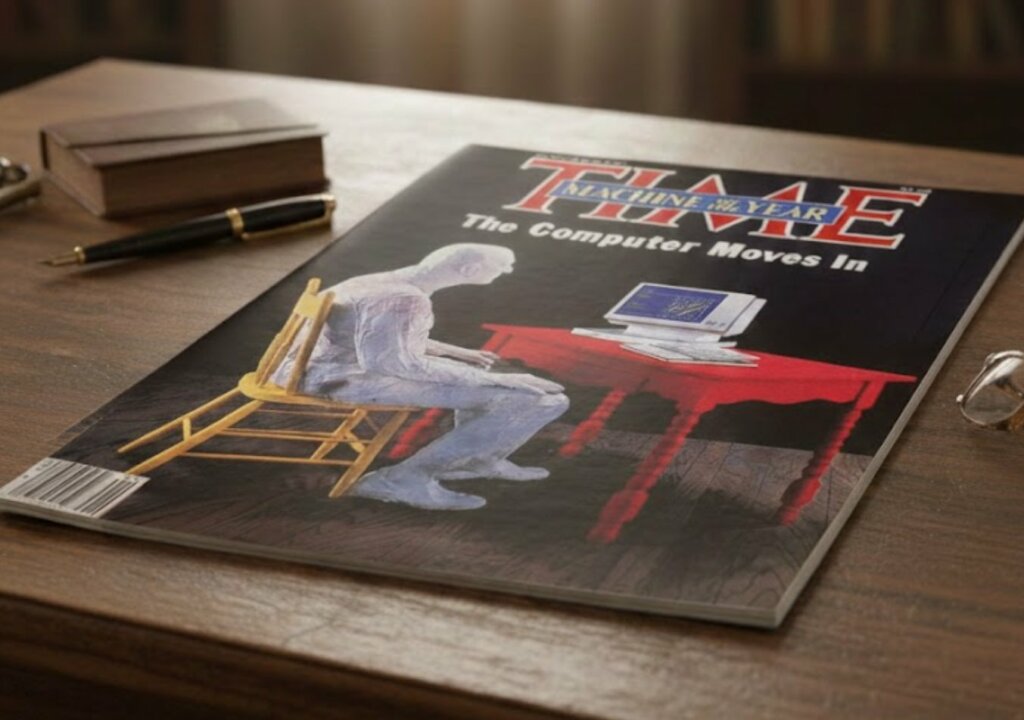
The winning subject was the personal computer, depicted on the cover through a symbolic image: a stick figure sitting at a red table in front of a PC . This representation was intended to convey the introduction of computers into everyday life, without attributing the change to a single human face.
The decision did not come at the beginning of the personal computer era, but at an already advanced stage in their diffusion . By the early 1980s, the market was growing rapidly: sales had gone from around 724,000 units in 1980 to 1.4 million in 1981, and nearly 3 million in 1982 , with the rate of expansion doubling every year.
In justifying its choice, TIME explained that in some historical moments the most significant force is not a person, but a process . The editors believed that the computer represented a structural change that would influence every other aspect of society , more than any human candidates of the time could have.
Among the names circulating on the eve of the decision were prominent political figures such as US President Ronald Reagan and British Prime Minister Margaret Thatcher. Only later did it emerge that, according to some reconstructions, Steve Jobs had also been mentioned as a possible cover star , a hypothesis that fueled controversy and speculation.
Apple cofounder Jobs expected to be chosen as “Person of the Year” and was deeply disappointed by the final decision. At the time, he had opened the company’s doors to journalist Michael Moritz , a TIME correspondent in San Francisco, believing that he was working on a cover story about him.
The reaction was exacerbated by the article’s content, which included references to his private life, particularly the issue of his denied paternity of Lisa, his daughter with Chrisann Brennan four years earlier. Jobs interpreted the portrayal as hostile, while Moritz himself was dissatisfied with the editorial changes, which accentuated personal elements.
Rereading that editorial choice today, it becomes clear that in the early 1980s it was not yet possible to fully understand the scope of the digital revolution underway.
The personal computer was seen as an emerging tool, not as the starting point of a change that would redefine work, communication, information, and society, opening a path that, from that cover, leads directly to the contemporary digital world.
Follow us on Google News to receive daily updates on cybersecurity. Contact us if you would like to report news, insights or content for publication.