

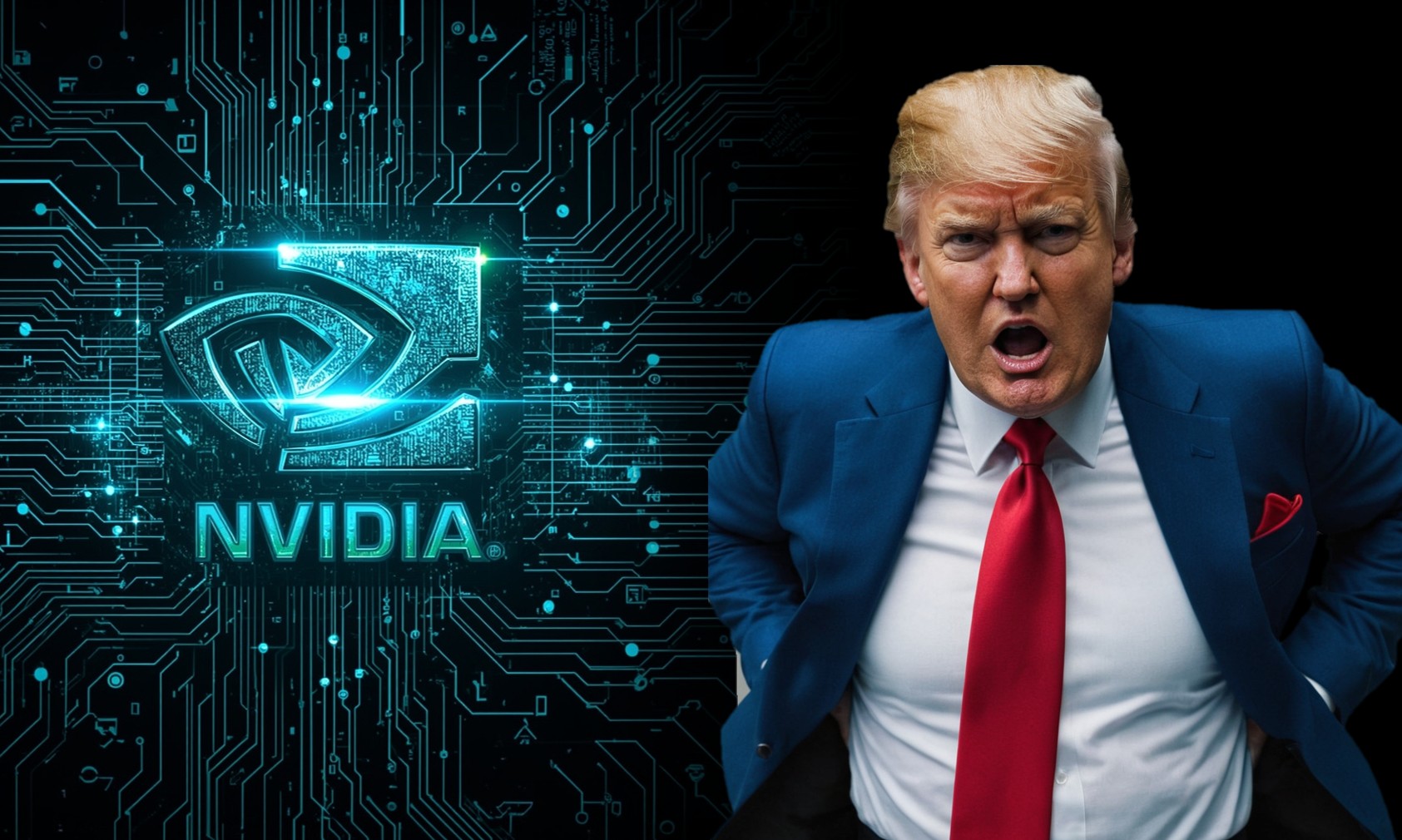
It seems the White House isn’t entirely clear … at least judging by yet another change of heart regarding the sale of Nvidia’s advanced chips to China, with the Trump administration having decided to once again authorize exports of the H200 to select customers after months of restrictions.
US President Donald Trump has authorized Nvidia to resume sales of its advanced H200 chip to select customers in China , following months of restrictions imposed amid tech tensions between Washington and Beijing. The announcement came on December 8 in a message posted by the president on social media , in which he reiterated his commitment to ensuring national security, supporting jobs in the United States, and maintaining the American artificial intelligence industry as a global leader.
The new provision doesn’t just affect Nvidia, but will also extend to other US semiconductor manufacturers, including AMD . The decision comes just days after Nvidia CEO Jensen Huang visited Washington, where he was engaged in intensive talks with the US administration.
In recent months, Nvidia has been at the center of strategic confrontation between the United States and China : previous restrictions imposed by Washington had blocked the export of the company’s most advanced chip models to Beijing. In July, the White House had already loosened some of the restrictions, while still imposing a mandatory 15% tax on Nvidia’s revenue generated in China. In response, according to local sources, Chinese authorities have urged domestic technology companies to suspend purchases of Nvidia chips specifically designed for that market.
In a statement to BBC News, Nvidia welcomed the US administration’s new stance, stressing that the ability to operate in the Chinese market could contribute to the growth of the American manufacturing sector and protect thousands of skilled jobs.
The H200 chip represents a high-end product, albeit one generation lower than the current Blackwell platform, considered one of the most advanced semiconductor standards for artificial intelligence. The White House announcement had an immediate positive impact on the markets, with a slight increase in Nvidia’s stock price.
Trump has clarified that, under the new agreement, 25% of the proceeds from approved sales will go to the United States. The BBC has requested further clarification on the mechanism for this contribution, a topic that could fuel debate among the most China-friendly members of Congress.
According to Alex Capri , a professor at the National University of Singapore , reopening the sale of H200 accelerators could buy the two countries time to address more sensitive issues, such as the management of rare earths —materials crucial to the production of electronic components, in which Beijing holds a near-monopoly . Capri added that, while China could benefit from access to H200, it will continue to work to reduce its dependence on US chips. In the past, Chinese authorities had already urged local companies to abandon H20 models produced by Nvidia and favor semiconductors developed internally.
On the security front, an analysis by researchers at Georgetown University’s Center for Security and Emerging Technologies (CSET) reports that the People’s Liberation Army has already used advanced chips designed by US companies to enhance its AI-based military capabilities. Cole McFaul, a senior analyst at CSET, said that access to higher-performance semiconductors could further facilitate the development of Chinese AI-based military systems and help strengthen Beijing’s strategic advantage in future operational scenarios.
Follow us on Google News to receive daily updates on cybersecurity. Contact us if you would like to report news, insights or content for publication.