

In Northern Virginia, along what has come to be called the “data center corridor,” stand massive, windowless facilities that form the physical backbone of the US race to artificial intelligence.
These buildings, the size of industrial hangars, absorb amounts of energy comparable to that of a medium-sized city, placing increasing pressure on local electricity grids.
Power stability is critical: even brief voltage drops can compromise the functioning of AI systems, causing hard-to-detect errors in computational processes. For this reason, major tech companies are investing billions of dollars in lithium-ion battery storage systems, essential for ensuring data center operations.
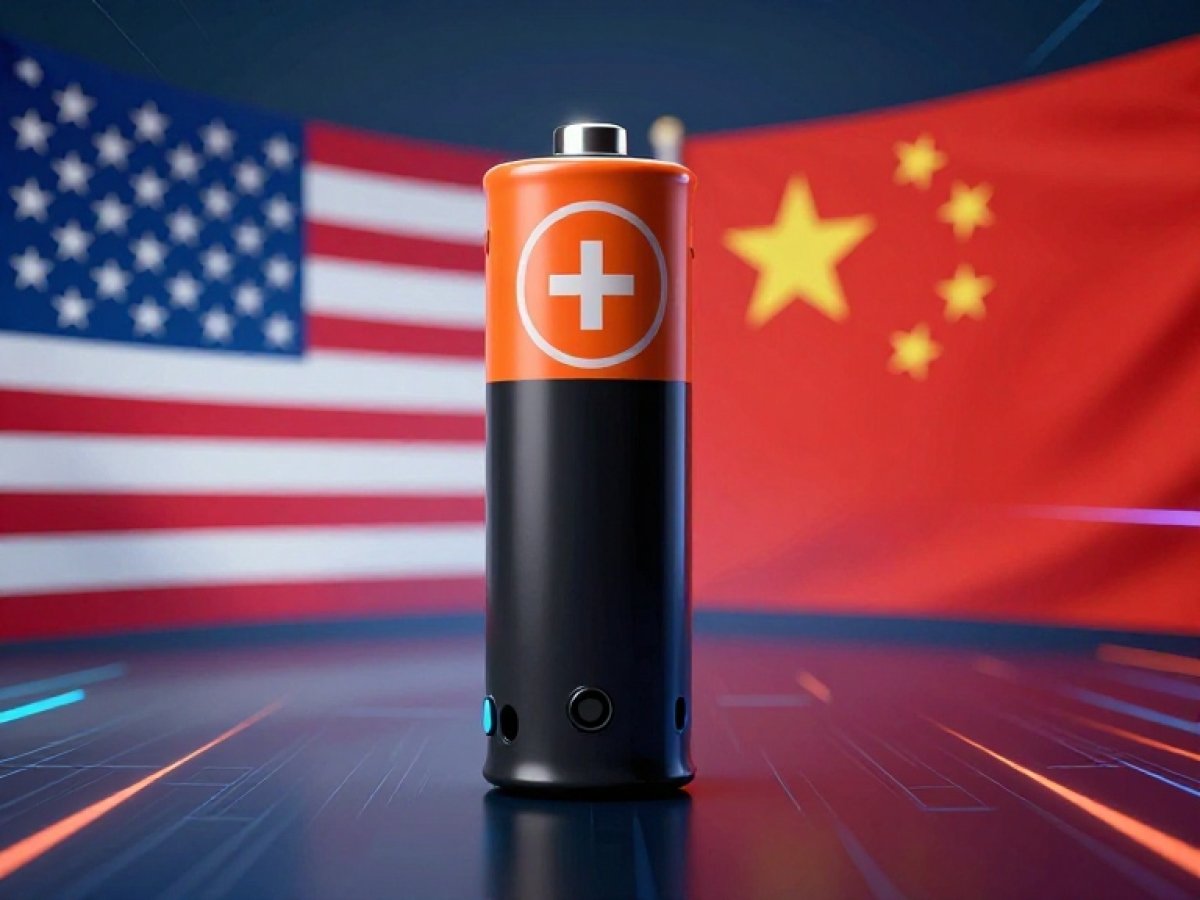
The paradox, as the China NYT explains, and underlined by analysts, is that this very strategic infrastructure depends largely on China, the main geopolitical rival of the United States.
Beijing dominates nearly every segment of the battery supply chain , from refining raw materials to producing cells and advanced components. According to Wang Dan , a China technology expert at the Hoover Institution at Stanford University , China’s leadership is based on both technological superiority and large-scale production capacity.
The issue does not only concern the civilian sector.
The Pentagon is also watching the dependence on Chinese supplies with growing concern. The U.S. military, which is adapting its strategies to the lessons learned from the conflict in Ukraine, foresees a future in which drones, laser weapons, communications systems, and satellites will require millions of high-performance batteries.
According to analyst firm Govini , the U.S. military currently uses approximately 6,000 battery components from the Chinese supply chain.
Tensions have further escalated in recent months. On October 9, amid growing trade tensions, China announced the possibility of restricting exports of some advanced lithium-ion battery technologies, including key components such as graphite anodes and cathodes. This move has reinforced the perception of batteries in the United States as a national security issue , rather than just an industrial one.
The Trump administration thus faces a complex balancing act. After initially freezing federal funding for battery production and other clean energy technologies approved under the Biden administration, the White House has gradually recognized the central role of batteries in strategic sectors such as artificial intelligence and defense . According to sources familiar with the matter, high-level meetings on the battery supply chain have been held in recent weeks, involving the National Energy Leadership Council and the Department of Energy.
Some concrete signs have already emerged. Washington has authorized the release of several Biden-era grants and announced new funding, up to $500 million, for projects related to materials and battery recycling . At the same time, the recently passed National Defense Authorization Act prohibits the Pentagon from purchasing batteries from “foreign entities of interest,” a term that specifically targets China.
However, the question of timing and structural difficulties remains open.
Data from the International Energy Agency indicates that in 2024, 99% of lithium iron phosphate cells and over 90% of key components were produced in China.
Experts estimate that it will take at least five years before the United States can approach self-sufficiency in this segment, and even longer to build a complete supply chain.
A dependence that, as Fatih Birol observed, recalls Europe’s dependence on Russian gas: relying on a single country for a strategic technology carries risks that are difficult to ignore.
Follow us on Google News to receive daily updates on cybersecurity. Contact us if you would like to report news, insights or content for publication.