



Sometimes, when you think about it, you wonder how we take the world around us for granted. Like, we click, scroll, type, and it all seems so natural, as if it’s always been there.
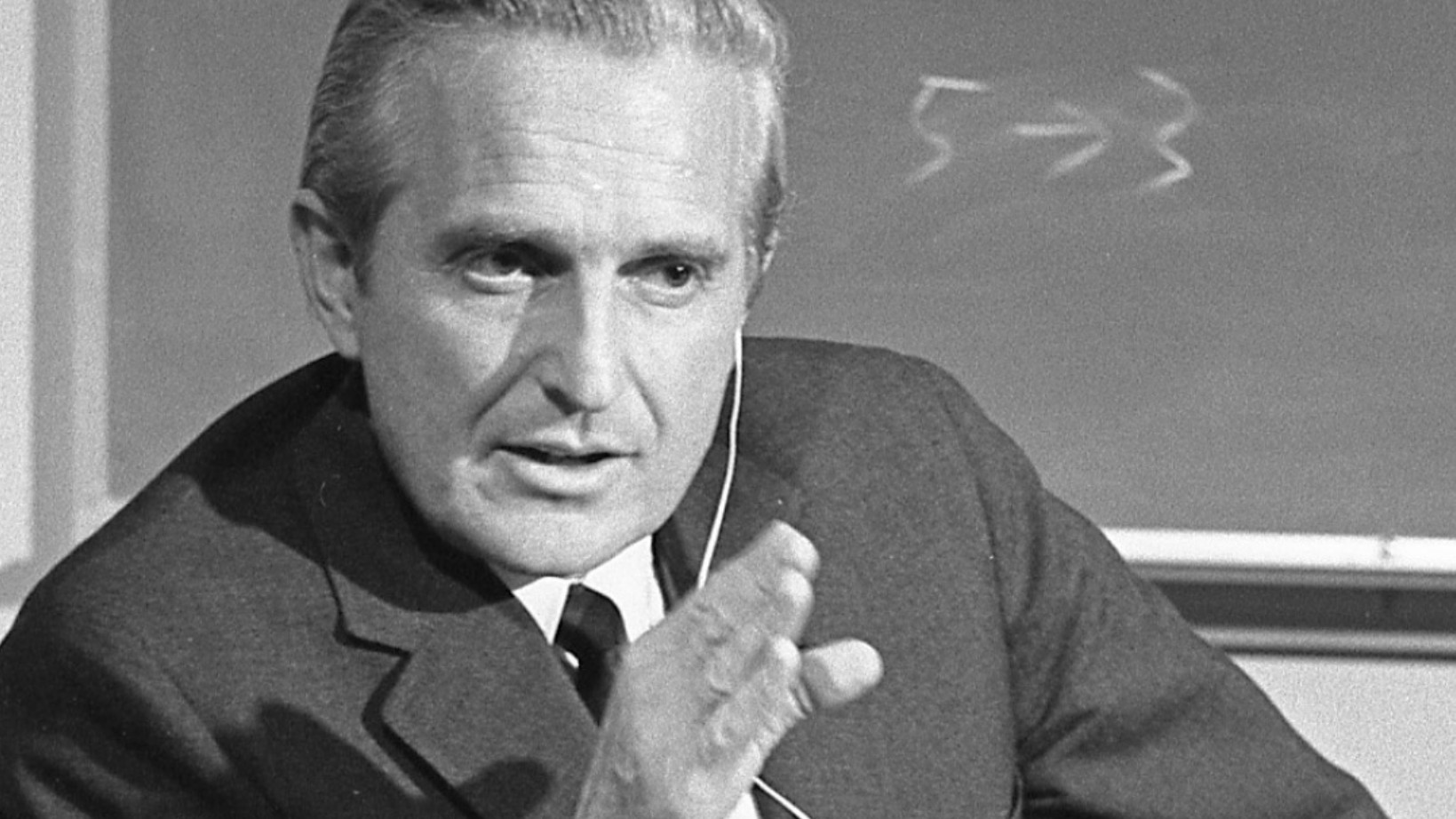
But no, there was someone, a certain Douglas Engelbart , who literally invented the fundamental pieces of this stuff . A man who, let’s face it, had a vision so innovative for his time that even the most advanced futurologists would have struggled to keep up.
Engelbart wasn’t one to settle for “this is how it’s done.” He looked at a problem— how to make humans more intelligent and collaborative with machines —and thought big. Not just the mouse, but the entire graphical user interface, the concept of hypertext that would later become the backbone of the web, and even video conferencing.
Stuff that, if you think about it, Silicon Valley has been living off of for the last forty years. And that’s not an exaggeration, mind you.
Douglas Engelbart wasn’t born with a mouse in his hand, but almost. Born in 1925, raised on a farm in Oregon, he possessed the kind of practical curiosity typical of hackers, like someone who needs to fix a tractor but dreams of infinity.
After serving as a radar technician for the Navy during World War II— a crucial experience in understanding how images could appear on a screen —he found himself reading Vannevar Bush ‘s article in Memex . It was the spark. Douglas understood that humanity’s real problem wasn’t the lack of machines, but the inability to manage the complexity of the information we were creating.
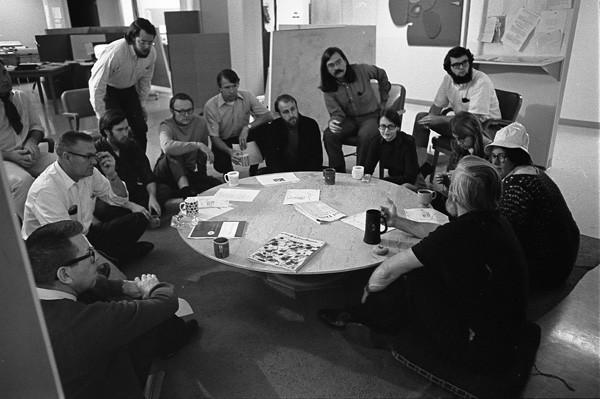
After earning his doctorate at Berkeley , he moved to Stanford Research Institute, but it wasn’t a walk in the park. Many colleagues looked at him as if he were a strange man talking to walls; his ideas about the ” extension of the human intellect ” seemed too abstract for an age dominated by giant calculators. Yet, he persisted. He founded the Augmentation Research Center (ARC) and began to gather around him people who weren’t afraid to make mistakes. In those dusty offices, among exposed cables and wooden prototypes, the first truly modern operating system, the NLS, was taking shape.
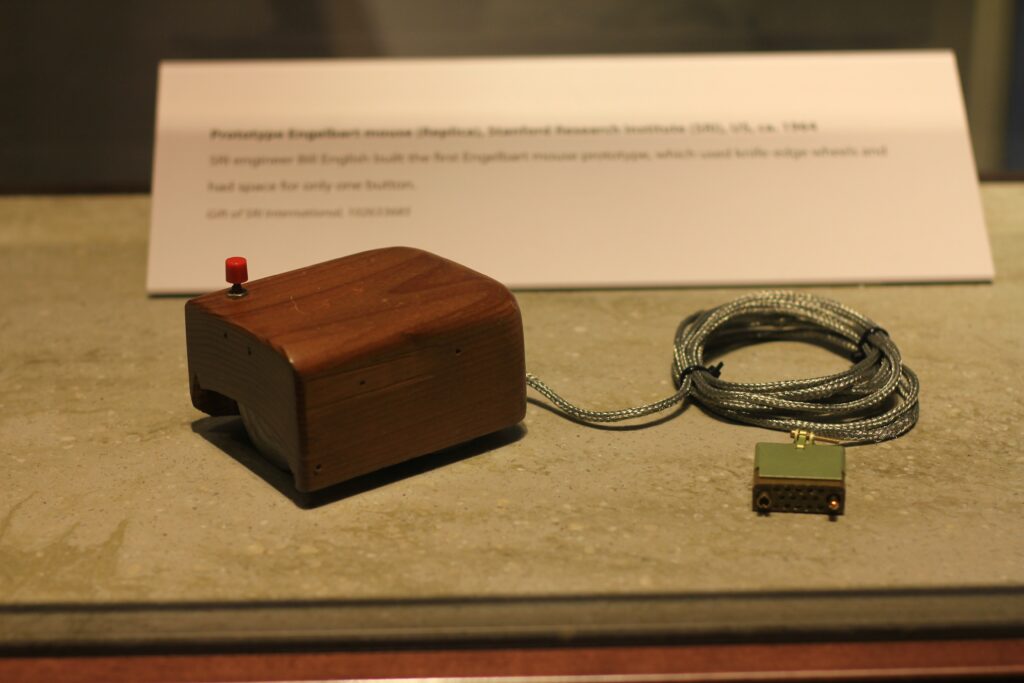
The highlight came almost by accident, or rather, out of ergonomic necessity. Engelbart wanted a way to move a cursor on the screen without having to type absurd commands. Together with Bill English, he built a wooden contraption with two metal wheels: the first mouse in history. It was ugly, square, and with a cord sticking out of the back (like a tail, indeed), but it worked. It was the first time humans stopped “talking” to computers through code and began interacting physically, almost touching the data. A silent revolution that few, at the time, truly understood.
All that underground work at the Augmentation Research Center (ARC) finally came to a head on December 9, 1968. There was a strange electricity in the air at the Fall Joint Computer Conference in San Francisco, the kind of tension you feel when you know something big is about to happen, even if you’re not sure what .
People crowded around, whispering, aware that Engelbart wasn’t someone who would simply show off a technical update. When Doug appeared, with his oversized headset and microphone, he almost looked like an astronaut ready for takeoff, or perhaps a pilot a little out of his depth. But it wasn’t just show: he was about to destroy, piece by piece, everything Vannevar Bush had ever dared to dream of with his Memex.
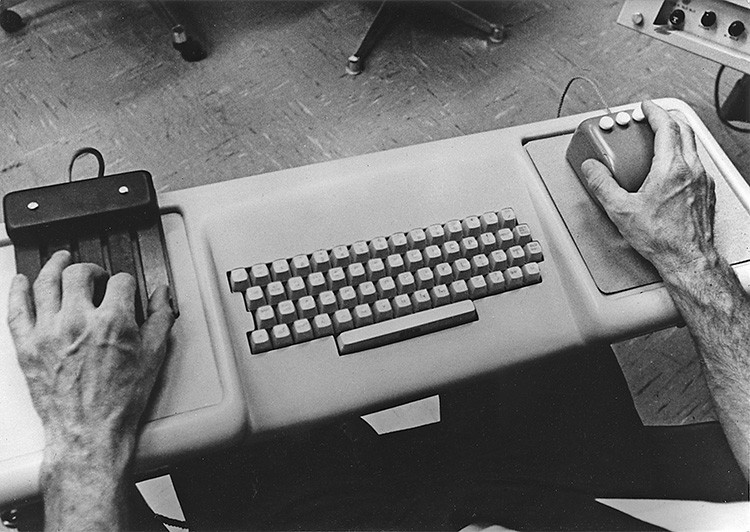
Projecting the future required real power, so they brought along an Eidophor projector , a giant, oil-based beast typically used by NASA in its space mission control centers. On that giant screen, the audience saw for the first time a man jumping from one document to another via links, popping up windows, and collaborating in real time with his team back in Menlo Park via a pre-modern video call. As he calmly used that wooden “mouse” to manipulate the text , the room went from excitement to an almost religious silence. It was the birth of modern computing, condensed into an hour and a half of pure technical daring that we now rightly call theMother of All Demos .
That presentation wasn’t just a window into the future, but a violent rupture in a present made of punch cards and cold calculations. Engelbart wasn’t selling a product, he was demonstrating a vision: a complete computing system called the oN-Line System (NLS) that aimed to enhance the human intellect, as Bush had envisioned. Everything was already there: the desktop, word processing, hyperlinks. It’s crazy to think that Silicon Valley has thrived for forty years on those insights. Virtually every tech company has built its fortunes on the foundations laid that day, often forgetting to credit the person who drew the original map.
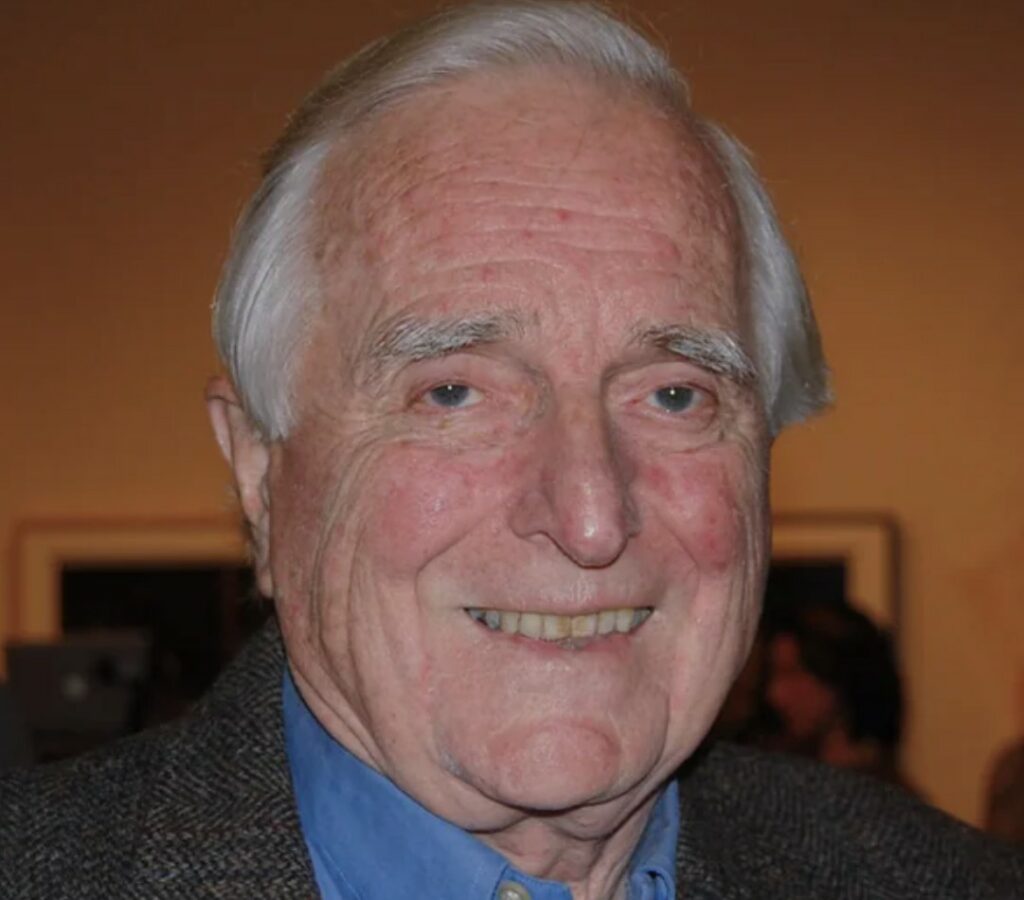
What’s sobering, and perhaps a little bitter, is that Engelbart wasn’t seeking commercial success. He didn’t become as rich as those who came after him, because his mission was loftier, almost philosophical: to give us the tools to avoid drowning in the complexity we ourselves were creating. Once the demo was over, after that moment of collective shock, a roar erupted . The world had changed radically in ninety minutes, even if most people outside that room would have taken decades to understand why. Without that flash of genius, today we’d probably still be writing letters to each other or eyeing a keyboard with suspicion.
Engelbart, in a sense, took up the baton from Vannevar Bush and his legendary Memex . Bush had envisioned a machine that would help scientists manage and consult enormous amounts of information, connecting concepts to each other. It was a fascinating vision, but it was Engelbart who said, ” Okay, cool, now how do we make this real ?”
And so, he laid the practical foundation for that idea, transforming it from an academic dream into a concrete engineering project . He understood that the problem wasn’t just how to store data, but how humans would interact with it in meaningful ways, enhancing their ability to think and create.
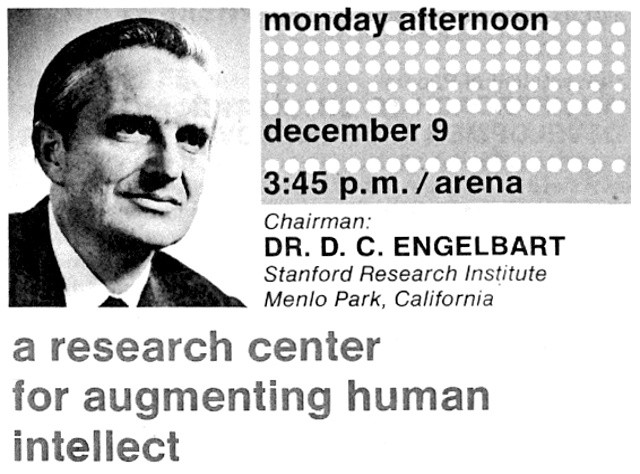
After that flash of genius in 1968, Engelbart’s life took a turn that could only be described as strange. Instead of becoming the master of the digital world (as usually happens after these astral presentations) , he gradually found himself on the margins, almost a prophet who had spoken too soon to be understood by the tech accountants. His lab, ARC, began to lose parts and funding, and Doug, who wasn’t exactly a marketing man, had to watch his ideas migrate to Xerox PARC and then to Apple and Microsoft computers. Privately, he wasn’t one to harbor resentment, but that feeling of having sown an entire forest only to see others reap the rewards must have been a constant companion, a bit like a background noise that never fades.
In the years that followed, his daily life became much quieter than that bombastic demo would have suggested. He devoted himself to his family and to an almost philosophical reflection on the future, trying to push the idea of global collaboration further while the world was content to use the mouse to play games or write letters. He lived with an old-fashioned dignity, receiving prestigious awards only when he was already an elderly man with white hair. He was never the man for glossy magazine covers , but anyone who visited him in his California home felt they were in the presence of someone who had truly seen the future and, with extreme kindness, had decided to give it to us without asking for change.
Doug’s legacy isn’t a piece of plastic with two wheels, but a shameless invitation to hack the future. For those who have just graduated from college or are still struggling with exams, the lesson is brutal and beautiful: don’t settle for optimizing what already exists. Engelbart didn’t want to make punch cards faster, he wanted to pulverize them. He teaches us that vision isn’t a hallucination (as artificial intelligence would do today), but a rigorous project that pushes where others haven’t even looked yet. It’s the ability to look beyond the hedge, to think unconventionally without fear of being considered crazy. If everyone tells you an idea is impossible, you’re probably on the right path, just like him in that ARC lab amidst the doubts of his colleagues.
In a country like Italy, where we often rest on the laurels of a glorious past , dusting off Olivetti and the brilliant inventions of Leonardo Chiarirgliene (who, incidentally, was born on the same day as Engelbart ), we are desperately hungry for this approach. Politics and institutions tend to move with the grace of an elephant in a china shop, and that’s why change must be a wave that starts from the bottom.
Engelbart has shown that a small group of determined people, with an unconventional vision, can force the entire world to act and adapt. Break the mold, get your hands dirty, seek connections no one has ever attempted. Don’t wait for the future to be handed to you with an instruction manual; take a screwdriver, open up the present, and reconnect it as you see fit.
The world belongs to those, like Doug, who have the courage to project their minds far beyond what their eyes can see.
Follow us on Google News to receive daily updates on cybersecurity. Contact us if you would like to report news, insights or content for publication.