




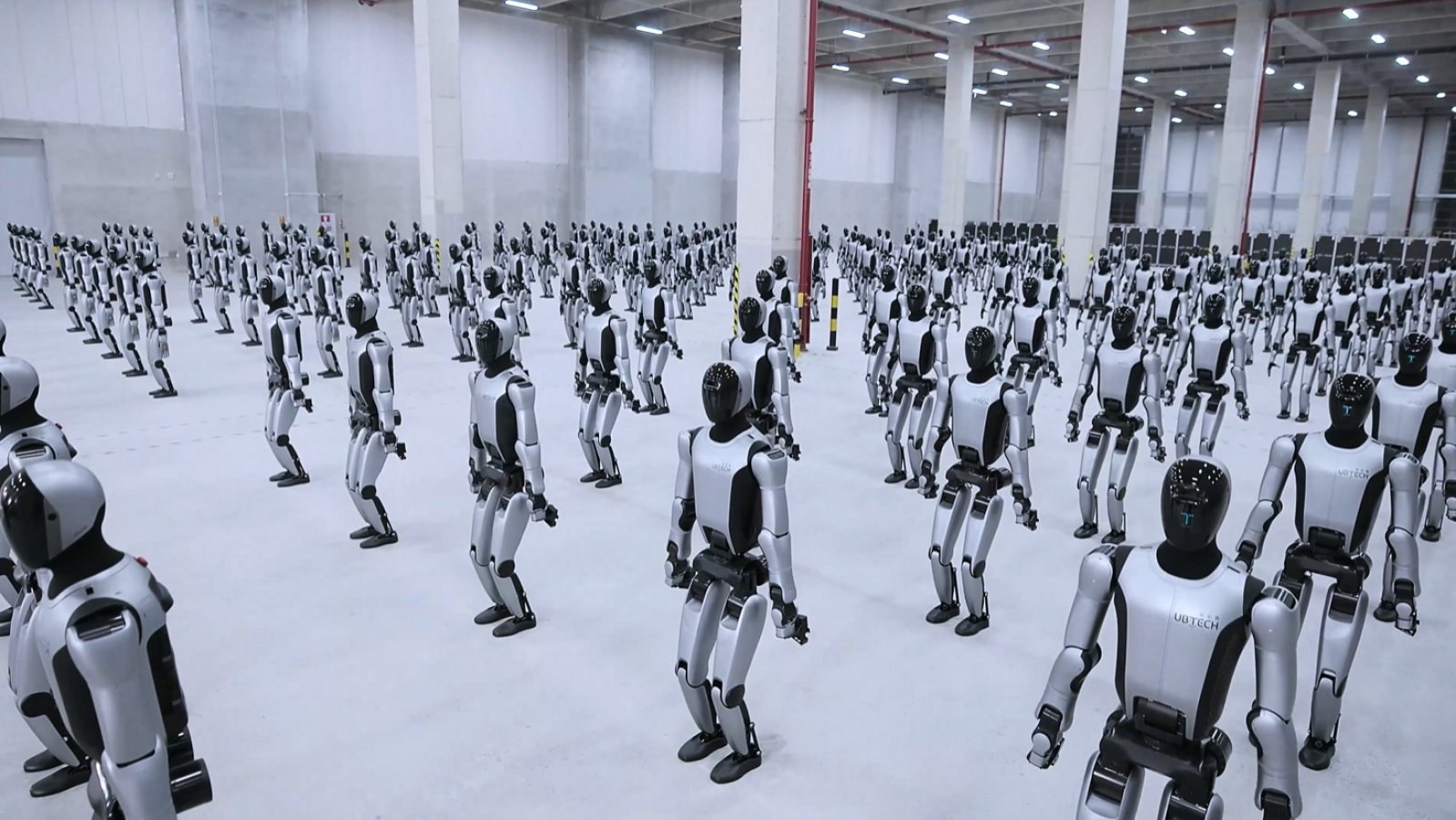
Un video, centinaia di robot umanoidi e una reazione che ha fatto il giro del mondo. Quando UBtech ha mostrato i suoi Walker S2 muoversi all’unisono in un magazzino cinese, per molti è stato uno spettacolo impressionante. Questi robot giravano la testa e agitavano le braccia all’unisono mentre entravano in fila nei container: un effetto visivamente sbalorditivo che ricorda il blockbuster fantascientifico “Io, Robot”.
Per altri, invece, troppo perfetto per essere reale. Da qui è nato un dibattito che va ben oltre l’autenticità di un filmato: riguarda la velocità con cui la Cina sta trasformando la robotica umanoide da esperimento da laboratorio a industria su larga scala, mettendo in discussione percezioni, pregiudizi e certezze consolidate in Occidente.
Brett Adcock, fondatore e CEO dell’azienda americana di robotica Figure, ha trovato difficile crederci e ha immediatamente pubblicato sui social media il video, insinuando che fosse stato generato al computer.
“Guarda il riflesso di questo robot e poi confrontalo con quello dietro. Il robot davanti è reale, quello dietro è finto”, ha riportato Adcock. “Se vedi un’unità principale che riflette un gruppo di luci sul soffitto, allora è un’immagine generata al computer.”
In risposta al post di Adcock, UBTECH ha rapidamente pubblicato un video girato con un drone FPV (prospettiva in prima persona), insieme all’audio originale, invitando gli scettici ad assistere in prima persona all'”impresa” del robot che esegue queste azioni, con la didascalia: “È davvero generato dall’intelligenza artificiale? Una rivelazione in un’unica ripresa, con audio originale e velocità originale!”
Tuttavia, non si può mai svegliare qualcuno che “finge di dormire”, e Adcock continua a non crederci… Il 29 novembre, il South China Morning Post di Hong Kong ha riferito che non si tratta di un caso isolato.
Quando la portaerei cinese Fujian dimostrò per la prima volta il suo sistema di catapulta elettromagnetica, gli esperti militari statunitensi sollevarono interrogativi analoghi sulle sue capacità. In questo contesto, le ipotesi basate sull’esperienza passata sembrano aver offuscato la loro comprensione delle attuali realtà industriali cinesi.
“Molti dei dubbi derivano da una scarsa comprensione delle capacità produttive della Cina e dei vantaggi del nostro sistema di collaborazione nella catena di fornitura”, ha risposto direttamente Tan Min, Chief Brand Officer di UBTECH: “I critici dovrebbero venire in Cina per vedere di persona il fiorente sviluppo dell’industria dei robot umanoidi e partecipare direttamente alla catena industriale”.
Il South China Morning Post ha osservato che tale scetticismo è in una certa misura comprensibile. Solo un anno fa, molti robot stavano ancora imparando a imitare l’andatura umana. Oggi, i robot industriali umanoidi vengono utilizzati in vari settori, tra cui la produzione di veicoli a nuova energia, la produzione intelligente 3C (computer, comunicazioni ed elettronica di consumo) e la logistica intelligente.
Grazie alla collaborazione open source, a una catena di fornitura strettamente integrata e alla rapida iterazione delle applicazioni pratiche, l’industria cinese dei robot umanoidi si sta sviluppando rapidamente.
“Una solida strategia open source è uno dei fattori chiave per il continuo aggiornamento dei nostri robot”, ha affermato Yao Qiyuan, co-fondatore di Shenzhen EngineAI, in un’intervista a Science and Technology Daily. “Distribuendo e addestrando codice open source, attiriamo sviluppatori globali per costruire insieme un ecosistema applicativo”.
Nel frattempo, il governo di Shenzhen ha ulteriormente sostenuto lo sviluppo dell’industria della robotica aprendo scenari nel settore pubblico, come l’ispezione e la protezione antincendio, per fornire “posti di lavoro” ai robot.
Naturalmente, la riduzione dei costi è un altro fattore chiave che ne favorisce l’adozione su larga scala. Nell’ottobre di quest’anno, la Noetix Robotics, con sede a Pechino, ha lanciato un robot umanoide al prezzo inferiore a 10.000 yuan, rivolto ad hobbisti e istituti di formazione per programmatori. Solo sei mesi prima, questo robot si era aggiudicato il secondo posto in una mezza maratona di robot umanoidi.
Ti è piaciuto questo articolo? Ne stiamo discutendo nella nostra Community su LinkedIn, Facebook e Instagram. Seguici anche su Google News, per ricevere aggiornamenti quotidiani sulla sicurezza informatica o Scrivici se desideri segnalarci notizie, approfondimenti o contributi da pubblicare.

 Cybercrime
 Innovazione
 Cybercrime
 Vulnerabilità
 Innovazione