




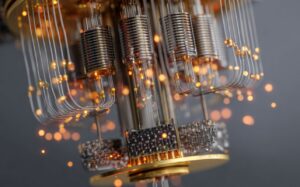
Il mondo della tecnologia quantistica ha compiuto un balzo in avanti impressionante:
QuantWare ha presentato il primo processore al mondo da 10.000 qubit, 100 volte più di qualsiasi dispositivo esistente. Inoltre, il nuovo chip occupa ancora meno spazio rispetto ai sistemi attuali, rendendo questa svolta particolarmente degna di nota in un contesto di anni di stagnazione nella scalabilità dei processori quantistici.
Per quasi un decennio, il settore non è riuscito a superare la soglia dei 100 qubit. Google è riuscita a passare da 53 a 105 qubit solo in sei anni, mentre IBM ha introdotto un processore da 1.121 qubit nel 2023 e non prevede una crescita significativa almeno fino al 2028. Di fronte alle limitazioni hardware, le aziende sono state costrette a combinare più chip di piccole dimensioni anziché aumentare la potenza di uno solo. Ciò ha complicato l’architettura, aumentato i costi e ostacolato il progresso reale.
QuantWare sostiene che la sua nuova architettura rimuove questa barriera.
Si basa sulla scalabilità 3D e su un design modulare a livello di chiplet, supportando 40.000 linee di I/O e interconnessioni interchip ad alta precisione. Questo approccio consente la costruzione di unità di elaborazione quantistica (QPU) monolitiche di grandi dimensioni senza sacrificare affidabilità o prestazioni.
L’azienda sostiene che il nuovo sistema offre una potenza di calcolo significativamente maggiore per dollaro e per watt rispetto alle soluzioni multi-chip, e l’architettura stessa potrebbe diventare uno standard di scalabilità a livello di settore. Qualsiasi organizzazione che lavori con qubit superconduttori potrà utilizzarlo per creare dispositivi quantistici più potenti.

QuantWare sta sviluppando contemporaneamente l’ecosistema Quantum Open Architecture, che ora include NVIDIA NVQLink. Combinata con l’architettura proprietaria di QuantWare, questa tecnologia combina il calcolo quantistico iperscalabile con il calcolo classico ad alte prestazioni, accessibile tramite NVIDIA CUDA-Q. L’azienda è convinta che la combinazione di VIO e NVQLink offra la scalabilità di cui il settore ha disperatamente bisogno oggi.
Insieme all’annuncio, l’azienda ha anche annunciato l’intenzione di costruire un impianto Kilofab su larga scala. L’impianto, la cui apertura è prevista per il 2026 a Delft, nei Paesi Bassi, diventerà la prima fabbrica al mondo dedicata ai dispositivi Quantum Open Architecture e uno dei più grandi impianti di produzione quantistica mai progettati. QuantWare spedisce già più processori quantistici di qualsiasi altro produttore commerciale in termini di volume, e Kilofab aumenterà questa capacità di 20 volte.
Matt Rijlaarsdam, CEO di QuantWare, ha definito questo un punto di svolta atteso da tempo.
Ha osservato che per anni gli specialisti si erano limitati a teorizzare le capacità dei sistemi quantistici, poiché il settore era limitato a 100 qubit e non poteva raggiungere una potenza di calcolo economicamente significativa. Il nuovo processore, ha affermato, rimuove finalmente questa barriera e apre la strada a computer quantistici realmente utili . “Con il VIO-40K, stiamo offrendo all’intero ecosistema l’accesso all’architettura di processore quantistico più potente e scalabile mai realizzata”, ha sottolineato.
I preordini sono già aperti e le prime unità saranno consegnate ai clienti nel 2028.
Ricordiamo che nel 2019 Craig Gidney e Martin Ekerå stimarono, nel loro lavoro intitolato “How to factor 2048-bit RSA integers in 8 hours using 20 million noisy qubits”, che un dispositivo quantistico con circa 20 milioni di qubit fisici “rumorosi” — connessi in una griglia piana e corretti con codice superficie (surface code) — sarebbe teoricamente in grado di fattorizzare una chiave RSA a 2048 bit in circa 8 ore.
Tuttavia, in un aggiornamento del 2025 lo stesso Gidney propone ottimizzazioni sostanziali: grazie a tecniche come l’approximate residue arithmetic e una gestione più efficiente dei qubit logici dormienti, secondo l’articolo “How to factor 2048 bit RSA integers with less than a million noisy qubits” oggi sarebbe sufficiente un quantum computer con meno di un milione di qubit fisici rumorosi per scomporre una chiave RSA-2048, in un tempo “meno di una settimana.
Ti è piaciuto questo articolo? Ne stiamo discutendo nella nostra Community su LinkedIn, Facebook e Instagram. Seguici anche su Google News, per ricevere aggiornamenti quotidiani sulla sicurezza informatica o Scrivici se desideri segnalarci notizie, approfondimenti o contributi da pubblicare.

 Innovazione
 Cybercrime
 Vulnerabilità
 Innovazione
 Cyber Italia