




Microsoft ha avviato uno dei più ambiziosi programmi di trasformazione del codice mai annunciati nel settore software: l’obiettivo dichiarato è rimuovere completamente C e C++ dai propri principali repository entro il 2030, sostituendoli con Rust. L’iniziativa coinvolge asset centrali come Windows e Azure e riguarda una delle più grandi basi di codice commerciali al mondo.
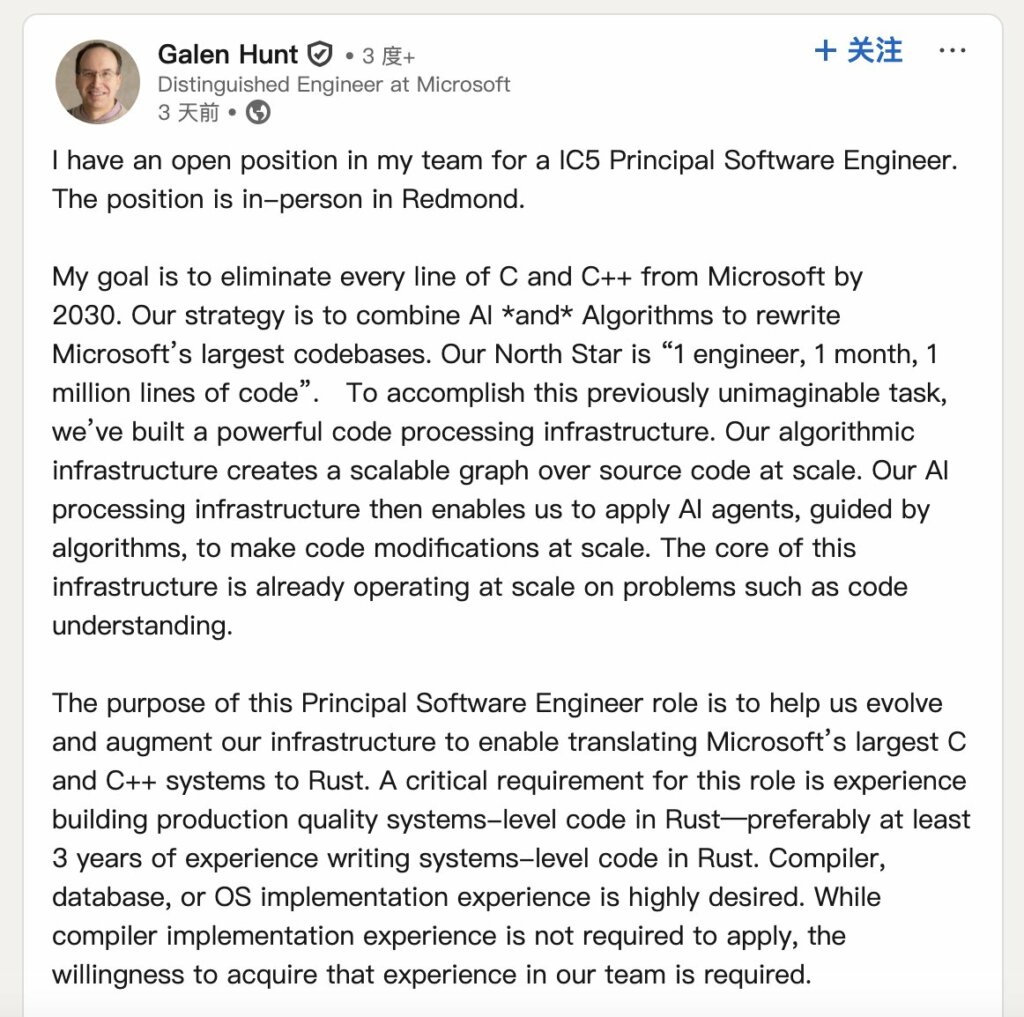
L’annuncio non nasce da indiscrezioni, ma da una presa di posizione pubblica interna all’azienda. A renderla esplicita è stato Galen Hunt, Distinguished Engineer di Microsoft, attraverso un annuncio di selezione pubblicato su LinkedIn. Nel post, Hunt ha descritto una strategia industriale che punta a riscrivere in modo sistematico il software di base dell’azienda, combinando automazione algoritmica e intelligenza artificiale.
Galen Hunt è una figura di primo piano nello sviluppo dei sistemi Microsoft. Da anni opera nel campo dei sistemi operativi e del software di basso livello e attualmente concentra il proprio lavoro sull’integrazione dei modelli linguistici di grandi dimensioni nello sviluppo di software di sistema.
Nel corso della sua carriera in Microsoft ha fondato e guidato il team di Azure Sphere, la piattaforma di sicurezza end-to-end per dispositivi IoT ed embedded, progettata per consentire ai produttori di realizzare hardware con elevati standard di protezione. In precedenza ha ricoperto ruoli chiave all’interno di Microsoft Research, contribuendo allo sviluppo di tecnologie per sistemi operativi e sistemi distribuiti.
Tra i progetti più noti da lui guidati figura Drawbridge, un’iniziativa volta a ridefinire il confine tra kernel e hypervisor. Tra il 2012 e il 2013, Hunt ha lavorato all’implementazione della tecnologia su Azure in contesti di produzione reale; la stessa architettura è stata poi utilizzata per il porting di Microsoft SQL Service su Linux.
Nel post di LinkedIn, Hunt sintetizza così la propria visione: l’eliminazione completa di ogni riga di codice C e C++ dai repository Microsoft entro la fine del decennio.
Per un’azienda con decenni di storia e centinaia di milioni di linee di codice, fortemente intrecciate con C e C++ in ambiti come sistemi operativi, database, compilatori, virtualizzazione e cloud, non si tratta di un semplice aggiornamento tecnologico. È un’operazione che investe l’organizzazione, le competenze, le metodologie e l’intera toolchain di sviluppo.
Nel dettaglio, Hunt spiega che il team sta costruendo un’infrastruttura capace di analizzare grandi volumi di codice sorgente tramite modelli algoritmici e agenti di intelligenza artificiale, con l’obiettivo di riscrivere in modo automatico interi componenti software. L’ambizione dichiarata è arrivare a una produttività pari a un milione di linee di codice convertite da un singolo ingegnere nell’arco di un mese.
Il gruppo di lavoro opera all’interno della divisione CoreAI di Microsoft, nel reparto Engineering Horizons, sotto il programma denominato “Future of Scalable Software Engineering”. Non si tratta di un team legato a un singolo prodotto, ma di una struttura pensata per sviluppare capacità riutilizzabili su scala aziendale e, potenzialmente, anche per clienti esterni.
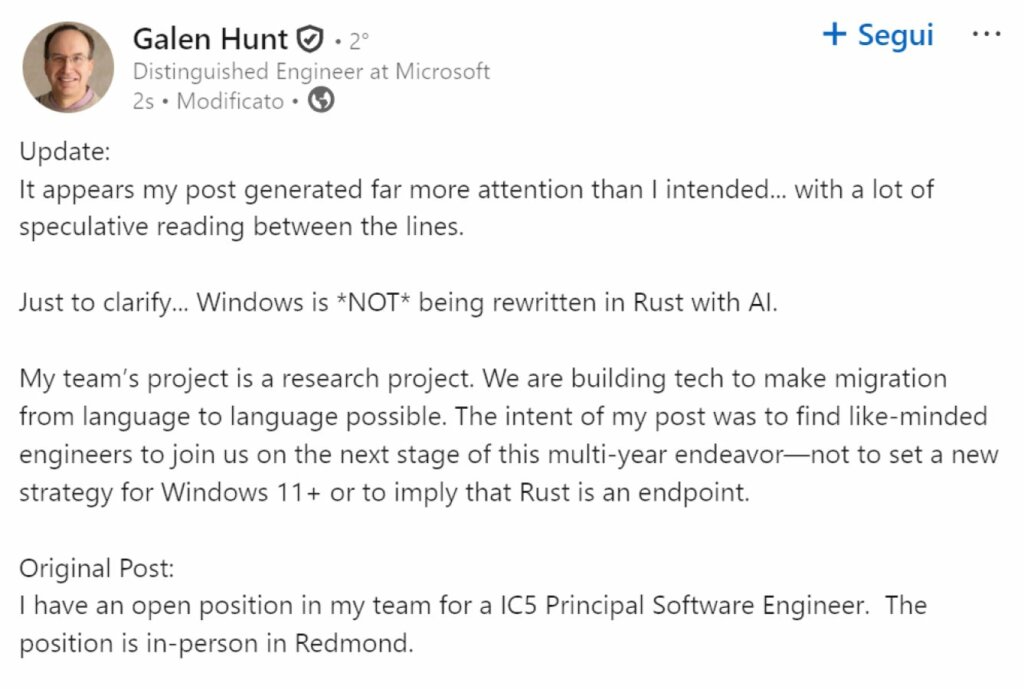
La successiva rettifica pubblicata da Galen Hunt ha ridimensionato in modo significativo l’interpretazione iniziale del suo post, chiarendo che Windows non è in fase di riscrittura in Rust tramite l’uso dell’intelligenza artificiale e che il progetto del suo team rientra in un ambito di ricerca e sperimentazione, non in una nuova strategia ufficiale per Windows 11 o per i prodotti core di Microsoft.
Hunt ha precisato che l’obiettivo del gruppo è sviluppare tecnologie capaci di rendere possibili e più efficienti le migrazioni tra linguaggi di programmazione, senza indicare Rust come punto di arrivo definitivo né come scelta già adottata su larga scala. Il post originale, nelle sue intenzioni, era finalizzato esclusivamente alla ricerca di profili tecnici affini per una collaborazione pluriennale, non a comunicare un cambio di rotta aziendale.
La rettifica evidenzia quindi una distanza tra la narrativa emersa nel dibattito pubblico e lo stato reale del progetto: non una riscrittura imminente dei sistemi Microsoft, ma un investimento strutturale su strumenti, metodi e automazione applicati all’ingegneria del software.
Resta però un dato difficilmente ignorabile. Al di là delle precisazioni, la direzione di fondo di Microsoft appare chiara: l’azienda sta puntando con decisione sull’integrazione dell’intelligenza artificiale nei processi di sviluppo, manutenzione e trasformazione del codice. In un contesto segnato da importanti ristrutturazioni e da migliaia di licenziamenti, l’AI emerge come un elemento centrale nella strategia industriale e tecnica del gruppo.
Il futuro concreto dello sviluppo software in Microsoft non è ancora pienamente definito, e il ruolo di Rust rimane, allo stato attuale, un’incognita. Ciò che appare invece evidente è la visione complessiva: un’azienda che intende ripensare il modo in cui il software viene costruito, evoluto e riscritto, affidando all’intelligenza artificiale un ruolo sempre più determinante.
Ti è piaciuto questo articolo? Ne stiamo discutendo nella nostra Community su LinkedIn, Facebook e Instagram. Seguici anche su Google News, per ricevere aggiornamenti quotidiani sulla sicurezza informatica o Scrivici se desideri segnalarci notizie, approfondimenti o contributi da pubblicare.

 Cybercrime
 Innovazione
 Cybercrime
 Vulnerabilità
 Innovazione