




PentestAgent è un altro nuovo progetto open source sviluppato dal gruppo GH05TCREW che mira a supportare le attività di penetration testing attraverso l’uso di agenti basati su modelli linguistici.
Il tool è progettato per funzionare con Python dalla versione 3.10 in poi e richiede una chiave API compatibile con OpenAI, Anthropic o altri provider supportati da LiteLLM.
L’installazione può avvenire clonando il repository GitHub ufficiale e utilizzando script dedicati per Windows, Linux e macOS, che automatizzano la creazione dell’ambiente virtuale e l’installazione delle dipendenze. In alternativa, è possibile procedere manualmente configurando una virtual environment Python, installando i pacchetti necessari e completando l’installazione di Playwright con Chromium, indispensabile per l’utilizzo degli strumenti di navigazione web integrati.
Per il corretto funzionamento del software è necessario creare un file di configurazione .env nella directory principale del progetto. All’interno vanno specificate le variabili d’ambiente relative alla chiave API del provider scelto e al modello da utilizzare, come ad esempio Claude Sonnet o GPT-5. PentestAgent è compatibile con qualsiasi modello supportato dall’ecosistema LiteLLM.
Una volta configurato, il tool può essere avviato tramite riga di comando, aprendo un’interfaccia testuale interattiva. È possibile lanciare PentestAgent senza parametri, specificando direttamente un target IP o abilitando l’esecuzione degli strumenti all’interno di un container Docker per una maggiore sicurezza e isolamento dell’ambiente di test.
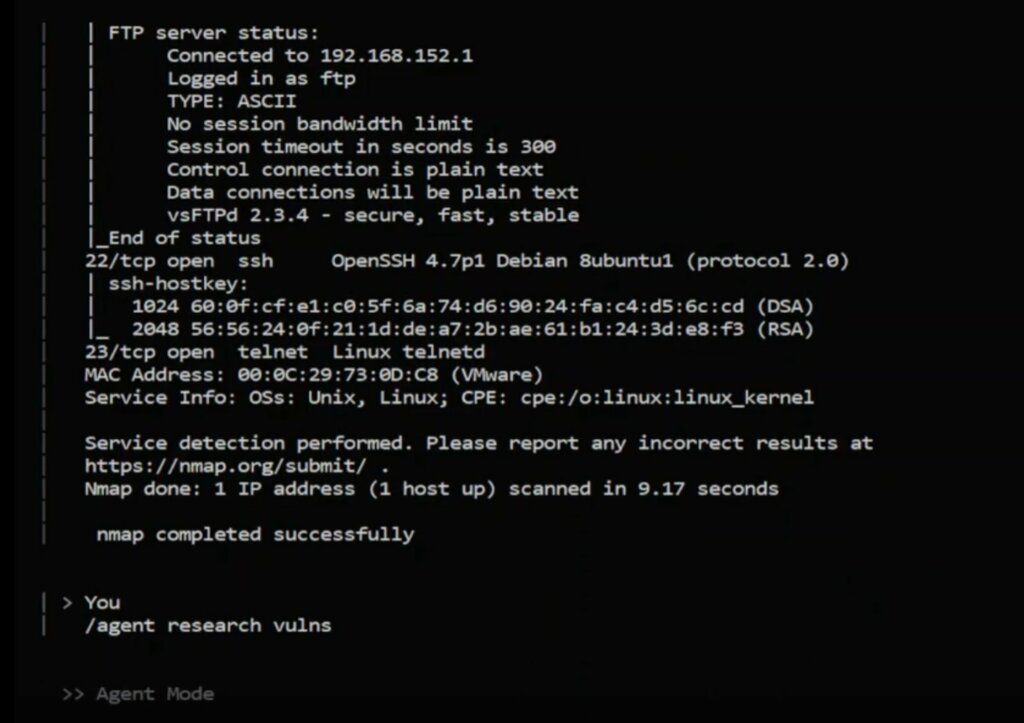
Il supporto Docker rappresenta una delle caratteristiche principali del progetto. Gli utenti possono scegliere tra immagini precompilate leggere, che includono strumenti di base come nmap e netcat, oppure immagini basate su Kali Linux, già dotate di framework avanzati come Metasploit, sqlmap e Hydra. In alternativa, le immagini possono essere costruite localmente tramite Docker Compose, con profili differenti a seconda delle esigenze operative.
PentestAgent offre tre modalità operative distinte. La modalità Assist consente un’interazione guidata con l’agente, lasciando il controllo all’utente. La modalità Agent permette l’esecuzione autonoma di un singolo task, mentre la modalità Crew attiva un sistema multi-agente in cui un orchestratore coordina più entità specializzate per affrontare attività complesse.
L’interfaccia TUI mette a disposizione una serie di comandi per la gestione delle operazioni, tra cui l’impostazione del target, la visualizzazione degli strumenti disponibili, la generazione di report e la consultazione delle note raccolte durante le sessioni. È inoltre possibile interrompere l’esecuzione degli agenti o uscire rapidamente dall’applicazione tramite scorciatoie da tastiera.
Il progetto include playbook predefiniti per test di sicurezza black-box, oltre a un sistema di gestione della conoscenza basato su RAG. Metodologie, vulnerabilità e wordlist possono essere caricate per arricchire il contesto operativo degli agenti. Le informazioni raccolte vengono salvate in modo persistente e, nella modalità Crew, utilizzate per costruire un grafo di conoscenza che supporta analisi strategiche avanzate. L’utilizzo del software è consentito esclusivamente su sistemi per i quali si dispone di autorizzazione esplicita, come indicato nelle note legali del progetto.
Ti è piaciuto questo articolo? Ne stiamo discutendo nella nostra Community su LinkedIn, Facebook e Instagram. Seguici anche su Google News, per ricevere aggiornamenti quotidiani sulla sicurezza informatica o Scrivici se desideri segnalarci notizie, approfondimenti o contributi da pubblicare.

 Innovazione
 Cybercrime
 Vulnerabilità
 Innovazione
 Cyber Italia